English

CITES
An international agreement between governments to ensure that international trade in specimens of wild…
Reads at Grades 3–5 Listens at Grades 1–5
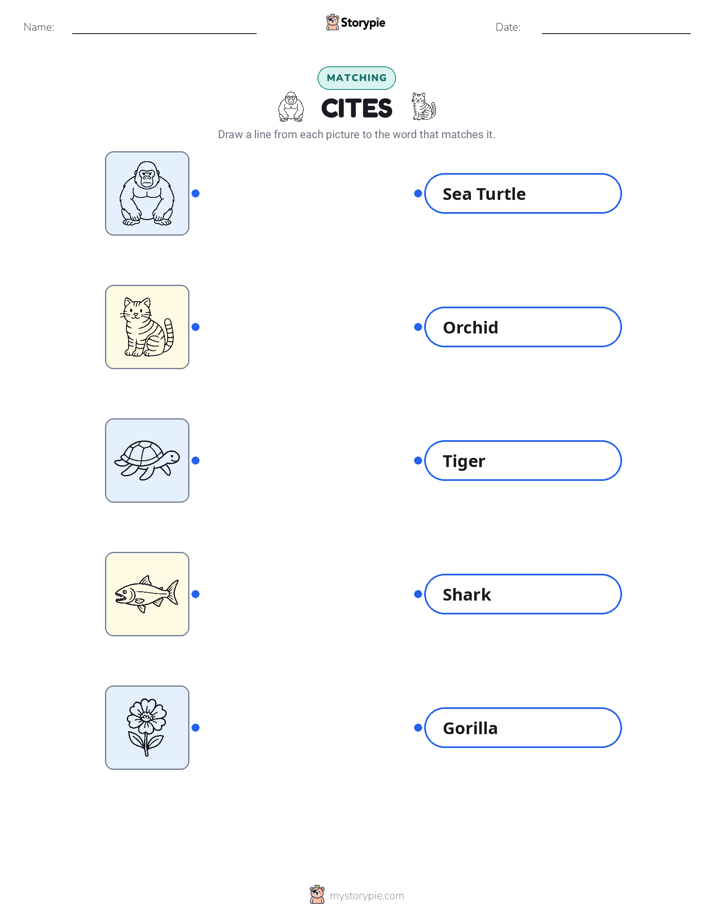
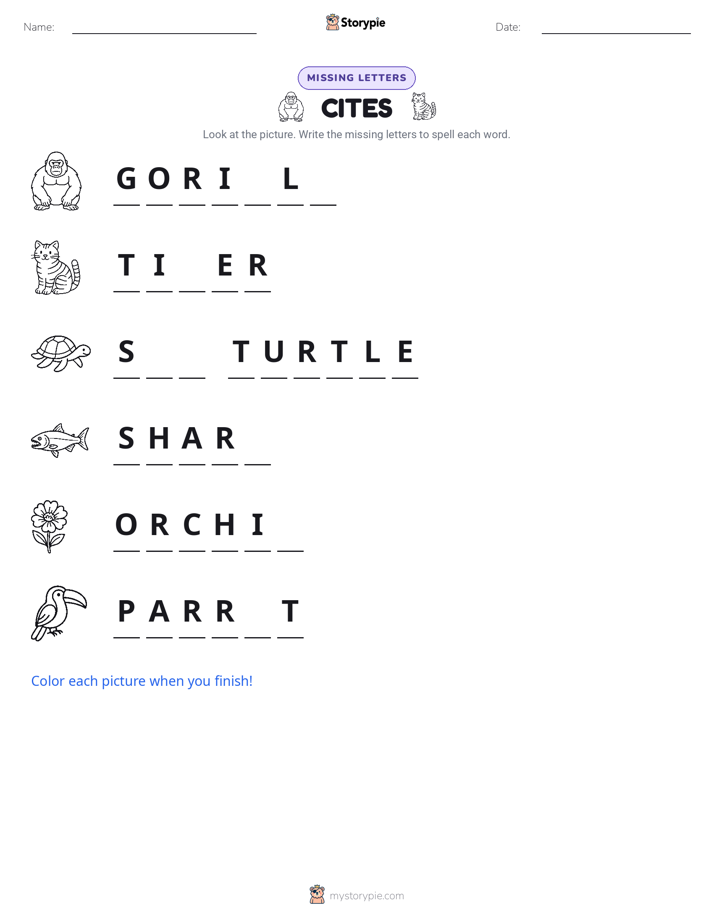
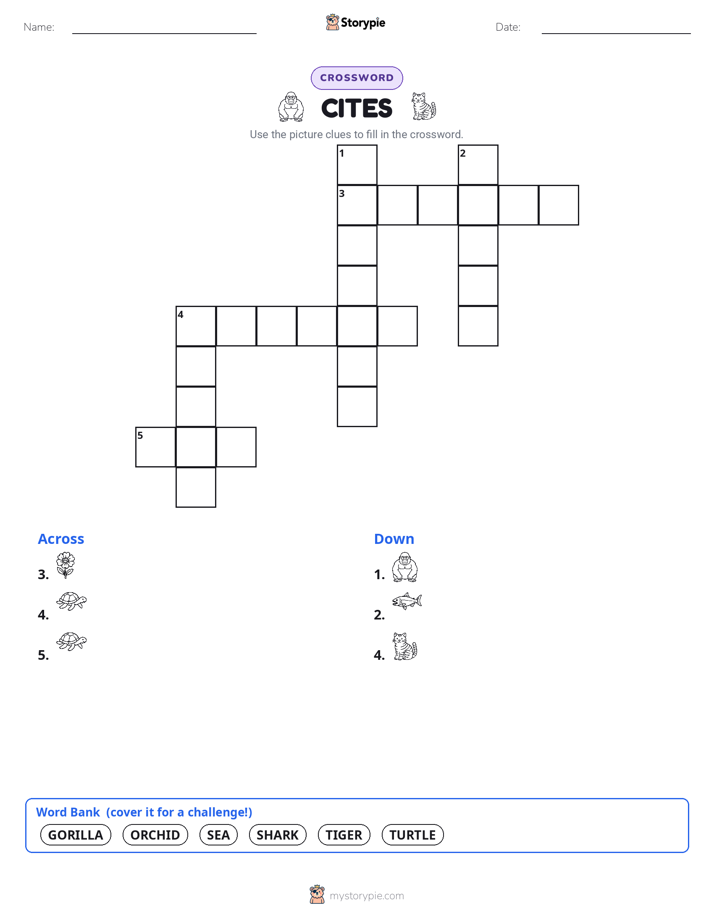
Print & create
Answer keys·No prep·Free with an account
28 worksheets · answer keys · full story · quiz · Ages 8-10 · CEFR B1
Plus adds 164,000+ more stories in 27 languages, audio for every one, and printables for all of them.
Just want CITES?
Hello! We are an important global agreement created to protect the world’s amazing animals and plants. Our full name is the Convention on International Trade in Endangered Species of Wild Fauna and Flora, but that’s a mouthful, so most people call us by our acronym, CITES. "Fauna" is a word for animals, and "flora" is a word for plants. We were formed because for many years, countless species were in danger of disappearing forever. The reason was often international trade—the buying and selling of animals, plants, or products made from them, across country borders. When this trade is not carefully managed, it can threaten the survival of entire species. So, we are a promise between countries to work as a team and make sure this never happens.
Our story began on March 3rd, 1973. On that day, representatives from 80 different countries gathered in Washington, D.C., in the United States. They all shared a common concern for the future of wildlife and recognized that no single country could solve the problem alone. After much discussion, they agreed on a set of powerful rules to protect species from the dangers of uncontrolled trade. It took some time for all the countries to prepare, so these rules officially went into effect a couple of years later, on July 1st, 1975. Since that time, more and more countries have joined us, agreeing to follow these rules and help carry out our important mission.
To do our job effectively, we needed a clear system. We decided to organize species onto three different lists, which we call Appendices. Each appendix offers a different level of protection based on how much danger a species is in. The first list, Appendix I, is for species that are most at risk of extinction. This is our highest level of protection. Animals like tigers and sea turtles are on this list. For these species, almost all international commercial trade is banned. This strict rule is necessary to give these vulnerable populations a chance to recover.
We Are CITES: Protecting Wildlife Together
Hello! We are an important global agreement created to protect the world’s amazing animals and plants. Our full name is the Convention on International Trade in Endangered Species of Wild Fauna and Flora, but that’s a mouthful, so most people call us by our acronym, CITES. "Fauna" is a word for animals, and "flora" is a word for plants. We were formed because for many years, countless species were in danger of disappearing forever. The reason was often international trade—the buying and selling of animals, plants, or products made from them, across country borders. When this trade is not carefully managed, it can threaten the survival of entire species. So, we are a promise between countries to work as a team and make sure this never happens.
Our story began on March 3rd, 1973. On that day, representatives from 80 different countries gathered in Washington, D.C., in the United States. They all shared a common concern for the future of wildlife and recognized that no single country could solve the problem alone. After much discussion, they agreed on a set of powerful rules to protect species from the dangers of uncontrolled trade. It took some time for all the countries to prepare, so these rules officially went into effect a couple of years later, on July 1st, 1975. Since that time, more and more countries have joined us, agreeing to follow these rules and help carry out our important mission.
To do our job effectively, we needed a clear system. We decided to organize species onto three different lists, which we call Appendices. Each appendix offers a different level of protection based on how much danger a species is in. The first list, Appendix I, is for species that are most at risk of extinction. This is our highest level of protection. Animals like tigers and sea turtles are on this list. For these species, almost all international commercial trade is banned. This strict rule is necessary to give these vulnerable populations a chance to recover.
Our other two lists help us protect species in different situations. Appendix II is for species that are not yet in immediate danger of extinction but could become so if trade isn't managed carefully. This list includes many types of parrots, corals, and other species whose populations need to be monitored. By controlling the trade of Appendix II species, we can prevent them from ever needing to be moved to Appendix I. Finally, Appendix III is a special tool that allows individual countries to ask for help protecting a species within their own borders. If a country is worried about one of its native plants or animals, it can list it on Appendix III, and all other member countries will help control the trade of that species.
Over the years, our rules have made a real difference for many species. For example, to help protect African and Asian elephants from poaching, we put very strict controls on the international trade of elephant ivory. We have also helped protect rhinos by banning the international trade of their horns. But our work isn't only about large animals. We also help protect thousands of plant species, from beautiful and rare orchids to valuable tropical hardwoods used to make furniture. Our main goal is to make sure that any trade that does happen is legal, sustainable, and traceable. "Sustainable" means it doesn’t harm the long-term survival of the species, and "traceable" means we can track where the product came from.
Even with so many countries working together, our mission isn't always easy. We face a serious challenge from people who break the rules and trade wildlife illegally. This crime is sometimes called smuggling or wildlife trafficking, and it is a major threat to many of the animals and plants we protect. These illegal activities can quickly undo years of conservation work. To fight back, we work closely with the governments of our member countries and with law enforcement organizations all around the world. This teamwork helps us to stop poachers and smugglers and give vulnerable species a better chance at survival.
Today, 184 parties—which includes 183 countries plus the European Union—have all agreed to follow our rules. Together, our member countries help protect over 40,000 species of animals and plants from the threat of extinction due to international trade. The world is always changing, but our mission continues every single day. We work to find a balance so that people and nature can both thrive, ensuring that the incredible diversity of life on our planet is protected for generations to come.
Wow facts
About
An international agreement between governments to ensure that international trade in specimens of wild animals and plants does not threaten their survival.
Take a Quiz
Question 1 of 5
What is the full name for the organization commonly called CITES?
Explore next




Want to do even more?
Go beyond exploring. Unlock tools that turn every story into real learning.

Storypie Plus for families
Full stories, quizzes, and printables. Nights and car rides, sorted.
- Unlimited audio stories
- Create Mode: your child stars in the story
- Offline downloads
- Printable worksheets & coloring pages

Why Storypie for Schools
Students engaged. Prep in seconds. Evenings back to you.
- Worksheets & Quizzes
- Classroom Management
- Formative Assessment
- Custom Curriculum & Lesson Plans
- 27 Languages

Why Storypie for Homeschool
Curriculum done. They'll ask for more. Hours back in your day.
- Worksheet Generator
- First-Person Audio Stories
- Built-in Comprehension Quizzes
- Custom Curriculum & Lesson Plans
- Print & Go Activities