English

World Wildlife Fund
An international non-governmental organization founded in 1961…
Reads at Grades 6–8 Listens at Grades 4–8
Print & create
Answer keys·No prep·Free with an account
28 worksheets · answer keys · full story · quiz · Ages 10-12 · CEFR B2
Plus adds 116,000+ more stories in 27 languages, audio for every one, and printables for all of them.
Just want World Wildlife Fund?
We are the World Wildlife Fund, an organization often known by our acronym, WWF. For more than sixty years, our mission has been to protect the future of nature. Our story began on April 29th, 1961, when a group of dedicated scientists and conservationists came together in Morges, Switzerland. These founders, including figures like Julian Huxley, Max Nicholson, and Peter Scott, were deeply concerned about the world's disappearing wildlife and felt an urgent need to act on a global scale.
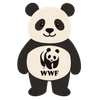
To give our new organization a powerful and recognizable symbol, we chose a logo inspired by a very special animal. At the time, a giant panda named Chi-Chi at the London Zoo had captured the hearts of people everywhere. We saw her as the perfect ambassador for our cause—a beautiful, endangered animal that needed protection. Our simple black-and-white panda logo was designed to be easily reproduced and universally understood, and it has since become an international symbol for the entire conservation movement.
In our early years, we operated primarily as a funding organization. Instead of creating all of our own field projects from scratch, we focused on raising money to support other established conservation groups that were already performing vital work around the world. We acted as a partner, providing the financial resources that experts on the ground needed to save endangered animals and preserve the habitats they called home. This approach allowed us to make a significant impact right from the start by empowering those with specialized local knowledge.
A Mission for Nature: The Story of World Wildlife Fund
We are the World Wildlife Fund, an organization often known by our acronym, WWF. For more than sixty years, our mission has been to protect the future of nature. Our story began on April 29th, 1961, when a group of dedicated scientists and conservationists came together in Morges, Switzerland. These founders, including figures like Julian Huxley, Max Nicholson, and Peter Scott, were deeply concerned about the world's disappearing wildlife and felt an urgent need to act on a global scale.
To give our new organization a powerful and recognizable symbol, we chose a logo inspired by a very special animal. At the time, a giant panda named Chi-Chi at the London Zoo had captured the hearts of people everywhere. We saw her as the perfect ambassador for our cause—a beautiful, endangered animal that needed protection. Our simple black-and-white panda logo was designed to be easily reproduced and universally understood, and it has since become an international symbol for the entire conservation movement.
In our early years, we operated primarily as a funding organization. Instead of creating all of our own field projects from scratch, we focused on raising money to support other established conservation groups that were already performing vital work around the world. We acted as a partner, providing the financial resources that experts on the ground needed to save endangered animals and preserve the habitats they called home. This approach allowed us to make a significant impact right from the start by empowering those with specialized local knowledge.
Two of our first major projects demonstrate this early strategy. We provided crucial support to help establish the Charles Darwin Foundation, an organization dedicated to protecting the one-of-a-kind wildlife of the Galápagos Islands. These islands are home to species found nowhere else on Earth, and their protection was a top priority. We also supported the creation of the Coto Doñana National Park in Spain. This vast wetland is an incredibly important resting place for millions of migratory birds traveling between Africa and Europe, and preserving it was essential for their survival.
As the decades passed, we grew from a small group based in Switzerland into a large, interconnected global network with offices in many countries. Our understanding of conservation also evolved. We realized that protecting individual species, while important, was not enough. To truly secure the future of nature, we needed to protect entire ecosystems—the complex webs of life found in forests, oceans, rivers, and grasslands. To reflect this broader mission, we changed our name to the 'World Wide Fund for Nature' in 1986 in most parts of the world. However, in the United States and Canada, we decided to keep our original name, World Wildlife Fund, which was already very well known.
Our work, conducted with partners around the globe, has contributed to major conservation successes. We played a key role in campaigns that raised global awareness about the devastating effects of the ivory trade. This work helped lead to a global ban on the international trade of ivory, providing critical protection for elephant populations that were being decimated by poaching. Through targeted conservation efforts, we have also helped bring iconic species like the black rhino and the majestic Bengal tiger back from the brink of extinction. Our efforts extend beyond individual species to entire landscapes. For example, we support the Amazon Region Protected Areas (ARPA) program in Brazil. This is one of the largest and most ambitious tropical forest conservation projects in history, safeguarding a vast and vital part of our planet.
Over time, it became clear that saving one species or even one park at a time could not solve the bigger problems facing our planet. We needed to address the root causes of environmental destruction, such as large-scale deforestation, widespread pollution, and the growing threat of climate change. To help us and the world understand the scale of these challenges, we created a scientific publication called the 'Living Planet Report.' This detailed report tracks the health of the planet by measuring population changes in thousands of animal species. It provides clear, science-based evidence of the impact human activities are having on Earth's biodiversity and helps guide the actions we must all take to create a more sustainable world.
Today, our mission is more focused than ever on building a future where people and nature can thrive together. We recognize that human well-being is deeply connected to the health of the environment. Our work is guided by the latest science, and we collaborate with a wide range of partners, from local and Indigenous communities to national governments and global corporations. We focus on developing sustainable solutions for the world’s food, water, and energy needs—solutions that can support humanity without destroying the natural systems we all depend on. Our fundamental goal remains the same as it was in 1961: to protect the amazing and precious diversity of life on our planet for all the generations to come.
Wow facts
About
An international non-governmental organization founded in 1961, working on wilderness preservation and the reduction of human impact on the environment. It is known for its iconic giant panda logo.
Take a Quiz
Question 1 of 5
What was the main reason WWF changed its name to 'World Wide Fund for Nature' in most countries in 1986?
Explore next






Want to do even more?
Go beyond exploring. Unlock tools that turn every story into real learning.

Storypie Plus for families
Full stories, quizzes, and printables. Nights and car rides, sorted.
- Unlimited audio stories
- Create Mode: your child stars in the story
- Offline downloads
- Printable worksheets & coloring pages

Why Storypie for Schools
Students engaged. Prep in seconds. Evenings back to you.
- Worksheets & Quizzes
- Classroom Management
- Formative Assessment
- Custom Curriculum & Lesson Plans
- 27 Languages

Why Storypie for Homeschool
Curriculum done. They'll ask for more. Hours back in your day.
- Worksheet Generator
- First-Person Audio Stories
- Built-in Comprehension Quizzes
- Custom Curriculum & Lesson Plans
- Print & Go Activities