English

Anishinaabe Peoples
The Anishinaabe are a group of culturally related Indigenous peoples in what is now Canada and the United…
Reads at Pre-K Listens at Pre-K–1
Print & create
Answer keys·No prep·Free with an account
28 worksheets · answer keys · full story · quiz · Ages 3-5 · CEFR A1
Plus adds 116,000+ more stories in 27 languages, audio for every one, and printables for all of them.
Just want Anishinaabe Peoples?
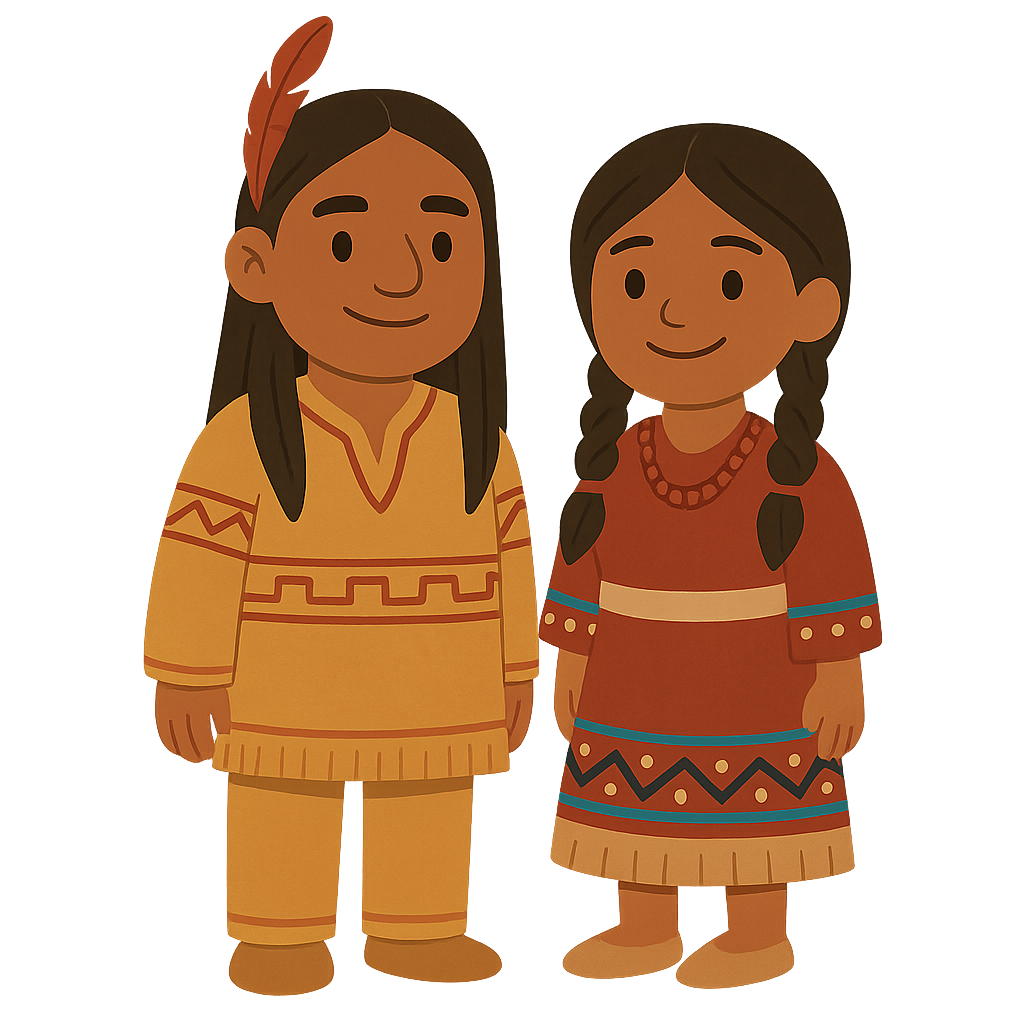
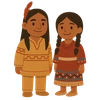
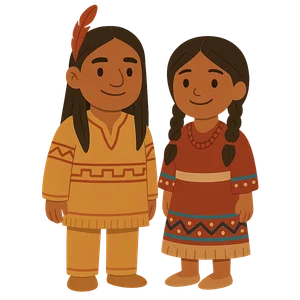
Hello! We are the Anishinaabe. Our name means the “Original People.” We are a big family made up of many different groups. Three of these groups are the Ojibwe, the Odawa, and the Potawatomi. For a very, very long time, our home has been near the Great Lakes. These lakes are so big they look like oceans. We live on the land all around these big waters.
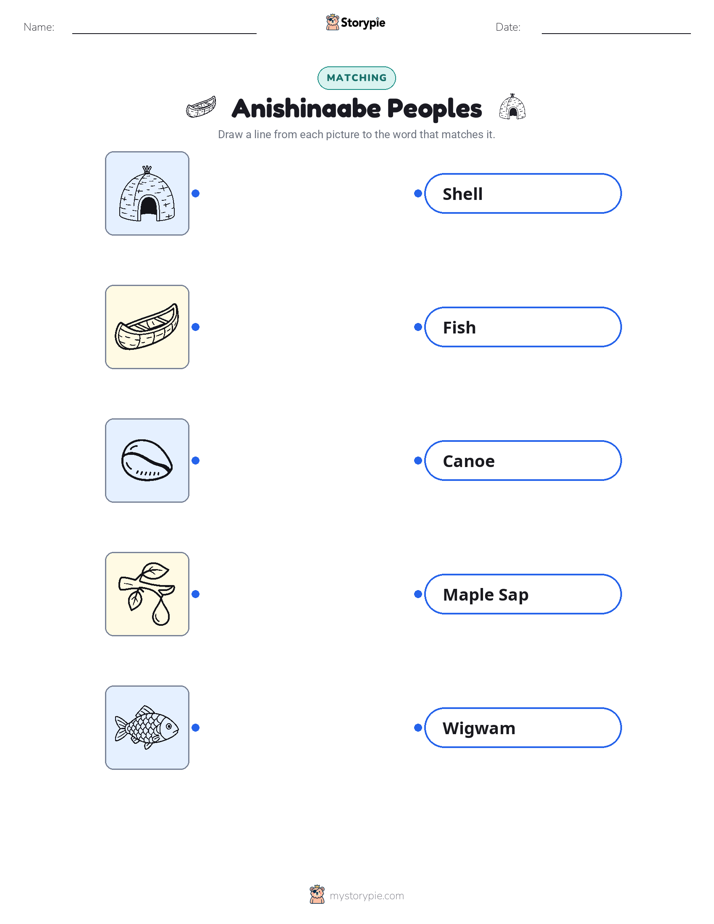
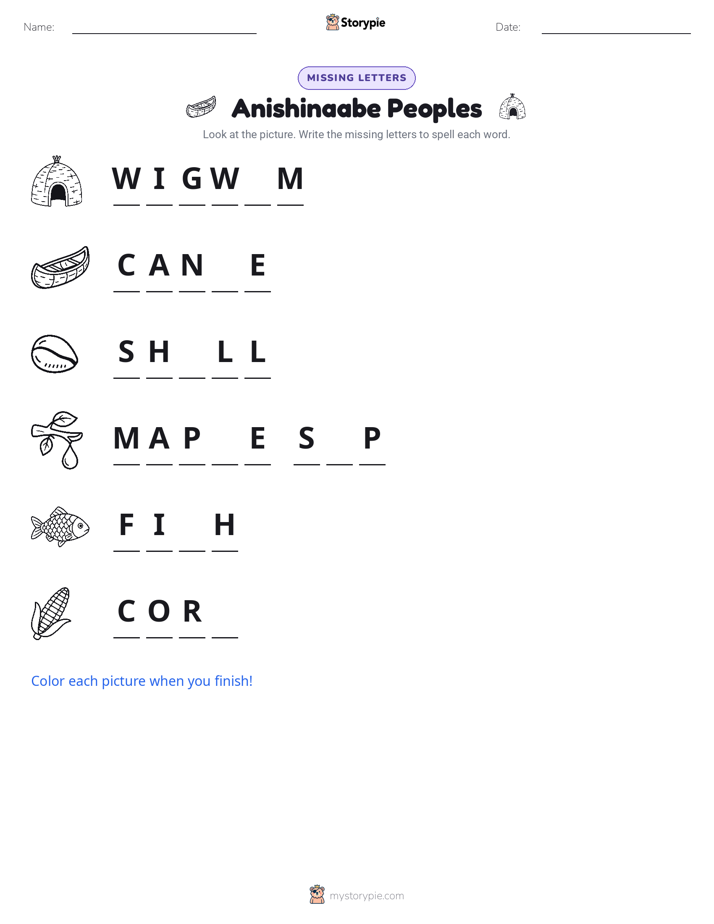
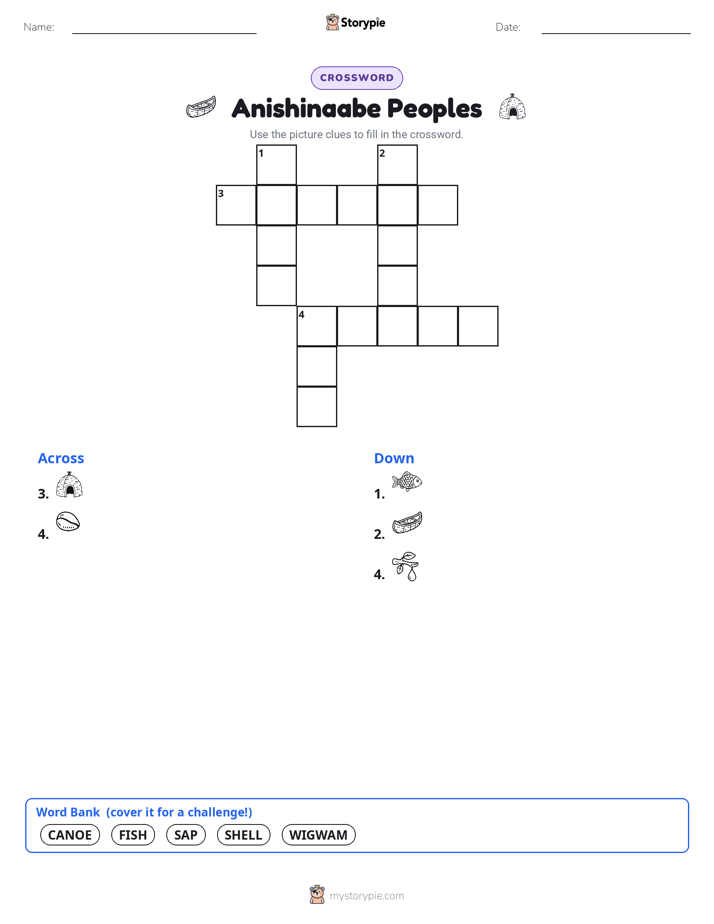
Living here, we have a close relationship with nature. The forests and waters give us many gifts. We use the smooth, white bark from birch trees. We are careful when we take the bark so the tree can stay healthy. With this special bark, we build strong canoes that glide across the water. These canoes help us travel and fish. We also weave the bark into baskets of all sizes. We use them to gather food. A very special food for us is manoomin, which is wild rice. It is a grass that grows right on top of the water. We go out in our canoes to gently gather the grains of rice. Manoomin is an important part of our meals.
We, the Anishinaabe people, are still here today. Our communities are strong in places across the United States and Canada. We work to keep our culture alive for our children. We do this by sharing our traditions. We tell our important stories. Artists in our communities make beautiful beadwork, sewing tiny, colorful beads onto clothing. We also love to gather for powwows. A powwow is a wonderful celebration with drumming, singing, and dancing. It is a time for all of us to come together and share our pride in being Anishinaabe.
We Are the Anishinaabe
Hello! We are the Anishinaabe. Our name means the “Original People.” We are a big family made up of many different groups. Three of these groups are the Ojibwe, the Odawa, and the Potawatomi. For a very, very long time, our home has been near the Great Lakes. These lakes are so big they look like oceans. We live on the land all around these big waters.
Living here, we have a close relationship with nature. The forests and waters give us many gifts. We use the smooth, white bark from birch trees. We are careful when we take the bark so the tree can stay healthy. With this special bark, we build strong canoes that glide across the water. These canoes help us travel and fish. We also weave the bark into baskets of all sizes. We use them to gather food. A very special food for us is manoomin, which is wild rice. It is a grass that grows right on top of the water. We go out in our canoes to gently gather the grains of rice. Manoomin is an important part of our meals.
We, the Anishinaabe people, are still here today. Our communities are strong in places across the United States and Canada. We work to keep our culture alive for our children. We do this by sharing our traditions. We tell our important stories. Artists in our communities make beautiful beadwork, sewing tiny, colorful beads onto clothing. We also love to gather for powwows. A powwow is a wonderful celebration with drumming, singing, and dancing. It is a time for all of us to come together and share our pride in being Anishinaabe.
Wow facts
About
The Anishinaabe are a group of culturally related Indigenous peoples in what is now Canada and the United States, including the Ojibwe, Odawa, and Potawatomi, who share related languages and a common origin story.
Take a Quiz
Question 1 of 3
What does Anishinaabe mean?
Explore next


Want to do even more?
Go beyond exploring. Unlock tools that turn every story into real learning.

Storypie Plus for families
Full stories, quizzes, and printables. Nights and car rides, sorted.
- Unlimited audio stories
- Create Mode: your child stars in the story
- Offline downloads
- Printable worksheets & coloring pages

Why Storypie for Schools
Students engaged. Prep in seconds. Evenings back to you.
- Worksheets & Quizzes
- Classroom Management
- Formative Assessment
- Custom Curriculum & Lesson Plans
- 27 Languages

Why Storypie for Homeschool
Curriculum done. They'll ask for more. Hours back in your day.
- Worksheet Generator
- First-Person Audio Stories
- Built-in Comprehension Quizzes
- Custom Curriculum & Lesson Plans
- Print & Go Activities