English

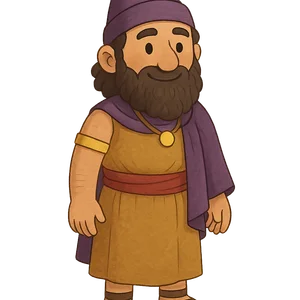
Phoenicians
The Phoenicians were an ancient maritime civilization originating in the Levant region of the eastern…
Reads at Grades 6–8 Listens at Grades 4–8
Print & create
Answer keys·No prep·Free with an account
28 worksheets · answer keys · full story · quiz · Ages 10-12 · CEFR B2
Plus adds 164,000+ more stories in 27 languages, audio for every one, and printables for all of them.
Just want Phoenicians?
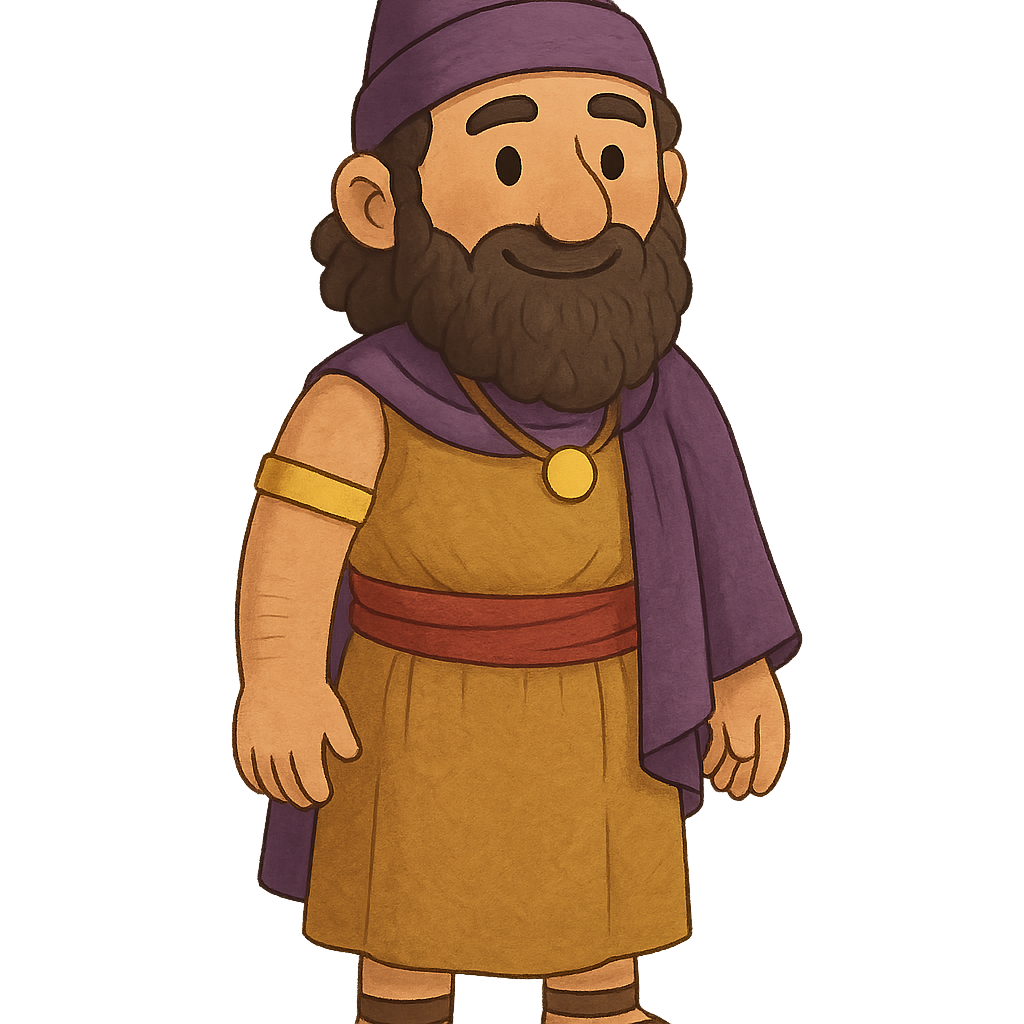
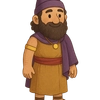
Hello. We are the Phoenicians, and our story is written on the waves of the Mediterranean Sea. Our home was a narrow strip of land along the coast, in the place now called Lebanon. We were not a single, unified empire with one ruler commanding everyone. Instead, our civilization was a collection of powerful and independent city-states. Imagine great coastal cities like Tyre, Sidon, and Byblos, each one a bustling center of trade and culture with its own king and its own laws. While our cities governed themselves, we were bound together by a common culture and a shared language. To ourselves, we were likely known as the Canaanites, the people of this land. The name you may know us by, ‘Phoenicians,’ was given to us by the ancient Greeks. Many historians believe this name was inspired by one of our most famous products: a brilliant purple dye that was prized throughout the ancient world.
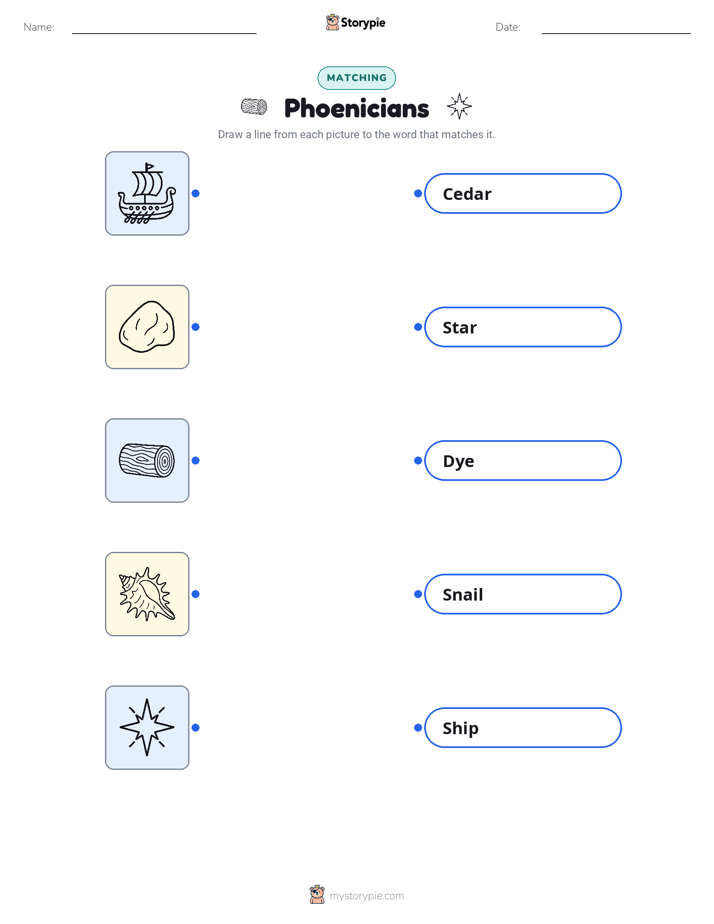
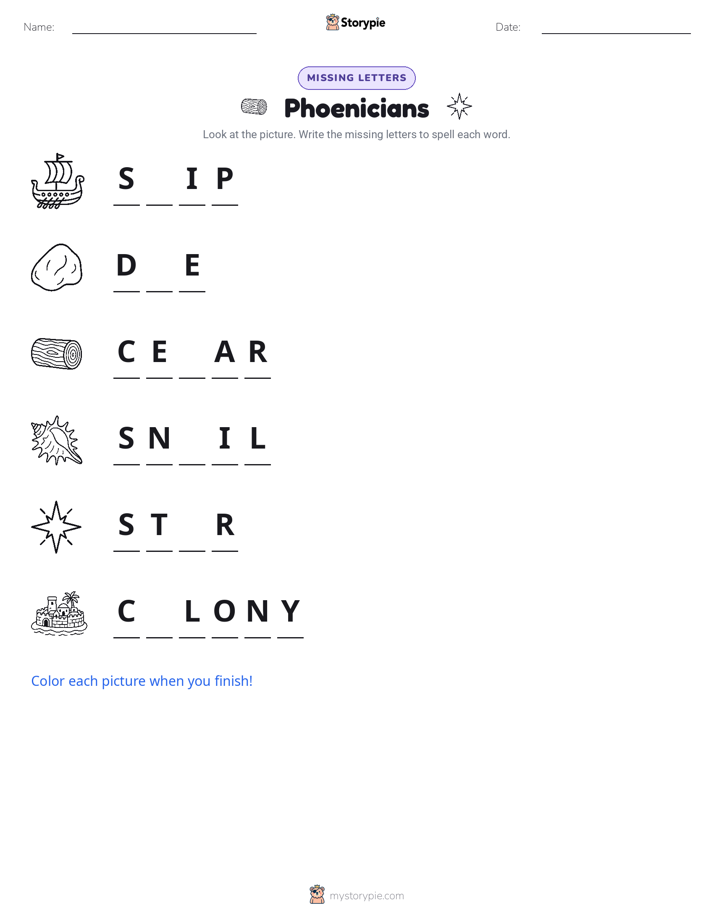
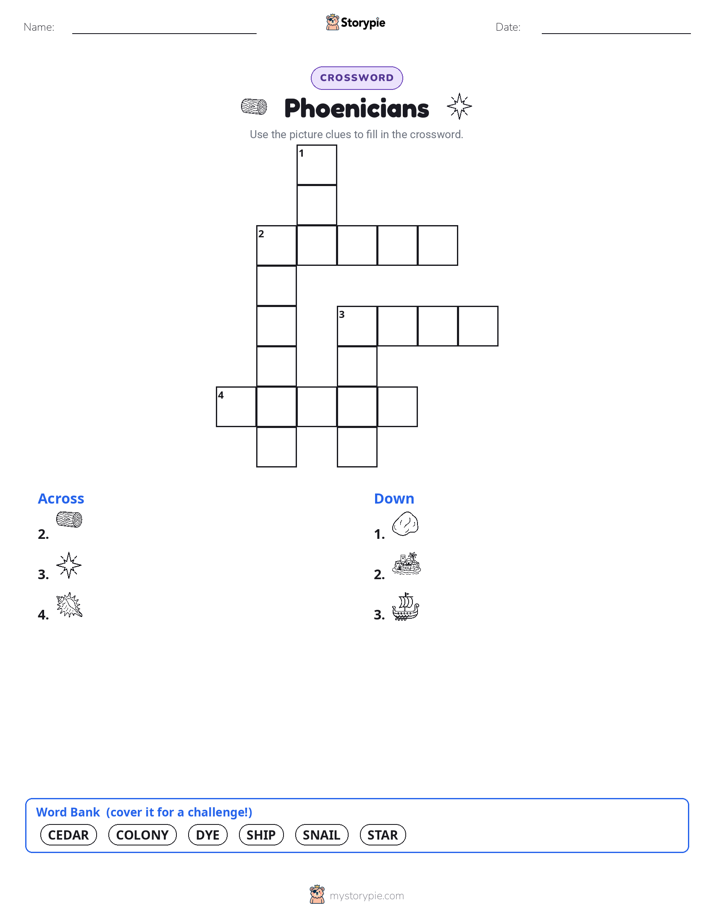
Our world was the sea. From our coastal cities, we looked out upon the vast Mediterranean and saw not a barrier, but a great highway of opportunity. We became expert sailors and shipbuilders, and our skills were unmatched for a very long time. The mountains behind our cities were covered in magnificent cedar trees, and the strong, durable wood from these cedars of Lebanon became the foundation of our maritime power. We built sturdy ships that could handle long voyages and carry heavy loads of cargo. With these vessels, we created a vast trading network that stretched from one end of the Mediterranean to the other. We were pioneers of navigation. While many other sailors hugged the coastlines, afraid to lose sight of land, we learned to look to the sky. We were among the first mariners to use the North Star to guide us, a fixed point in the night sky that allowed us to sail in darkness and in the open ocean with confidence. This skill gave us a tremendous advantage, enabling us to make our journeys faster and more direct. Our mastery of the sea allowed us to establish trading posts and build new cities, which we called colonies, far from our homeland. Our most famous colony was the city of Carthage, founded on the coast of North Africa. In time, Carthage grew so wealthy and powerful that it became a great civilization in its own right, a true daughter of Phoenicia.
We Are the Phoenicians: Sailors of the Purple Sea
Hello. We are the Phoenicians, and our story is written on the waves of the Mediterranean Sea. Our home was a narrow strip of land along the coast, in the place now called Lebanon. We were not a single, unified empire with one ruler commanding everyone. Instead, our civilization was a collection of powerful and independent city-states. Imagine great coastal cities like Tyre, Sidon, and Byblos, each one a bustling center of trade and culture with its own king and its own laws. While our cities governed themselves, we were bound together by a common culture and a shared language. To ourselves, we were likely known as the Canaanites, the people of this land. The name you may know us by, ‘Phoenicians,’ was given to us by the ancient Greeks. Many historians believe this name was inspired by one of our most famous products: a brilliant purple dye that was prized throughout the ancient world.
Our world was the sea. From our coastal cities, we looked out upon the vast Mediterranean and saw not a barrier, but a great highway of opportunity. We became expert sailors and shipbuilders, and our skills were unmatched for a very long time. The mountains behind our cities were covered in magnificent cedar trees, and the strong, durable wood from these cedars of Lebanon became the foundation of our maritime power. We built sturdy ships that could handle long voyages and carry heavy loads of cargo. With these vessels, we created a vast trading network that stretched from one end of the Mediterranean to the other. We were pioneers of navigation. While many other sailors hugged the coastlines, afraid to lose sight of land, we learned to look to the sky. We were among the first mariners to use the North Star to guide us, a fixed point in the night sky that allowed us to sail in darkness and in the open ocean with confidence. This skill gave us a tremendous advantage, enabling us to make our journeys faster and more direct. Our mastery of the sea allowed us to establish trading posts and build new cities, which we called colonies, far from our homeland. Our most famous colony was the city of Carthage, founded on the coast of North Africa. In time, Carthage grew so wealthy and powerful that it became a great civilization in its own right, a true daughter of Phoenicia.
As we traveled, we carried goods that became famous across the known world. None was more sought after than our Tyrian purple dye. This deep, rich color was incredibly difficult and expensive to produce. We made it through a painstaking process using thousands of tiny sea snails. Because it was so rare and vibrant, the purple-colored cloth we sold became a symbol of wealth, power, and royalty. Kings and emperors draped themselves in our fabrics to show their status. But our most important and lasting gift to the world was not a color, but an idea: the alphabet. Before us, writing systems often used hundreds or even thousands of complex symbols to represent words or syllables. Learning to read and write was a task for specially trained scribes. We developed a much simpler system. Our alphabet had just 22 characters, and each symbol represented a single sound. This innovation made writing and reading much easier to learn. For us, as merchants needing to keep records and communicate clearly with trading partners, this was a perfect tool. Our practical alphabet was so effective that it was adopted and adapted by the Greeks. From the Greeks, it was passed to other cultures and eventually became the basis for the very alphabet used to write English today.
Like all civilizations, our time of independence eventually came to an end. Our homeland city-states, which had stood for so long as centers of commerce, were conquered by growing empires. First, the mighty Persians took control of our lands, and later, the brilliant Greek general Alexander the Great swept through the region, bringing our cities into his vast empire. Across the sea, our greatest colony, Carthage, rose to challenge the power of Rome. The two great powers fought a series of massive wars for control of the Mediterranean. In the end, Rome was victorious, and the city of Carthage was utterly destroyed. Though our cities were conquered and our political power faded, our legacy endured. We were the great connectors of the ancient world. Our ships did not just carry wood, metals, and textiles; they carried knowledge, technologies, and new ideas from one culture to another. We helped weave the diverse peoples of the Mediterranean into a shared world. And every time you read or write a word, you are using a system that began with our simple, practical alphabet, a gift from the people of the coast.
Wow facts
About
The Phoenicians were an ancient maritime civilization originating in the Levant region of the eastern Mediterranean, primarily in the coastal areas of modern-day Lebanon, Syria, and northern Israel. They were renowned as traders, sailors, and colonizers, and are credited with creating the Phoenician alphabet.
Take a Quiz
Question 1 of 5
According to the story, what valuable natural resource did the Phoenicians use to build their strong ships?
Explore next




Want to do even more?
Go beyond exploring. Unlock tools that turn every story into real learning.

Storypie Plus for families
Full stories, quizzes, and printables. Nights and car rides, sorted.
- Unlimited audio stories
- Create Mode: your child stars in the story
- Offline downloads
- Printable worksheets & coloring pages

Why Storypie for Schools
Students engaged. Prep in seconds. Evenings back to you.
- Worksheets & Quizzes
- Classroom Management
- Formative Assessment
- Custom Curriculum & Lesson Plans
- 27 Languages

Why Storypie for Homeschool
Curriculum done. They'll ask for more. Hours back in your day.
- Worksheet Generator
- First-Person Audio Stories
- Built-in Comprehension Quizzes
- Custom Curriculum & Lesson Plans
- Print & Go Activities