English

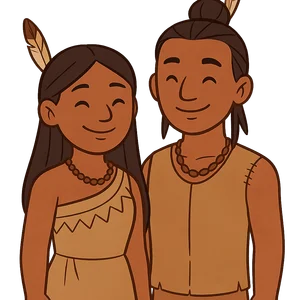
Wampanoag people
The Wampanoag are an Indigenous people of the Northeastern Woodlands of North America.
Reads at Grades 6–8 Listens at Grades 4–8
Print & create
Answer keys·No prep·Free with an account
28 worksheets · answer keys · full story · quiz · Ages 10-12 · CEFR B2
Plus adds 116,000+ more stories in 27 languages, audio for every one, and printables for all of them.
Just want Wampanoag people?
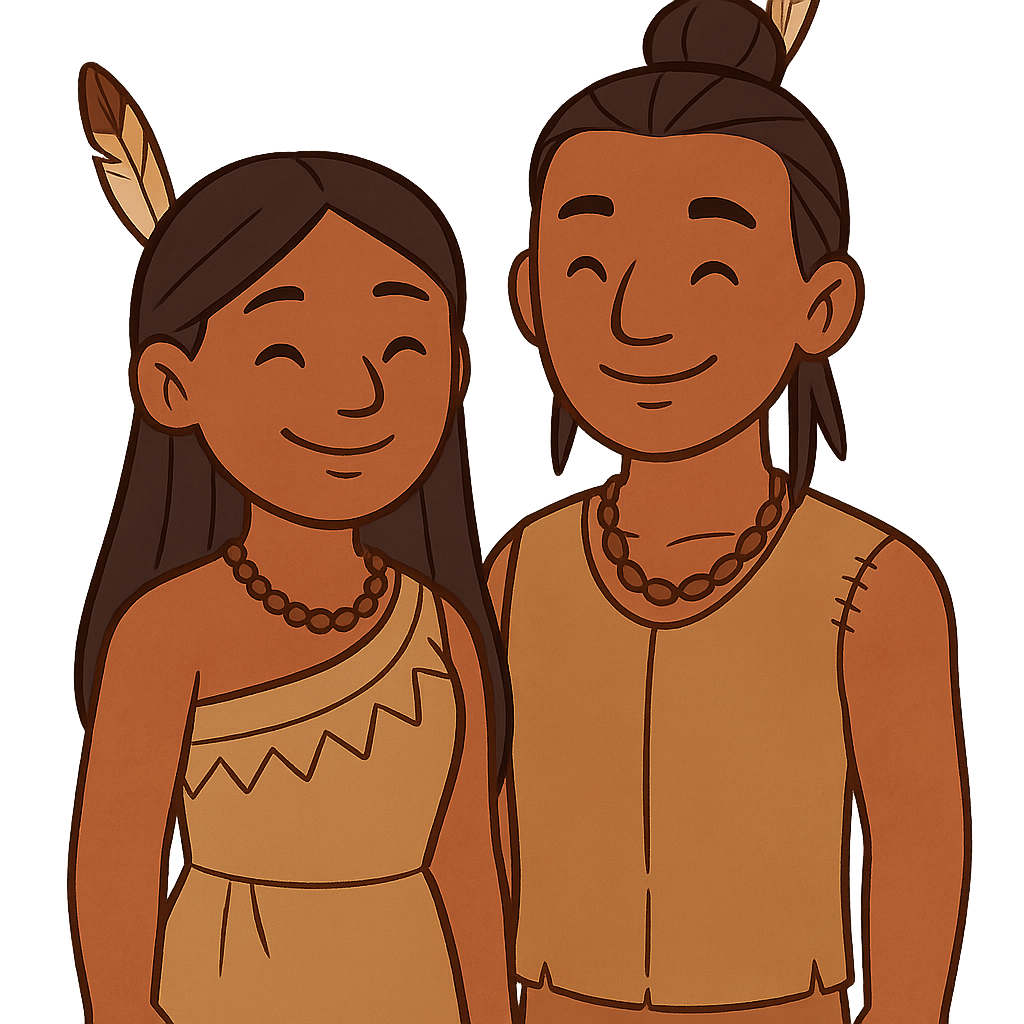
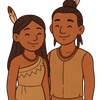
Kuweeqâhsun. Welcome. We are the Wampanoag, and our story is woven into the land we have called home for more than 12,000 years. Our name in our own language means People of the First Light. It is a name that connects us to our home, a beautiful stretch of coast and forest where the sun first touches the land each morning. This place, now known as southeastern Massachusetts and eastern Rhode Island, has always been the center of our world. It includes the islands of Noepe, which is called Martha’s Vineyard today, and Nantucket. For thousands of years, we have greeted the dawn here, and our lives have been shaped by the turning of the seasons and the gifts of the world around us.
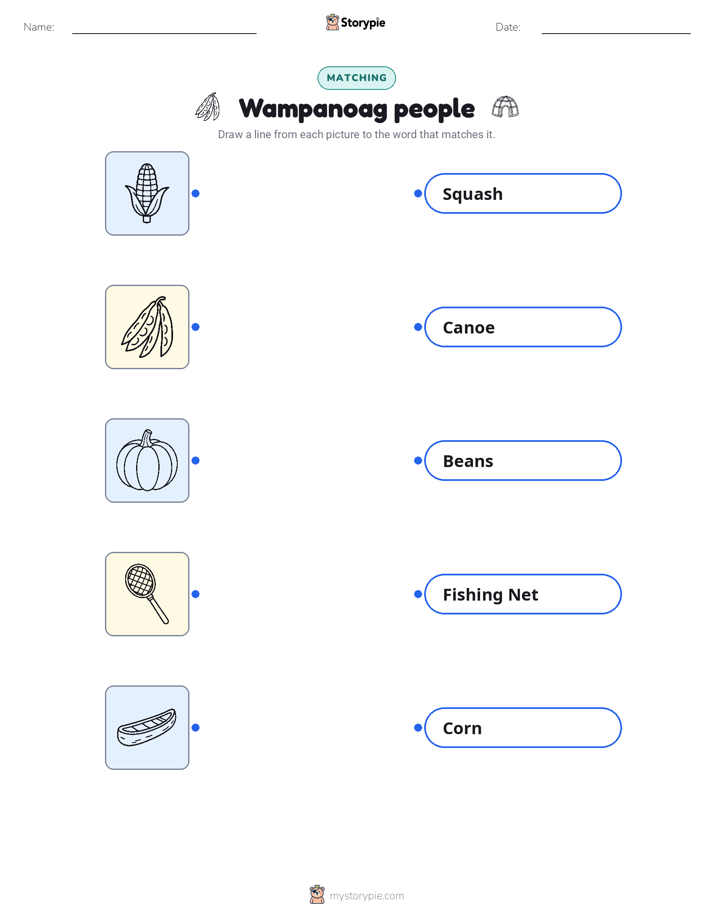
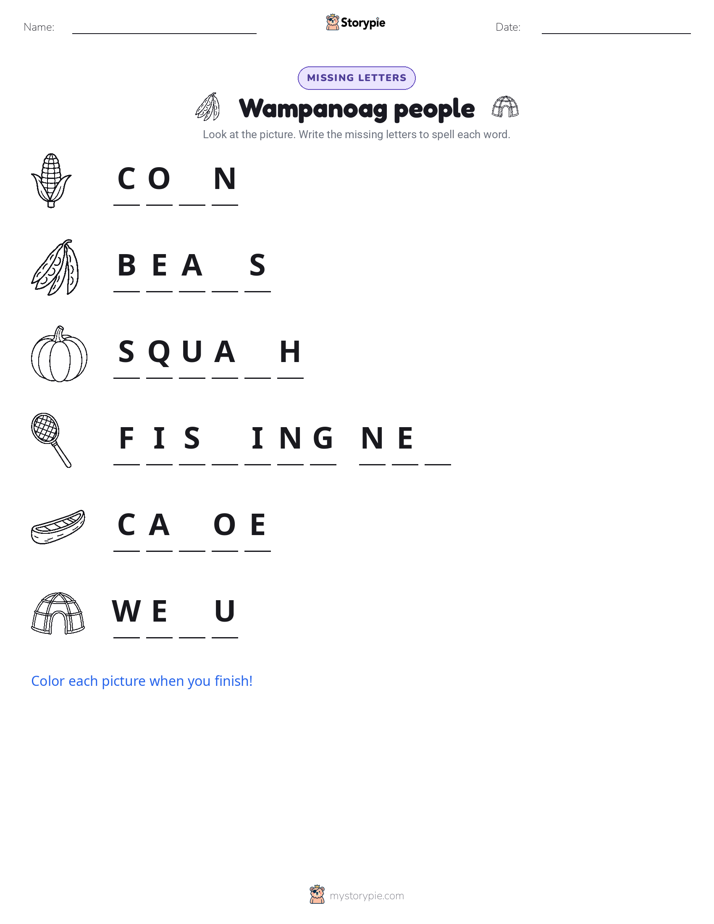
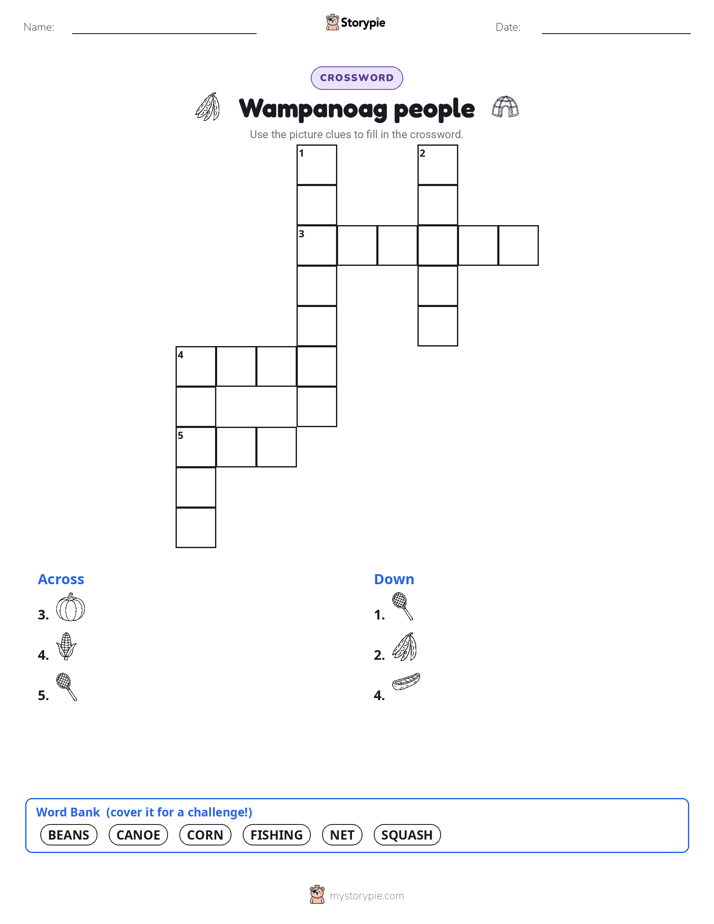
Our connection to the land taught us to live in a careful rhythm, moving with the seasons to ensure we lived in harmony with our environment. This way of life was practical and deeply spiritual. When the weather grew warm and the days long, our communities would move toward the coast. The summer was a time of abundance from the sea, and we spent our days fishing in the saltwater bays and estuaries. It was also the season for farming. In our fields, we cultivated the crops that sustained us, especially the Three Sisters: corn, beans, and squash. These plants were the foundation of our diet and our agriculture, growing together just as our people lived together.
As the air turned crisp and the leaves fell, our lives would shift. In the winter, we moved inland, away from the harsh winds of the coast and into the shelter of the forests. This was the hunting season, a time to seek deer and other game that provided food and materials for clothing and tools. To protect us from the cold, we built strong and warm homes called wetus. Using flexible saplings for the frame and covering them with layers of bark, we created sturdy, dome-shaped shelters that were perfectly suited for the New England winters. This seasonal journey between the coast and the forest was a pattern that defined our lives for countless generations, ensuring we had what we needed while respecting the land.
We Are the People of the First Light
Kuweeqâhsun. Welcome. We are the Wampanoag, and our story is woven into the land we have called home for more than 12,000 years. Our name in our own language means People of the First Light. It is a name that connects us to our home, a beautiful stretch of coast and forest where the sun first touches the land each morning. This place, now known as southeastern Massachusetts and eastern Rhode Island, has always been the center of our world. It includes the islands of Noepe, which is called Martha’s Vineyard today, and Nantucket. For thousands of years, we have greeted the dawn here, and our lives have been shaped by the turning of the seasons and the gifts of the world around us.
Our connection to the land taught us to live in a careful rhythm, moving with the seasons to ensure we lived in harmony with our environment. This way of life was practical and deeply spiritual. When the weather grew warm and the days long, our communities would move toward the coast. The summer was a time of abundance from the sea, and we spent our days fishing in the saltwater bays and estuaries. It was also the season for farming. In our fields, we cultivated the crops that sustained us, especially the Three Sisters: corn, beans, and squash. These plants were the foundation of our diet and our agriculture, growing together just as our people lived together.
As the air turned crisp and the leaves fell, our lives would shift. In the winter, we moved inland, away from the harsh winds of the coast and into the shelter of the forests. This was the hunting season, a time to seek deer and other game that provided food and materials for clothing and tools. To protect us from the cold, we built strong and warm homes called wetus. Using flexible saplings for the frame and covering them with layers of bark, we created sturdy, dome-shaped shelters that were perfectly suited for the New England winters. This seasonal journey between the coast and the forest was a pattern that defined our lives for countless generations, ensuring we had what we needed while respecting the land.
We were not one single group but a great Wampanoag Nation, made up of many distinct communities. Each of our communities had its own leader, a sachem, who guided the people. Though our communities were independent, we were all united as a nation, sharing a common language, culture, and history. This unity gave us strength. For thousands of years, this was our world. Then, in 1620, that world began to change when English newcomers arrived on a ship. These people, who became known as the Pilgrims, were unprepared for the harsh winter and the new environment.
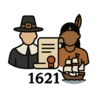
Our great sachem, Massasoit, saw the newcomers and made a difficult decision. He chose to form an alliance with them. We shared our knowledge of the land, teaching them how to plant and where to fish. In 1621, after their first successful harvest, we shared a feast with them, a moment of cooperation between our peoples. However, this peace was fragile. In the years that followed, more and more English settlers arrived. They did not share our view of the land as a resource for all to use respectfully. They began to take our lands, pushing our communities into smaller and smaller areas.
The alliance that Massasoit had built eventually broke apart. The growing tension and the constant loss of our homeland led to a terrible conflict. In 1675, war erupted, a conflict that became known as King Philip's War. It was a devastating time for our people. The war brought immense suffering, and we also endured terrible losses from new diseases that the Europeans brought with them. Our population was greatly reduced, and our way of life was forever changed. But even through this incredible hardship, we did not break. We survived.
Today, the Wampanoag Nation continues. Our communities are strong, and we are still here in our ancestral homelands. We are proud of our history and our resilience. A vital part of our cultural strength comes from bringing our language back to life. For many years, our Wôpanâak language was not spoken, but we are working hard to reclaim it, teaching it to our children and speaking it in our communities once more. By doing this and by continuing our traditions, we are ensuring that our culture not only survives but thrives for all the generations to come. We are still the People of the First Light, and we greet the dawn in our homeland, just as our ancestors did for thousands of years.
Wow facts
About
The Wampanoag are an Indigenous people of the Northeastern Woodlands of North America. They have inhabited their ancestral lands in southeastern Massachusetts and Rhode Island for between 12,000 and 15,000 years and are known for their historic encounter with the Mayflower Pilgrims.
Take a Quiz
Question 1 of 5
What is the meaning of the name 'Wampanoag'?
Explore next
Want to do even more?
Go beyond exploring. Unlock tools that turn every story into real learning.

Storypie Plus for families
Full stories, quizzes, and printables. Nights and car rides, sorted.
- Unlimited audio stories
- Create Mode: your child stars in the story
- Offline downloads
- Printable worksheets & coloring pages

Why Storypie for Schools
Students engaged. Prep in seconds. Evenings back to you.
- Worksheets & Quizzes
- Classroom Management
- Formative Assessment
- Custom Curriculum & Lesson Plans
- 27 Languages

Why Storypie for Homeschool
Curriculum done. They'll ask for more. Hours back in your day.
- Worksheet Generator
- First-Person Audio Stories
- Built-in Comprehension Quizzes
- Custom Curriculum & Lesson Plans
- Print & Go Activities