English

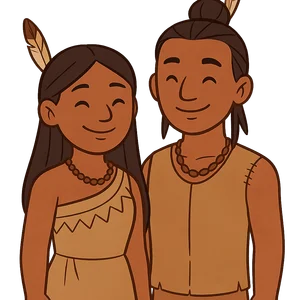
Wampanoag people
The Wampanoag are an Indigenous people of the Northeastern Woodlands of North America.
Reads at Grades K-2 Listens at K–3
Print & create
Answer keys·No prep·Free with an account
28 worksheets · answer keys · full story · quiz · Ages 6-8 · CEFR A2
Plus adds 116,000+ more stories in 27 languages, audio for every one, and printables for all of them.
Just want Wampanoag people?
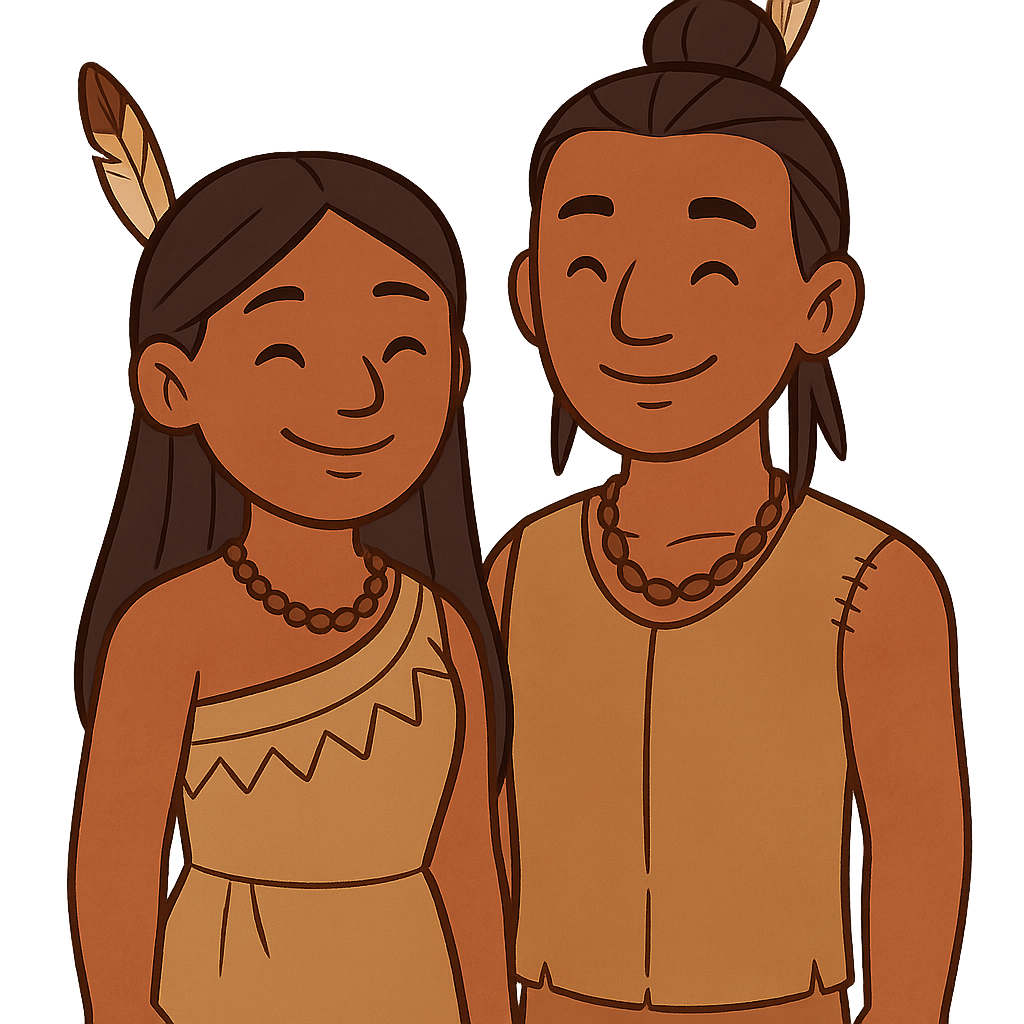
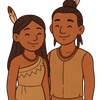
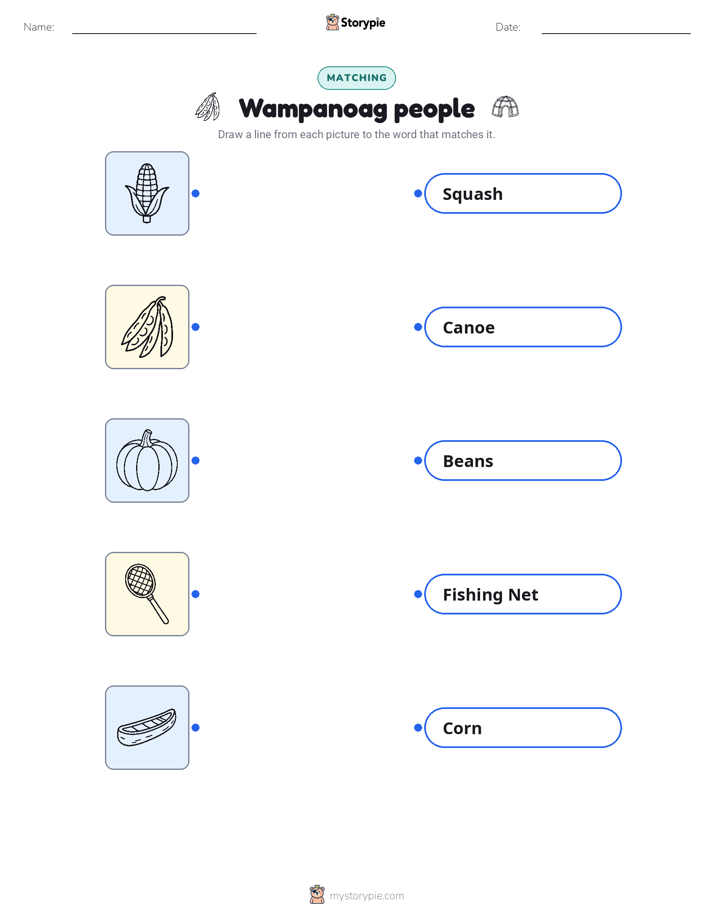
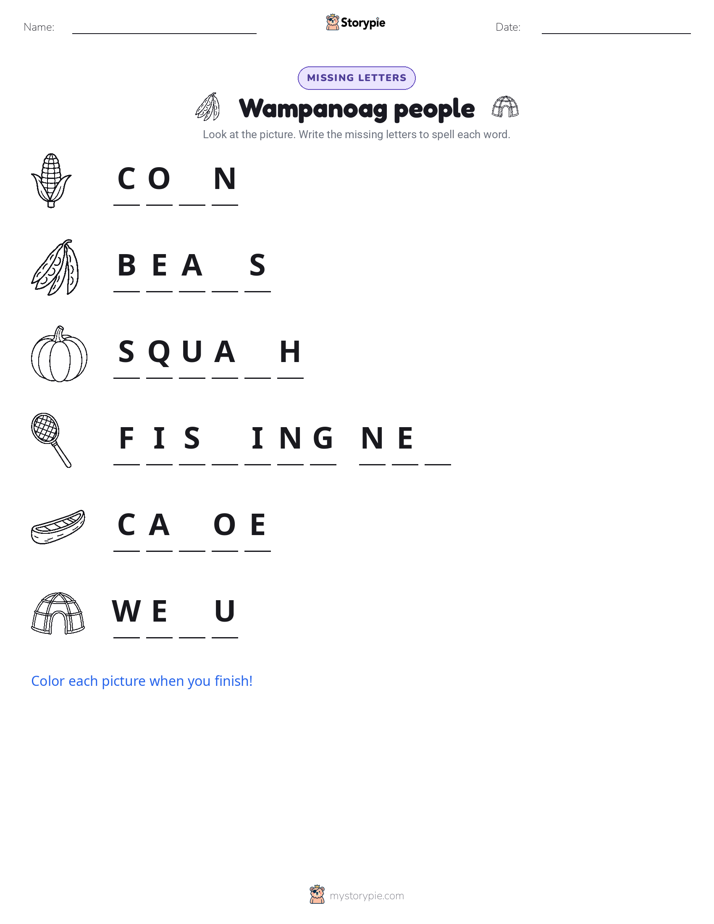
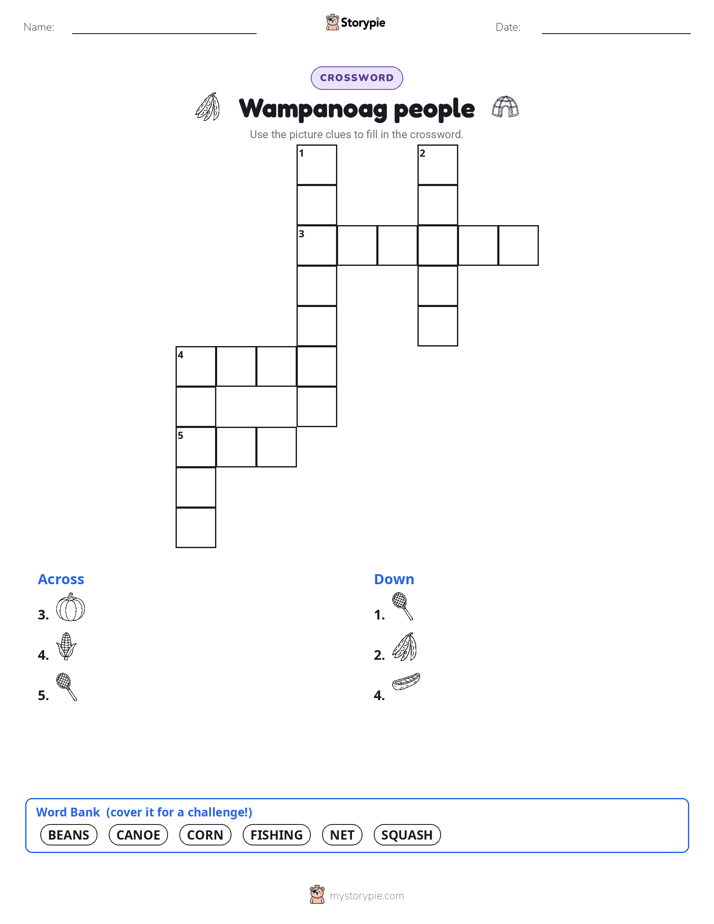
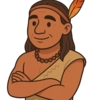
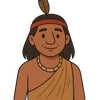
Hello! We are the Wampanoag. Our name means 'People of the First Light' because our homeland is where the sun first touches the land each morning. For thousands and thousands of years, our ancestors have lived here, in the places now called Massachusetts and Rhode Island. Our lives followed the beautiful rhythm of the seasons. In the warm summer, we lived near the coast in our special homes called wetus. These round, sturdy homes were cleverly made from wood and bark to keep us comfortable and safe. By the ocean, we fished in the sparkling waters and farmed our gardens. We grew corn, beans, and squash, which were important foods for our families. When the air turned chilly and winter arrived, we moved our communities inland. In the quiet forests, we built our warm winter homes and hunted for deer and other animals. Moving with the seasons allowed us to always have what we needed from the land and sea.
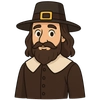
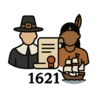
One day, everything began to change. New people arrived on a big ship. In the year 1620, a group known as the Pilgrims landed in our homeland. They were not prepared for the cold winter and did not know how to find or grow food here. Our great leader, a sachem named Massasoit Ousamequin, saw that they were struggling and would not make it on their own. He made a thoughtful and important choice to help them survive. One of our people, Tisquantum, had learned their language and was able to teach them many things. He showed the new arrivals how to plant corn and other crops that grew well in our soil. Because of our help, the Pilgrims had a successful harvest. In 1621, we all came together for a shared harvest feast to celebrate their survival. But as time went on, more and more settlers came from across the ocean. This brought great changes and difficult times for our people. New sicknesses spread through our villages, and there were serious conflicts and disagreements over who would use and control the land.
We Are the Wampanoag, People of the First Light
Hello! We are the Wampanoag. Our name means 'People of the First Light' because our homeland is where the sun first touches the land each morning. For thousands and thousands of years, our ancestors have lived here, in the places now called Massachusetts and Rhode Island. Our lives followed the beautiful rhythm of the seasons. In the warm summer, we lived near the coast in our special homes called wetus. These round, sturdy homes were cleverly made from wood and bark to keep us comfortable and safe. By the ocean, we fished in the sparkling waters and farmed our gardens. We grew corn, beans, and squash, which were important foods for our families. When the air turned chilly and winter arrived, we moved our communities inland. In the quiet forests, we built our warm winter homes and hunted for deer and other animals. Moving with the seasons allowed us to always have what we needed from the land and sea.
One day, everything began to change. New people arrived on a big ship. In the year 1620, a group known as the Pilgrims landed in our homeland. They were not prepared for the cold winter and did not know how to find or grow food here. Our great leader, a sachem named Massasoit Ousamequin, saw that they were struggling and would not make it on their own. He made a thoughtful and important choice to help them survive. One of our people, Tisquantum, had learned their language and was able to teach them many things. He showed the new arrivals how to plant corn and other crops that grew well in our soil. Because of our help, the Pilgrims had a successful harvest. In 1621, we all came together for a shared harvest feast to celebrate their survival. But as time went on, more and more settlers came from across the ocean. This brought great changes and difficult times for our people. New sicknesses spread through our villages, and there were serious conflicts and disagreements over who would use and control the land.
Even after all those challenges, it is important for you to know that we are still here. We, the Wampanoag people, are a strong and vibrant community today. Our connection to our homeland has never been broken. There are several modern Wampanoag tribes, like the Mashpee Wampanoag and the Aquinnah Wampanoag. We live modern lives, going to school and work just like everyone else. At the same time, we work hard to keep our culture alive for our children and grandchildren. We are bringing back our language so that more of us can speak it every day. We practice our important traditions, tell our stories, and make sure our children learn about our proud and long history as the People of the First Light.
Wow facts
About
The Wampanoag are an Indigenous people of the Northeastern Woodlands of North America. They have inhabited their ancestral lands in southeastern Massachusetts and Rhode Island for between 12,000 and 15,000 years and are known for their historic encounter with the Mayflower Pilgrims.
Take a Quiz
Question 1 of 4
What does the name 'Wampanoag' mean in the story?
Explore next
Want to do even more?
Go beyond exploring. Unlock tools that turn every story into real learning.

Storypie Plus for families
Full stories, quizzes, and printables. Nights and car rides, sorted.
- Unlimited audio stories
- Create Mode: your child stars in the story
- Offline downloads
- Printable worksheets & coloring pages

Why Storypie for Schools
Students engaged. Prep in seconds. Evenings back to you.
- Worksheets & Quizzes
- Classroom Management
- Formative Assessment
- Custom Curriculum & Lesson Plans
- 27 Languages

Why Storypie for Homeschool
Curriculum done. They'll ask for more. Hours back in your day.
- Worksheet Generator
- First-Person Audio Stories
- Built-in Comprehension Quizzes
- Custom Curriculum & Lesson Plans
- Print & Go Activities