English

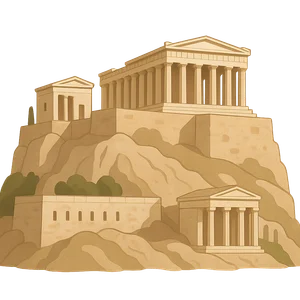
Acropolis of Athens
An ancient citadel located on a rocky outcrop above the city of Athens, Greece…
Reads at Grades 6–8 Listens at Grades 4–8
Print & create
Answer keys·No prep·Free with an account
28 worksheets · answer keys · full story · quiz · Ages 10-12 · CEFR B2
Plus adds 244,000+ more stories in 27 languages, audio for every one, and printables for all of them.
Just want Acropolis of Athens?
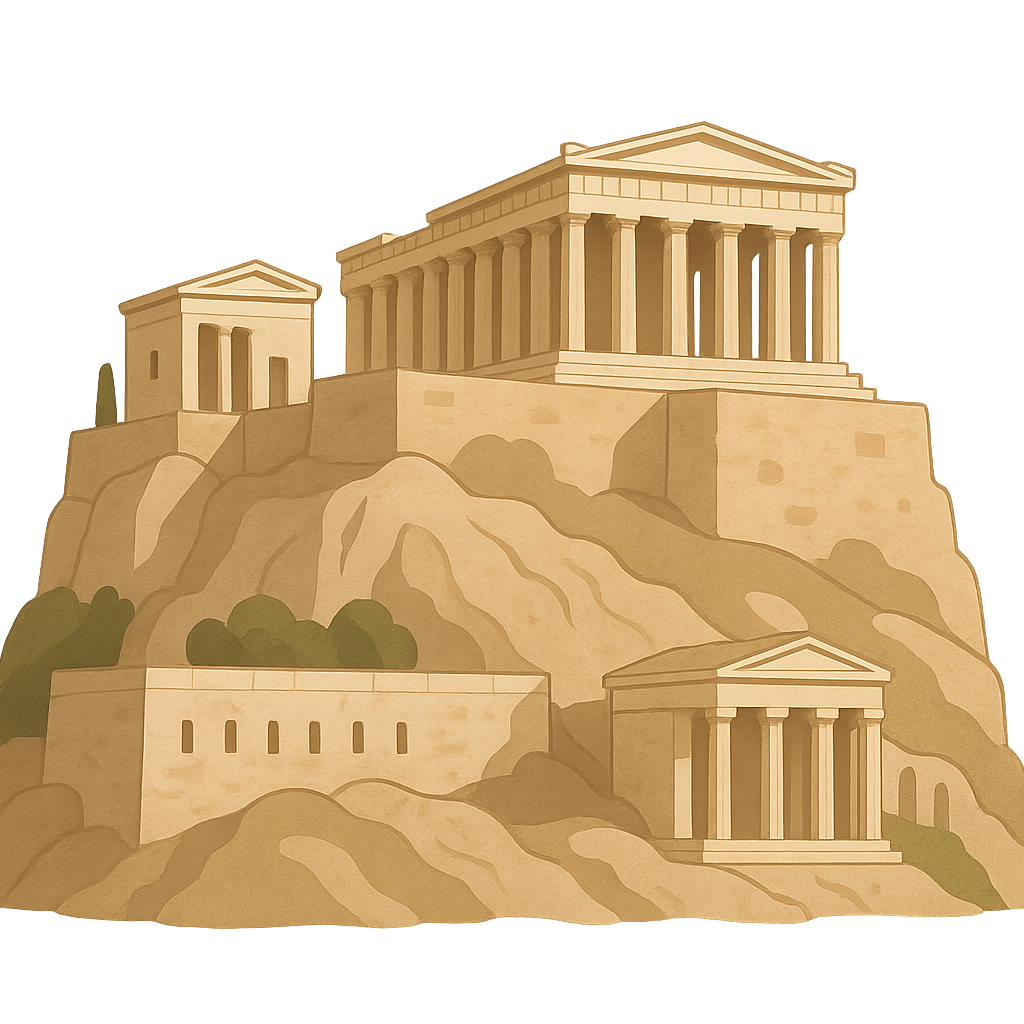
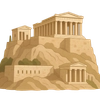
The warm Greek sun has kissed my marble skin for millennia. From my high perch, I feel the gentle Aegean breeze sweep across my weathered stones as I watch the city below me hum with life. I have seen it transform from a small cluster of homes into a sprawling, modern metropolis. The sounds have changed over the centuries, from the chatter of ancient marketplaces to the distant hum of traffic, but the murmur of human voices has been constant. People from every corner of the world climb my slopes, their faces filled with wonder as they walk among my temples. They come to hear the stories etched into my very being, stories of gods and heroes, of democracy and war, of ruin and rebirth. I am the Acropolis of Athens, the Sacred Rock that has watched over this city for thousands of years.
My story begins not with builders, but with nature itself. I was born a high, flat-topped rock, a natural fortress rising steeply from the plains of Attica. The earliest people, back in the Neolithic period, knew this was a safe place to live. Much later, in the 13th century BCE, powerful Mycenaean kings built a grand palace here, surrounding it with massive defensive walls made of giant limestone blocks. For centuries, I was the heart of a powerful kingdom. But my history has been defined by fire as much as by stone. The most critical turning point came in 480 BCE, when the vast Persian army invaded Greece. They climbed my slopes, overwhelmed my defenders, and burned everything to the ground. The temples, the statues, the homes—all were reduced to ash and rubble. When the Athenians returned, they found their sacred sanctuary in ruins. It was a moment of utter devastation, but also one of fierce resolve. From those ashes, an idea was born: to rebuild me, not as I was, but as something the world had never seen before.
The Sacred Rock of Athens
The warm Greek sun has kissed my marble skin for millennia. From my high perch, I feel the gentle Aegean breeze sweep across my weathered stones as I watch the city below me hum with life. I have seen it transform from a small cluster of homes into a sprawling, modern metropolis. The sounds have changed over the centuries, from the chatter of ancient marketplaces to the distant hum of traffic, but the murmur of human voices has been constant. People from every corner of the world climb my slopes, their faces filled with wonder as they walk among my temples. They come to hear the stories etched into my very being, stories of gods and heroes, of democracy and war, of ruin and rebirth. I am the Acropolis of Athens, the Sacred Rock that has watched over this city for thousands of years.
My story begins not with builders, but with nature itself. I was born a high, flat-topped rock, a natural fortress rising steeply from the plains of Attica. The earliest people, back in the Neolithic period, knew this was a safe place to live. Much later, in the 13th century BCE, powerful Mycenaean kings built a grand palace here, surrounding it with massive defensive walls made of giant limestone blocks. For centuries, I was the heart of a powerful kingdom. But my history has been defined by fire as much as by stone. The most critical turning point came in 480 BCE, when the vast Persian army invaded Greece. They climbed my slopes, overwhelmed my defenders, and burned everything to the ground. The temples, the statues, the homes—all were reduced to ash and rubble. When the Athenians returned, they found their sacred sanctuary in ruins. It was a moment of utter devastation, but also one of fierce resolve. From those ashes, an idea was born: to rebuild me, not as I was, but as something the world had never seen before.
That idea blossomed into what is now called the Golden Age of Athens, during the 5th century BCE. A brilliant statesman named Pericles led the city, and he had a vision. He believed that Athens deserved a monument that would reflect its power, its democratic ideals, and its devotion to its patron goddess, Athena. His ambitious building program began in 447 BCE, and it drew the most talented artists and thinkers of the age to my slopes. The centerpiece of this grand project was the Parthenon, a magnificent temple dedicated to Athena. Designed by the architects Ictinus and Callicrates, it was built between 447 and 438 BCE. It wasn't just a place of worship; it was also the city's treasury. Inside its main chamber stood a breathtaking statue of Athena, crafted by the master sculptor Phidias from gold and ivory. It towered nearly forty feet high, a shimmering symbol of Athenian glory. To enter my sacred grounds, visitors passed through a monumental gateway called the Propylaea, an architectural marvel designed by Mnesicles that was started in 437 BCE. Its gleaming marble columns created a majestic entrance, preparing all who entered for the wonders within. Nearby, perched on a rocky outcrop, stood the small, elegant Temple of Athena Nike, built around 420 BCE to honor the goddess as the bringer of victory. And finally, there was the Erechtheion, built between 421 and 406 BCE. It was a unique temple with a complex design, but its most famous feature is the Porch of the Maidens, where six beautiful statues of women, known as the Caryatids, serve as supporting columns. For a brief, shining moment in history, I was the most spectacular place on Earth.
My Golden Age, however, was just one chapter in a very long book. As empires rose and fell, my purpose and my appearance changed with them. In the 6th century CE, after Athens became part of the Byzantine Empire, the Parthenon was converted into a Christian church dedicated to the Virgin Mary. Its pagan statues were removed, and its inner layout was altered. Nearly a thousand years later, in the 15th century, the Ottoman Empire conquered Greece, and the Parthenon was transformed yet again, this time into a mosque, with a minaret added to its structure. The most devastating moment of my long life came on September 26th, 1687. During a siege by the Venetians, the Ottoman defenders used the Parthenon to store their gunpowder. A Venetian cannonball struck the building, igniting the explosives. The resulting blast tore through the heart of the temple, destroying its roof and much of its interior. It was a wound that would never fully heal. It was during this period of Ottoman rule that many of my remaining sculptures were removed and taken abroad. But a new chapter began in the early 1830s, when Greece won its independence. I became a powerful symbol of the new nation's ancient heritage and its fight for freedom, the very soul of the Greek people made manifest in stone.
Today, I am a survivor. The scars of time, war, and earthquakes are written all over me, but my spirit remains unbroken. A massive and careful restoration project began in 1975 to preserve what remains of my magnificent structures. Teams of experts work tirelessly to study every fragment, using advanced technology to protect me from modern pollution and to strengthen my ancient marble. In 1987, the world recognized my importance by naming me a UNESCO World Heritage site, a treasure belonging to all of humanity. I am no longer a fortress or a place of worship for a single goddess. I am a teacher. My stones speak of the birth of democracy, the heights of human creativity, and the endless cycle of history. I connect people from every culture and every generation, reminding them of what we are capable of achieving. I stand proudly, sharing my stories of resilience and beauty with every visitor who walks my ancient paths, a timeless symbol of a glorious past and an enduring inspiration for the future.
Wow facts
About
An ancient citadel located on a rocky outcrop above the city of Athens, Greece, containing the remains of several historically significant ancient buildings, the most famous of which is the Parthenon.
Take a Quiz
Question 1 of 5
What is the central theme of the story told by the Acropolis?
Explore next




Want to do even more?
Go beyond exploring. Unlock tools that turn every story into real learning.

Storypie Plus for families
Full stories, quizzes, and printables. Nights and car rides, sorted.
- Unlimited audio stories
- Create Mode: your child stars in the story
- Offline downloads
- Printable worksheets & coloring pages

Why Storypie for Schools
Students engaged. Prep in seconds. Evenings back to you.
- Worksheets & Quizzes
- Classroom Management
- Formative Assessment
- Custom Curriculum & Lesson Plans
- 27 Languages

Why Storypie for Homeschool
Curriculum done. They'll ask for more. Hours back in your day.
- Worksheet Generator
- First-Person Audio Stories
- Built-in Comprehension Quizzes
- Custom Curriculum & Lesson Plans
- Print & Go Activities