English

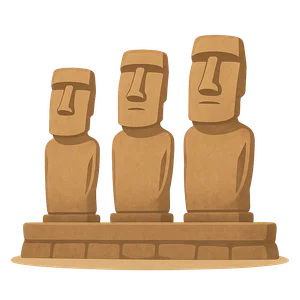
Easter Island
A remote volcanic island in Polynesia, a special territory of Chile…
Reads at Grades 6–8 Listens at Grades 4–8
Print & create
Answer keys·No prep·Free with an account
28 worksheets · answer keys · full story · quiz · Ages 10-12 · CEFR B2
Plus adds 164,000+ more stories in 27 languages, audio for every one, and printables for all of them.
Just want Easter Island?
I am a whisper on the wind, a lonely voice in the vast, deep blue of the Pacific Ocean. For thousands of years, my only companions were the seabirds that nested on my cliffs and the rhythmic crash of waves against my volcanic shores. The sea spray is a constant mist on my skin, and the sun warms my rocky slopes. From my hills, you can see nothing but an endless horizon of water in every direction. Standing watch over this solitude are hundreds of giant stone faces, their silent, knowing eyes gazing inland, their backs to the sea that brought both life and change to my shores. They are my children, my guardians, and my story. I am Rapa Nui, a speck of volcanic land born from fire. But you might know me by the name a visitor gave me long ago: Easter Island.
My story truly begins with the first human footprints pressed into my soil. Around the year 1200 CE, after a journey of unimaginable length and courage, the first people arrived. They were masterful Polynesian voyagers, who had sailed across the world’s largest ocean in double-hulled canoes, with only the stars, the sun, and the subtle language of the ocean currents to guide them. They found in me a new home, a place to build a life far from any other land. They called themselves the Rapa Nui people, and they became my people. I watched as they built villages with stone houses shaped like boats, planted gardens of sweet potatoes and taro, and developed a vibrant and complex culture. Their songs and stories filled my air, their ceremonies honored the land, and their lives became deeply intertwined with mine. I was no longer a lonely island, but a thriving world.
The Stone Giants of Rapa Nui
I am a whisper on the wind, a lonely voice in the vast, deep blue of the Pacific Ocean. For thousands of years, my only companions were the seabirds that nested on my cliffs and the rhythmic crash of waves against my volcanic shores. The sea spray is a constant mist on my skin, and the sun warms my rocky slopes. From my hills, you can see nothing but an endless horizon of water in every direction. Standing watch over this solitude are hundreds of giant stone faces, their silent, knowing eyes gazing inland, their backs to the sea that brought both life and change to my shores. They are my children, my guardians, and my story. I am Rapa Nui, a speck of volcanic land born from fire. But you might know me by the name a visitor gave me long ago: Easter Island.
My story truly begins with the first human footprints pressed into my soil. Around the year 1200 CE, after a journey of unimaginable length and courage, the first people arrived. They were masterful Polynesian voyagers, who had sailed across the world’s largest ocean in double-hulled canoes, with only the stars, the sun, and the subtle language of the ocean currents to guide them. They found in me a new home, a place to build a life far from any other land. They called themselves the Rapa Nui people, and they became my people. I watched as they built villages with stone houses shaped like boats, planted gardens of sweet potatoes and taro, and developed a vibrant and complex culture. Their songs and stories filled my air, their ceremonies honored the land, and their lives became deeply intertwined with mine. I was no longer a lonely island, but a thriving world.
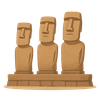
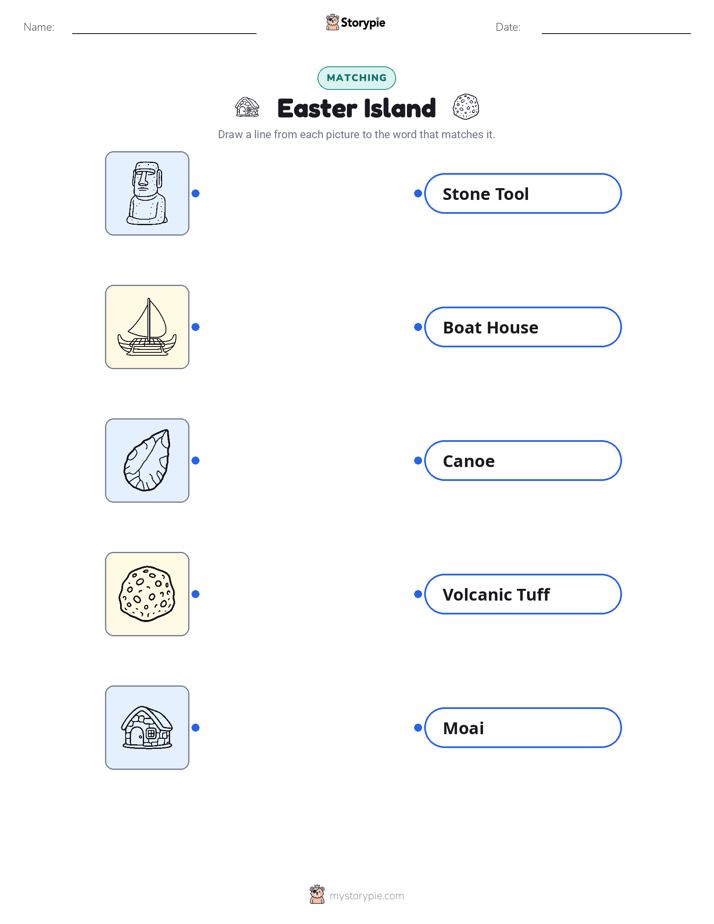
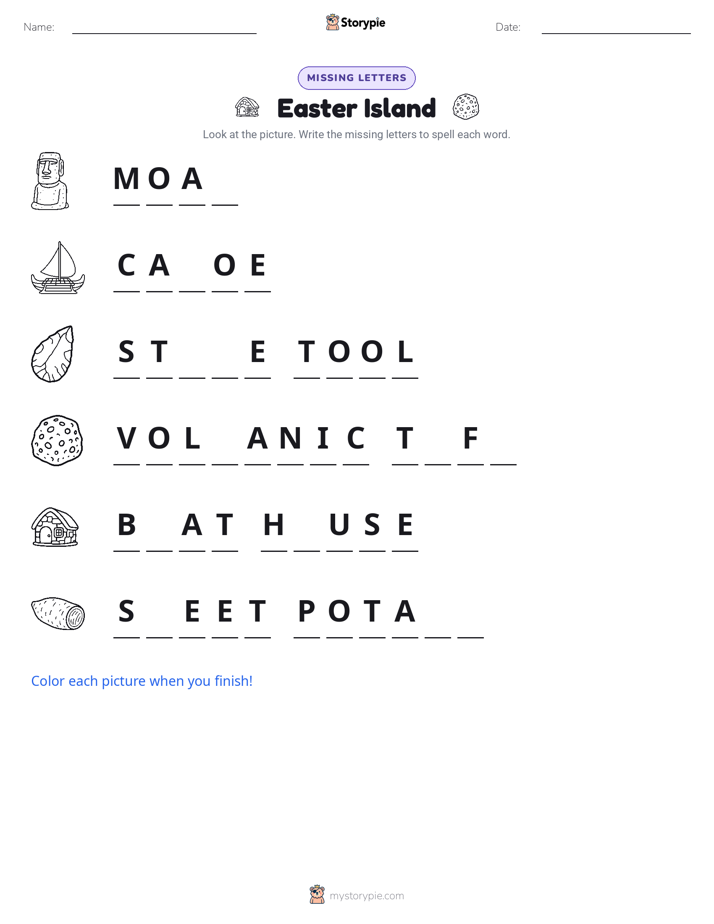
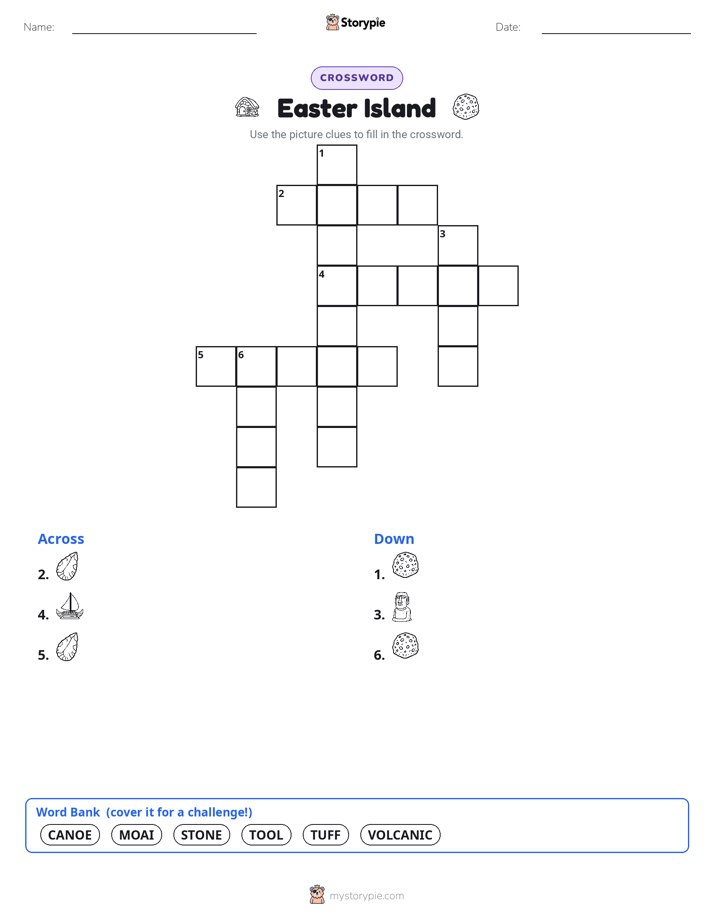
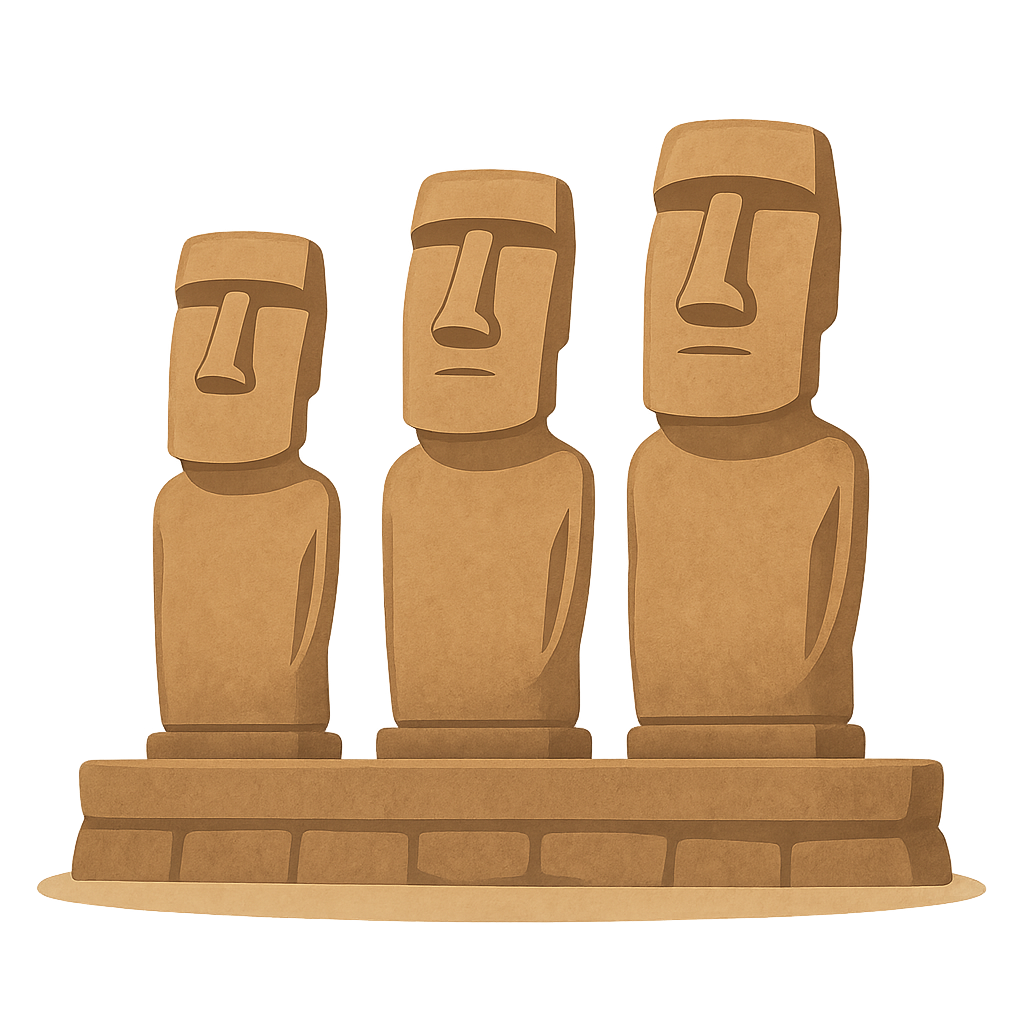
Soon, the Rapa Nui people began a project that would define me forever and puzzle the world for centuries. Between approximately 1250 and 1500 CE, they undertook the monumental task of carving my most famous features: the moai. These were not just statues; they were living faces of their deified ancestors, channels of spiritual power meant to watch over and protect the villages. Using simple stone tools, they carved nearly 1,000 of these giants from the soft volcanic tuff found in the crater of my volcano, Rano Raraku. This quarry became a nursery for stone giants, a place of immense effort and artistry. Imagine the incredible problem-solving it required to then move these figures, some weighing as much as 80 tons, for miles across my rugged landscape. Without wheels or large animals, they used clever engineering, teamwork, and sheer determination. Once at their destination, the moai were raised onto massive stone platforms called 'ahu'. Some were even crowned with a 'pukao', a separate carving of red stone that looked like a topknot or hat, symbolizing power and status.
But life on a small, isolated island is a delicate balance. After centuries of devotion to the moai and a growing population, my resources began to thin. The great forests that once covered my slopes, which had provided the wood and rope needed to move the statues, slowly disappeared. Around the 1500s, the era of moai-building came to an end. This could have been a time of despair, but the Rapa Nui people were resilient. They adapted. Instead of carving stone ancestors, they created a new tradition to choose their leader: the Tangata manu, or Birdman competition. Each year, at the sacred village of Orongo perched on the edge of a dramatic seaside cliff, the strongest men from different clans would compete. They had to scale down the treacherous cliffs, swim through shark-infested waters to a nearby islet, and retrieve the first egg of the sooty tern. The winner became the Birdman for the year, a position of great honor. This new ritual showed their incredible ability to transform their culture in the face of change.
For centuries, the Rapa Nui people were the only humans to know me. But the outside world was sailing closer. On Easter Sunday, April 5th, 1722, a new kind of canoe appeared on the horizon—a towering ship with huge white sails. It belonged to a Dutch explorer named Jacob Roggeveen, and it was he who gave me my European name in honor of the day he arrived. That first meeting was one of mutual wonder and confusion. The Rapa Nui people had never seen such a vessel, and the Europeans were mystified by the giant stone statues standing along my coast. After this first contact, more ships followed over the decades, bringing new diseases and conflicts that the Rapa Nui people had no defense against. It was a time of great struggle, but they held fast to their heritage. On September 9th, 1888, my story took another turn when I was formally annexed by the nation of Chile, becoming a special territory of that distant country.
Today, I am a bridge between a mysterious past and a hopeful future. In 1995, I was recognized as a UNESCO World Heritage Site, a declaration that my unique cultural landscape belongs to all of humanity and must be protected. The direct descendants of the first Polynesian voyagers still live here, speaking the Rapa Nui language and keeping the traditions of their ancestors alive. My moai continue their silent watch, no longer just guardians of villages, but powerful symbols of human creativity, resilience, and ingenuity. They remind every visitor of the incredible feats a small group of people can achieve in isolation. I stand as a profound lesson about the importance of living in balance with your environment and a timeless story of survival and art, etched in stone and waiting to be heard by all who come to listen to the wind.
Wow facts
About
A remote volcanic island in Polynesia, a special territory of Chile, famous for its monumental statues called moai, with estimates ranging from approximately 900 to over 1,000, created by the early Rapa Nui people.
Take a Quiz
Question 1 of 5
What is the central message the story of Rapa Nui teaches us?
Explore next



Want to do even more?
Go beyond exploring. Unlock tools that turn every story into real learning.

Storypie Plus for families
Full stories, quizzes, and printables. Nights and car rides, sorted.
- Unlimited audio stories
- Create Mode: your child stars in the story
- Offline downloads
- Printable worksheets & coloring pages

Why Storypie for Schools
Students engaged. Prep in seconds. Evenings back to you.
- Worksheets & Quizzes
- Classroom Management
- Formative Assessment
- Custom Curriculum & Lesson Plans
- 27 Languages

Why Storypie for Homeschool
Curriculum done. They'll ask for more. Hours back in your day.
- Worksheet Generator
- First-Person Audio Stories
- Built-in Comprehension Quizzes
- Custom Curriculum & Lesson Plans
- Print & Go Activities