English

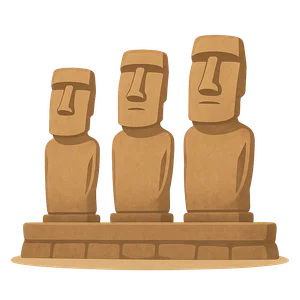
Easter Island
A remote volcanic island in Polynesia, a special territory of Chile…
Reads at Grades K-2 Listens at K–3
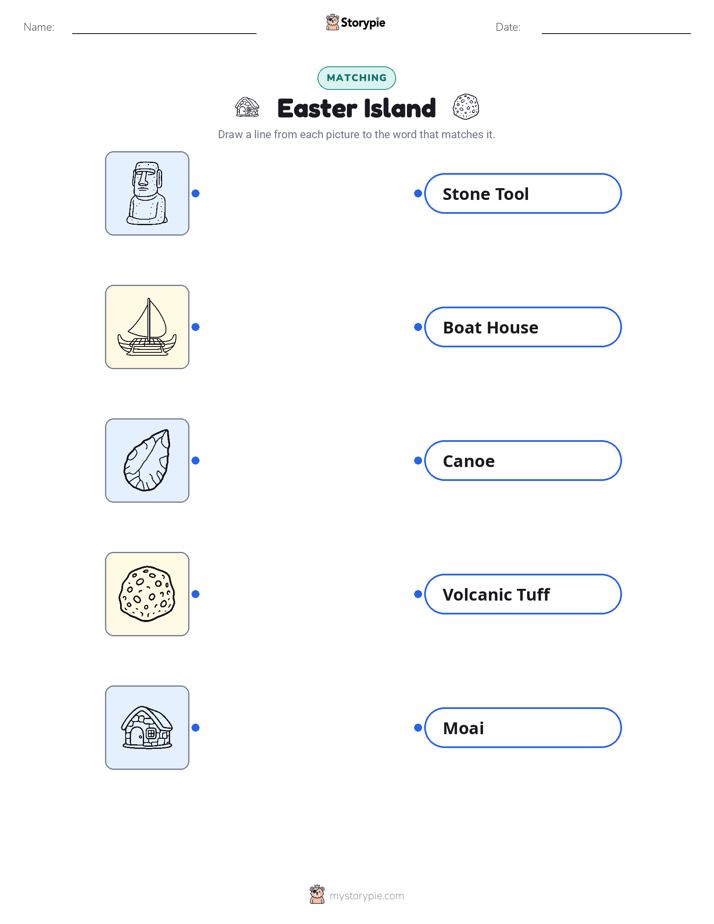
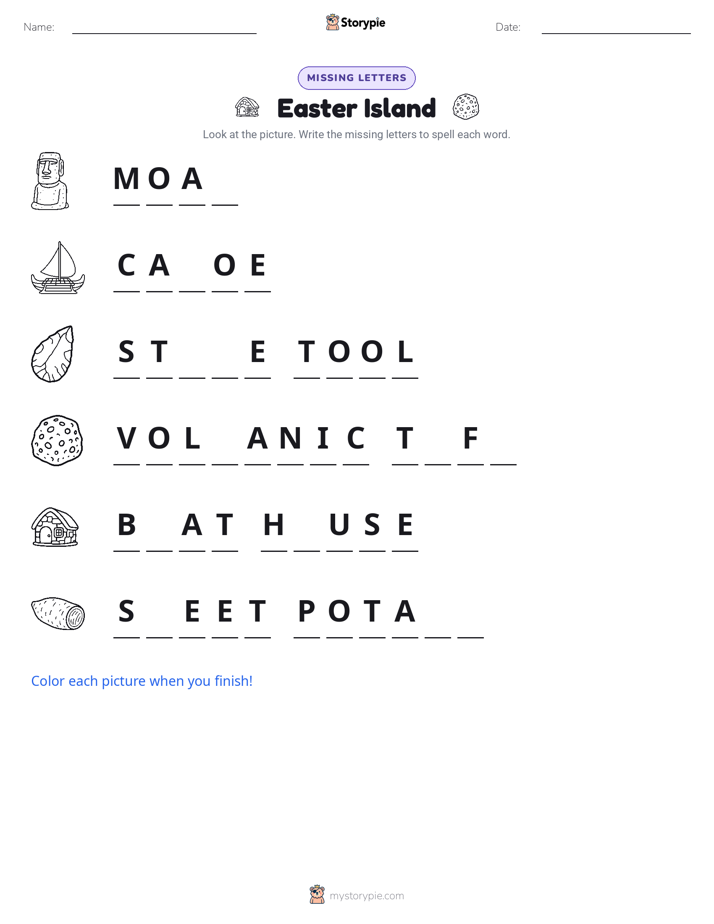
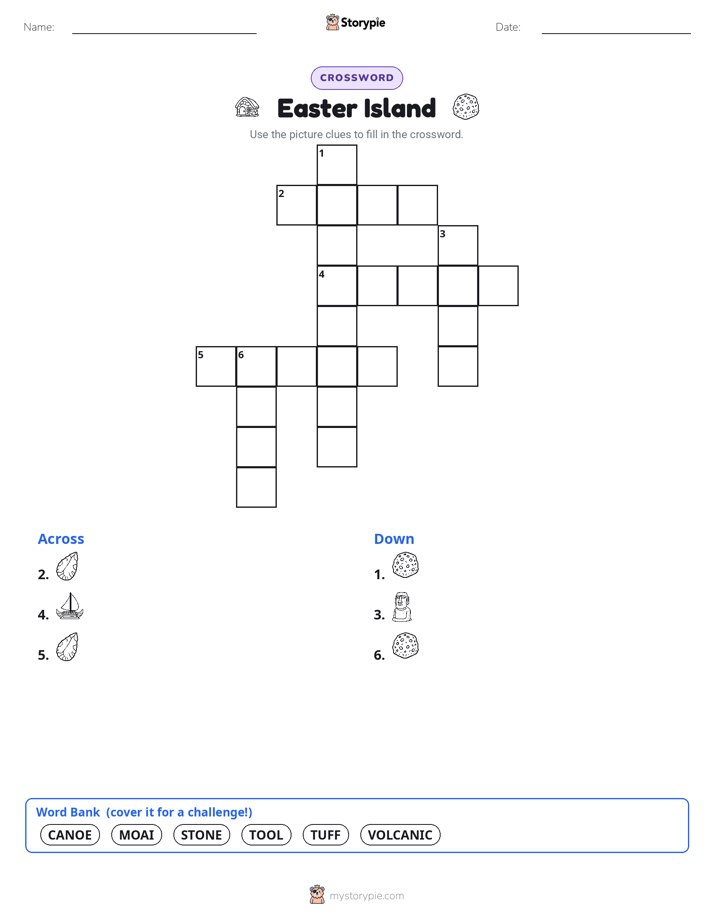
Print & create
Answer keys·No prep·Free with an account
28 worksheets · answer keys · full story · quiz · Ages 6-8 · CEFR A2
Plus adds 164,000+ more stories in 27 languages, audio for every one, and printables for all of them.
Just want Easter Island?
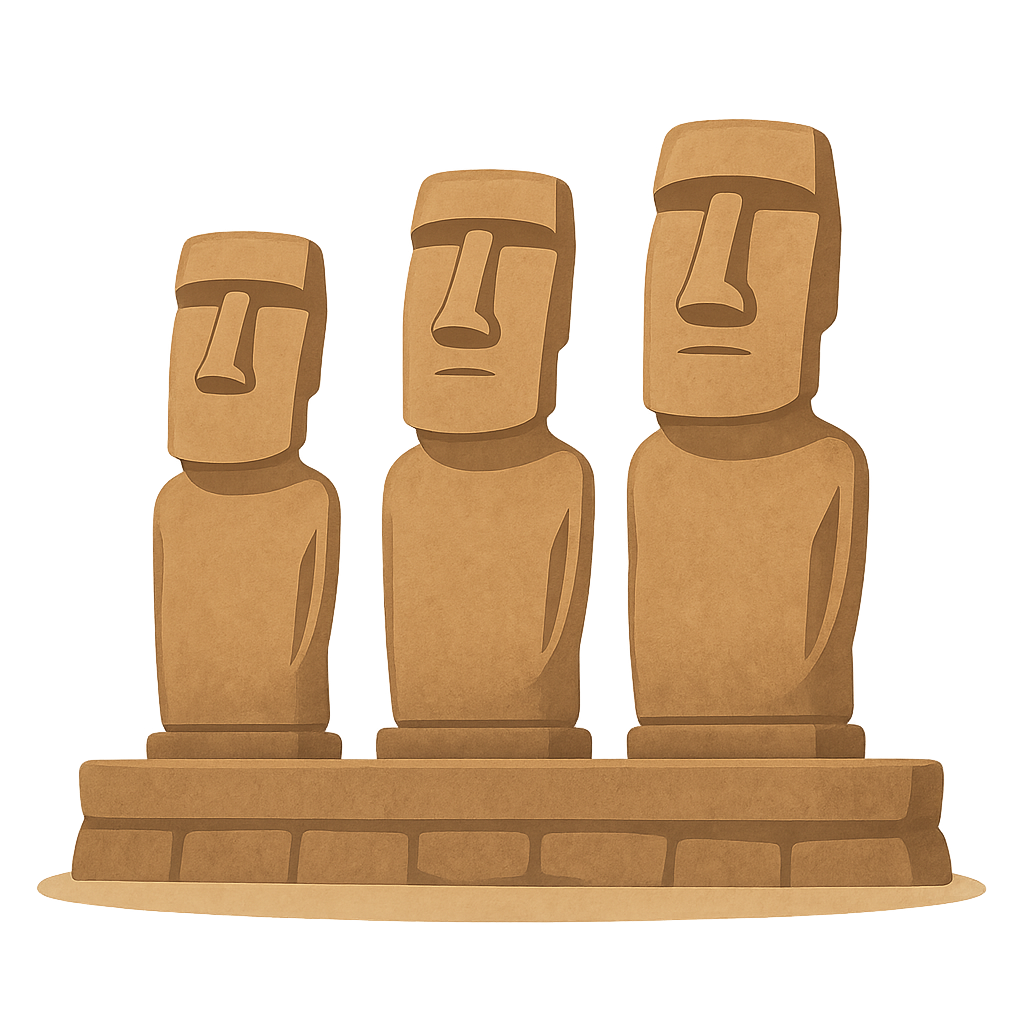
Imagine being a small, grassy island all alone in the middle of the giant Pacific Ocean. It can be a little lonely with only the sound of the waves. But I am not truly alone. I have hundreds of giant, silent stone faces that keep me company. They stand tall along my shores, with their big eyebrows and long noses, watching the sea as if they are waiting for someone. For a long, long time, they kept my biggest secret. People from far away wonder about them and about me. They call me Rapa Nui, but you might know me as Easter Island.
My story really began a long time ago, around the year 1200, when brave explorers arrived at my shores. They were the Rapa Nui people, and they had sailed across the wide ocean in big canoes to find a new home. They were clever and strong. Starting around the year 1250, they began a very special project. To honor their ancestors, the family members who had lived before them, they started carving enormous statues. You know them as the moai. They carved my stone giants from the rock of a special volcano. Can you imagine that. Carving a giant person out of a mountain. Once a statue was finished, the real teamwork began. The people worked together, using strong ropes and smooth logs, to carefully move the heavy moai across my hills. They set them up on stone platforms, called ahu, so they could watch over their villages and their families forever.
For hundreds of years, it was just me and the Rapa Nui people. But one day, everything changed. On Easter Sunday, April 5th, 1722, a new kind of canoe appeared. It was a giant ship with big white sails, and it brought the first visitors from Europe. The captain's name was Jacob Roggeveen. Because he arrived on that special holiday, he gave me my new name: Easter Island. Today, I am not so lonely anymore. People from all over the world come to visit me. They fly in airplanes to see my giant stone guardians. In 1995, I was given a very important promise. I became a UNESCO World Heritage Site, which means everyone has promised to protect my moai and my story. My stone faces will continue to watch over the ocean, inspiring people to wonder, to explore, and to always remember the amazing things we can do when we work together.
The Island of Giant Stone Faces
Imagine being a small, grassy island all alone in the middle of the giant Pacific Ocean. It can be a little lonely with only the sound of the waves. But I am not truly alone. I have hundreds of giant, silent stone faces that keep me company. They stand tall along my shores, with their big eyebrows and long noses, watching the sea as if they are waiting for someone. For a long, long time, they kept my biggest secret. People from far away wonder about them and about me. They call me Rapa Nui, but you might know me as Easter Island.
My story really began a long time ago, around the year 1200, when brave explorers arrived at my shores. They were the Rapa Nui people, and they had sailed across the wide ocean in big canoes to find a new home. They were clever and strong. Starting around the year 1250, they began a very special project. To honor their ancestors, the family members who had lived before them, they started carving enormous statues. You know them as the moai. They carved my stone giants from the rock of a special volcano. Can you imagine that. Carving a giant person out of a mountain. Once a statue was finished, the real teamwork began. The people worked together, using strong ropes and smooth logs, to carefully move the heavy moai across my hills. They set them up on stone platforms, called ahu, so they could watch over their villages and their families forever.
For hundreds of years, it was just me and the Rapa Nui people. But one day, everything changed. On Easter Sunday, April 5th, 1722, a new kind of canoe appeared. It was a giant ship with big white sails, and it brought the first visitors from Europe. The captain's name was Jacob Roggeveen. Because he arrived on that special holiday, he gave me my new name: Easter Island. Today, I am not so lonely anymore. People from all over the world come to visit me. They fly in airplanes to see my giant stone guardians. In 1995, I was given a very important promise. I became a UNESCO World Heritage Site, which means everyone has promised to protect my moai and my story. My stone faces will continue to watch over the ocean, inspiring people to wonder, to explore, and to always remember the amazing things we can do when we work together.
Wow facts
About
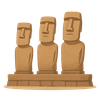
A remote volcanic island in Polynesia, a special territory of Chile, famous for its monumental statues called moai, with estimates ranging from approximately 900 to over 1,000, created by the early Rapa Nui people.
Take a Quiz
Question 1 of 4
Why did the Rapa Nui people carve the giant moai statues?
Explore next




Want to do even more?
Go beyond exploring. Unlock tools that turn every story into real learning.

Storypie Plus for families
Full stories, quizzes, and printables. Nights and car rides, sorted.
- Unlimited audio stories
- Create Mode: your child stars in the story
- Offline downloads
- Printable worksheets & coloring pages

Why Storypie for Schools
Students engaged. Prep in seconds. Evenings back to you.
- Worksheets & Quizzes
- Classroom Management
- Formative Assessment
- Custom Curriculum & Lesson Plans
- 27 Languages

Why Storypie for Homeschool
Curriculum done. They'll ask for more. Hours back in your day.
- Worksheet Generator
- First-Person Audio Stories
- Built-in Comprehension Quizzes
- Custom Curriculum & Lesson Plans
- Print & Go Activities