English

River
The Nile River is traditionally recognized as the longest river in the world…
Reads at Grades 3–5 Listens at Grades 1–5
Print & create
Answer keys·No prep·Free with an account
28 worksheets · answer keys · full story · quiz · Ages 8-10 · CEFR B1
Plus adds 164,000+ more stories in 27 languages, audio for every one, and printables for all of them.
Just want River?
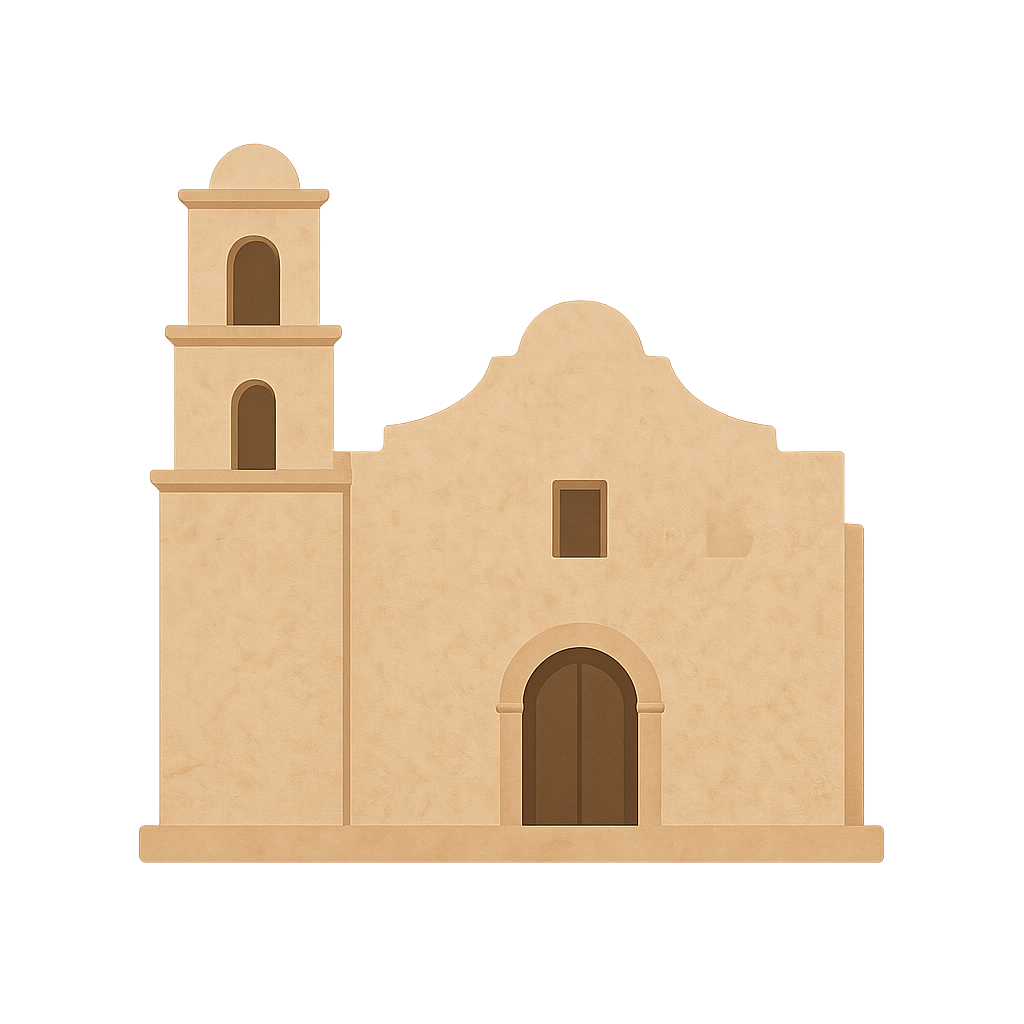
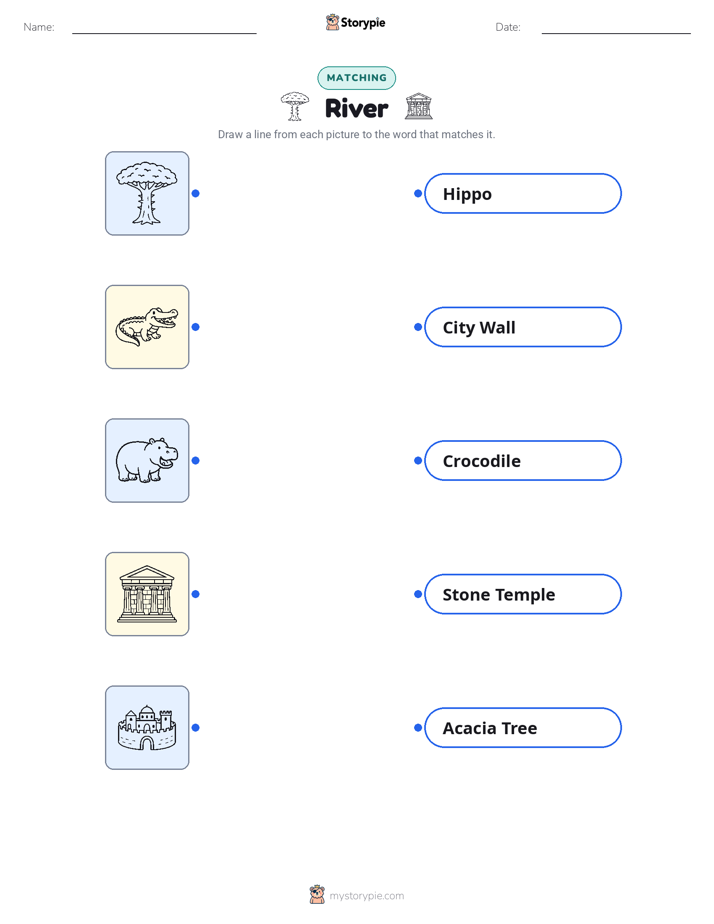
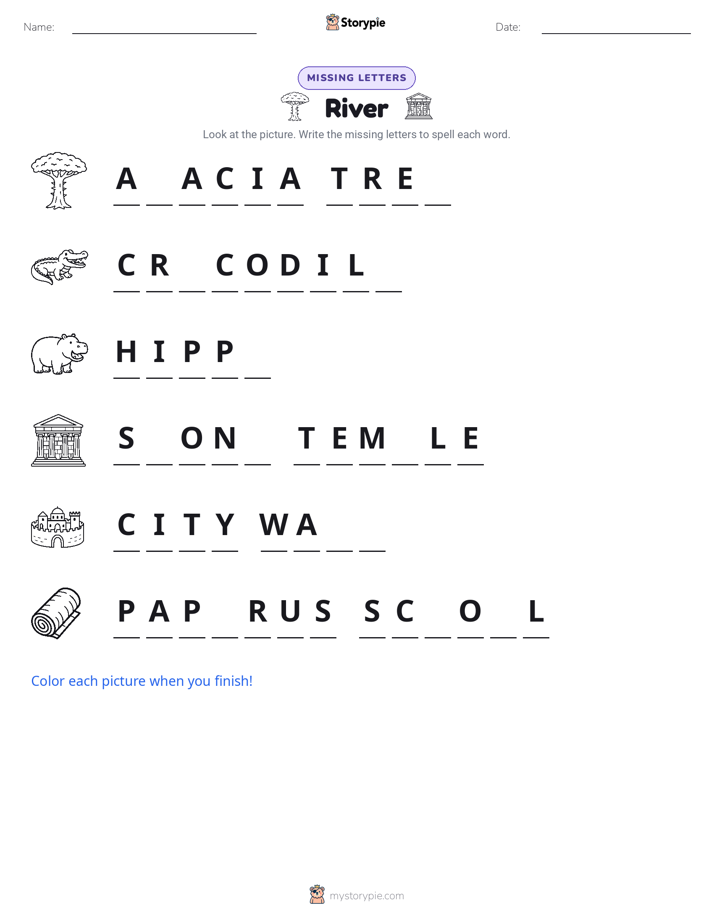
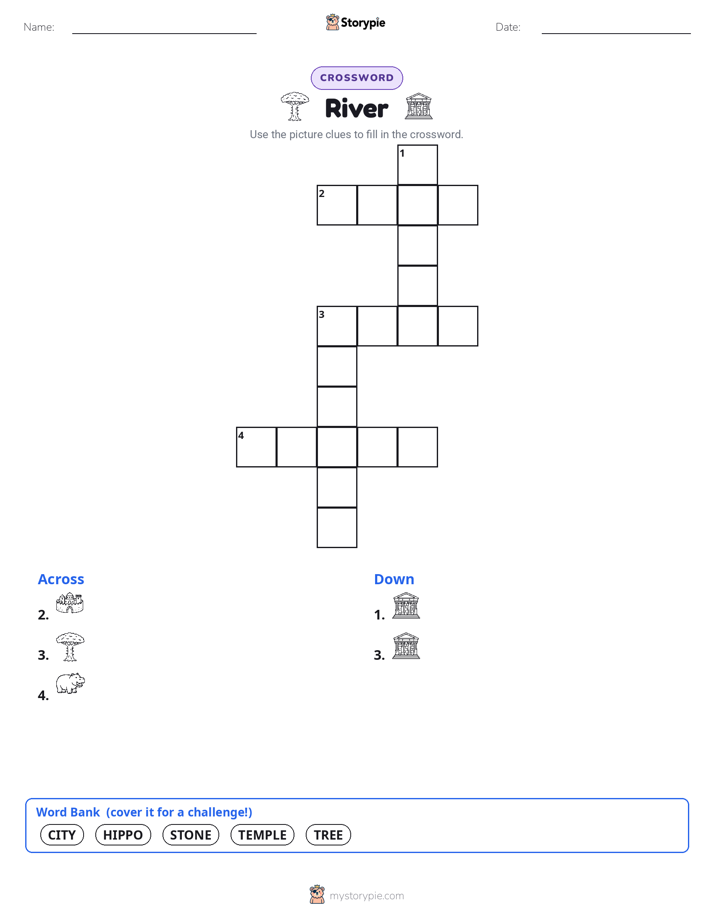
I am a long, winding ribbon of blue, flowing through a land of golden desert sands. For thousands of miles, I twist and turn, bringing life wherever I go. On my banks, green fields of barley and wheat sway in the warm breeze, a stark contrast to the dry land beyond. Crocodiles sun themselves on my muddy shores, and graceful birds dip into my cool waters to catch fish. For thousands of years, I have watched empires rise and fall. I saw the shadows of the great pyramids stretch across the sand as workers built them stone by giant stone. I have reflected the magnificent stone temples built to honor kings and queens from long ago. My waters have carried everyone from farmers in simple reed boats to powerful pharaohs in decorated barges. I am the lifeblood of this ancient land. I am the Nile River, the longest river in the world.
My journey begins far away, in two separate places. I have two sources, the White Nile and the Blue Nile, which travel a long way before they meet in a country called Sudan to become one mighty river. The first people to truly know me settled on my banks a very long time ago, around 6000 BCE. They quickly learned about my greatest secret, which I shared with them every single year. I called it my annual flood. It wasn't a scary, destructive flood, but a predictable and welcome visitor that they could count on. Every summer, heavy rains far to the south in the mountains of Ethiopia would swell my Blue Nile source, causing me to gently overflow my banks in Egypt. When the water pulled back a few months later, I left behind a wonderful present: a thick layer of rich, dark mud called silt. This black silt was full of nutrients, making the land perfect for growing crops like wheat and barley. This gift was so important that the ancient Egyptians created a god, Hapi, just to celebrate my yearly flood and the life it brought. They even based their entire calendar on my rhythm—the season of the flood, the season of planting, and the season of harvest. My gift of fertile soil allowed their civilization to grow strong and feed millions of people for thousands of years.
The River of Life
I am a long, winding ribbon of blue, flowing through a land of golden desert sands. For thousands of miles, I twist and turn, bringing life wherever I go. On my banks, green fields of barley and wheat sway in the warm breeze, a stark contrast to the dry land beyond. Crocodiles sun themselves on my muddy shores, and graceful birds dip into my cool waters to catch fish. For thousands of years, I have watched empires rise and fall. I saw the shadows of the great pyramids stretch across the sand as workers built them stone by giant stone. I have reflected the magnificent stone temples built to honor kings and queens from long ago. My waters have carried everyone from farmers in simple reed boats to powerful pharaohs in decorated barges. I am the lifeblood of this ancient land. I am the Nile River, the longest river in the world.
My journey begins far away, in two separate places. I have two sources, the White Nile and the Blue Nile, which travel a long way before they meet in a country called Sudan to become one mighty river. The first people to truly know me settled on my banks a very long time ago, around 6000 BCE. They quickly learned about my greatest secret, which I shared with them every single year. I called it my annual flood. It wasn't a scary, destructive flood, but a predictable and welcome visitor that they could count on. Every summer, heavy rains far to the south in the mountains of Ethiopia would swell my Blue Nile source, causing me to gently overflow my banks in Egypt. When the water pulled back a few months later, I left behind a wonderful present: a thick layer of rich, dark mud called silt. This black silt was full of nutrients, making the land perfect for growing crops like wheat and barley. This gift was so important that the ancient Egyptians created a god, Hapi, just to celebrate my yearly flood and the life it brought. They even based their entire calendar on my rhythm—the season of the flood, the season of planting, and the season of harvest. My gift of fertile soil allowed their civilization to grow strong and feed millions of people for thousands of years.
Once the people learned to use my gifts, their small villages grew into a great kingdom. Around 3100 BCE, the lands of Upper and Lower Egypt were united, and I became the main highway connecting the entire nation. My waters were always busy. Small papyrus boats zipped back and forth, carrying farmers, merchants, and messengers. Great wooden barges floated slowly, carrying precious goods like grain, cattle, and pottery from one city to another. My most important job came during the Old Kingdom. Around 2580 BCE, the pharaohs decided to build enormous tombs for themselves—the pyramids. To do this, they needed to move millions of massive limestone blocks, some weighing more than a car. How did they do it? They used me. The giant stones were floated down my currents on huge barges from quarries far away to the construction sites. I remember the powerful pharaohs who ruled from cities on my banks. The great female pharaoh, Hatshepsut, built a stunning temple near me, and Ramesses II constructed enormous monuments that still stand today. For them, I was more than just water; I was the road that built their empire and carried their dreams into history.
For thousands of years, my life followed the same rhythm: flood, plant, harvest. It was a pattern as old as the pyramids. But in the modern world, people needed something different from me. They wanted a steady supply of water all year round, and they wanted a new kind of power. So, engineers came up with a bold plan to change my flow forever. On January 9th, 1960, the construction of a massive new wall across my path began. It was called the Aswan High Dam. For ten years, people and machines worked day and night to build this huge structure of rock and clay. When it was finally finished in 1970, it created a giant lake behind it and completely changed my ancient rhythm. I no longer flood the lands of Egypt each year. Instead, the dam allows people to release my water whenever they need it for farming. And as the water passes through the dam, it spins giant turbines that create electricity, powering the homes and cities of millions of people. My wild, yearly pulse was traded for a steady, predictable heartbeat that helps power a modern nation.
Today, my journey continues, but in a different way. I am still the heart of life for the people of Egypt and Sudan. Along my banks, bustling modern cities like Cairo hum with energy, their bright lights reflecting on my surface at night. I still carry boats, though now they are often modern ferries and cruise ships showing visitors the ancient wonders I have watched over for so long. I connect the past with the present. The stories of the pharaohs and the secrets of the pyramids are whispered in the reeds along my shores, while the dreams of today's children are born in the cities and towns I nourish. I am more than just water flowing to the sea. I am a flow of history, a constant source of life, and a quiet witness to human creativity. I continue to inspire people to grow, to build, and to connect with one another, just as I have for centuries.
Wow facts
About
The Nile River is traditionally recognized as the longest river in the world, flowing through northeastern Africa. It was the lifeblood of ancient Egyptian civilization and remains a vital resource for Egypt and Sudan today.
Take a Quiz
Question 1 of 5
The story says the river was the 'Highway of the Pharaohs.' What does this phrase mean?
Explore next



Want to do even more?
Go beyond exploring. Unlock tools that turn every story into real learning.

Storypie Plus for families
Full stories, quizzes, and printables. Nights and car rides, sorted.
- Unlimited audio stories
- Create Mode: your child stars in the story
- Offline downloads
- Printable worksheets & coloring pages

Why Storypie for Schools
Students engaged. Prep in seconds. Evenings back to you.
- Worksheets & Quizzes
- Classroom Management
- Formative Assessment
- Custom Curriculum & Lesson Plans
- 27 Languages

Why Storypie for Homeschool
Curriculum done. They'll ask for more. Hours back in your day.
- Worksheet Generator
- First-Person Audio Stories
- Built-in Comprehension Quizzes
- Custom Curriculum & Lesson Plans
- Print & Go Activities