English

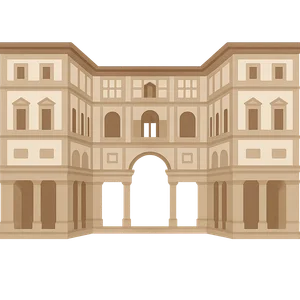
Uffizi Gallery
A world-renowned art museum in Florence, Italy, originally built in the 16th century as government offices.
Reads at Grades 6–8 Listens at Grades 4–8
Print & create
Answer keys·No prep·Free with an account
28 worksheets · answer keys · full story · quiz · Ages 10-12 · CEFR B2
Plus adds 208,000+ more stories in 27 languages, audio for every one, and printables for all of them.
Just want Uffizi Gallery?
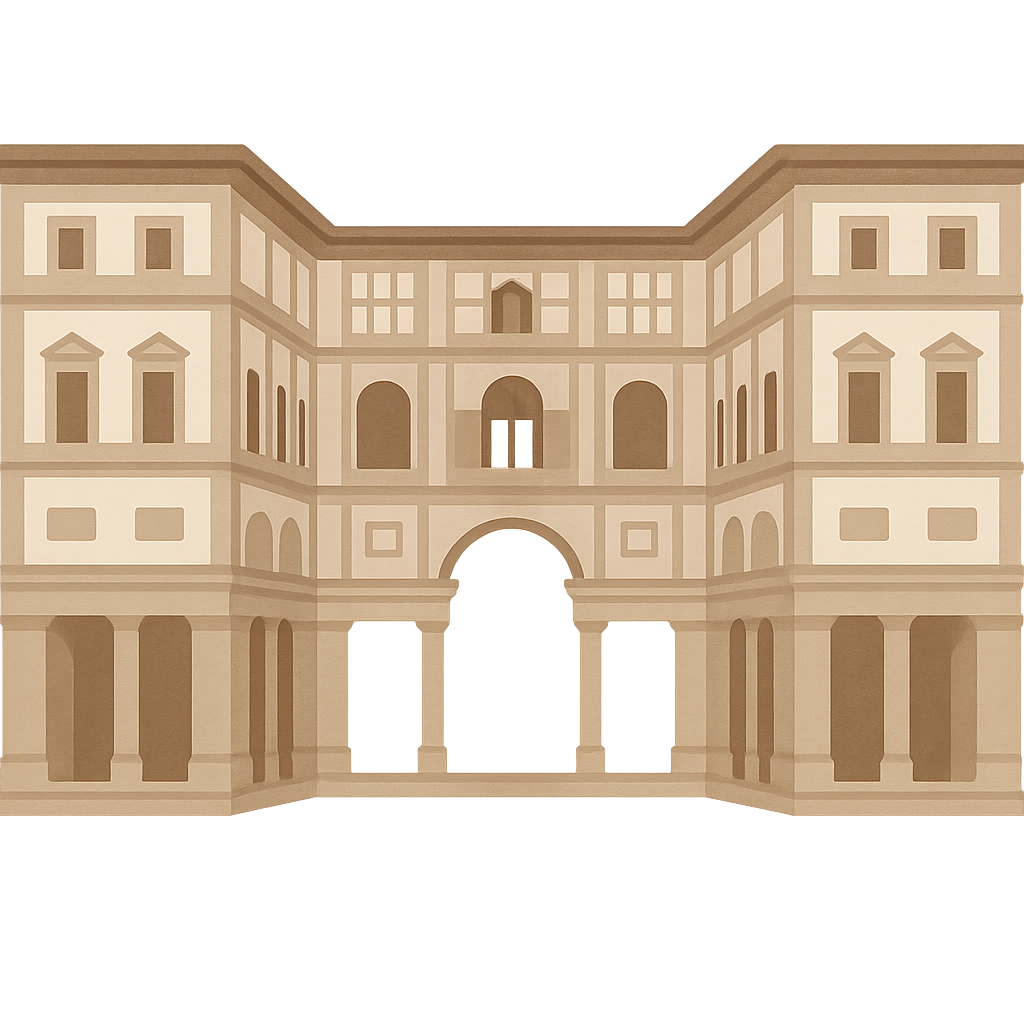
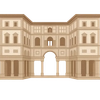
I stand in the heart of Florence, Italy, a city of terracotta roofs and echoing church bells, right beside the beautiful Arno River. If you were to look at me from above, you would see my two long arms stretch out, forming a U-shaped courtyard that feels like a grand and welcoming embrace for all who enter. This open space leads right to the river, framing a perfect view of the famous Ponte Vecchio bridge. Inside my halls, colors swirl on ancient canvases and marble figures seem to breathe, frozen in moments of thought, action, or grace. Sunlight streams through tall windows, illuminating masterpieces that have watched centuries unfold. For hundreds of years, I have been a silent witness to history, holding within my walls the brilliant dreams of artists and the ambitious visions of rulers. I was built for power and politics, but destiny had a more beautiful plan for me. I am the Uffizi Gallery.
My story begins not as a home for art, but as a center of command. I was commissioned in the year 1560 by a powerful and visionary ruler named Cosimo I de' Medici. He was the Duke of Florence and wanted to bring all of his government's administrative and judicial offices together under one magnificent roof. In Italian, these offices were called 'uffici', and that is how I received my name. Cosimo chose a brilliant architect, Giorgio Vasari, to design me. Vasari envisioned a building that was both functional and awe-inspiring, a symbol of the Medici family's strength and sophistication. Construction began quickly, and by 1565, Vasari added a feature that still captures imaginations today. He built a secret, elevated hallway, now known as the Vasari Corridor, which runs over a kilometer long. It connected me to the Pitti Palace, where the Medici family lived, allowing them to walk from their home to their offices without ever setting foot on the busy streets below. It was a true marvel of engineering and a testament to the power of my creators.
The Uffizi Gallery: A River of Art
I stand in the heart of Florence, Italy, a city of terracotta roofs and echoing church bells, right beside the beautiful Arno River. If you were to look at me from above, you would see my two long arms stretch out, forming a U-shaped courtyard that feels like a grand and welcoming embrace for all who enter. This open space leads right to the river, framing a perfect view of the famous Ponte Vecchio bridge. Inside my halls, colors swirl on ancient canvases and marble figures seem to breathe, frozen in moments of thought, action, or grace. Sunlight streams through tall windows, illuminating masterpieces that have watched centuries unfold. For hundreds of years, I have been a silent witness to history, holding within my walls the brilliant dreams of artists and the ambitious visions of rulers. I was built for power and politics, but destiny had a more beautiful plan for me. I am the Uffizi Gallery.
My story begins not as a home for art, but as a center of command. I was commissioned in the year 1560 by a powerful and visionary ruler named Cosimo I de' Medici. He was the Duke of Florence and wanted to bring all of his government's administrative and judicial offices together under one magnificent roof. In Italian, these offices were called 'uffici', and that is how I received my name. Cosimo chose a brilliant architect, Giorgio Vasari, to design me. Vasari envisioned a building that was both functional and awe-inspiring, a symbol of the Medici family's strength and sophistication. Construction began quickly, and by 1565, Vasari added a feature that still captures imaginations today. He built a secret, elevated hallway, now known as the Vasari Corridor, which runs over a kilometer long. It connected me to the Pitti Palace, where the Medici family lived, allowing them to walk from their home to their offices without ever setting foot on the busy streets below. It was a true marvel of engineering and a testament to the power of my creators.
My transformation from a bustling government building into a sanctuary for art began with Cosimo's son, Francesco I de' Medici. He was a great lover of art and science, and he had a brilliant idea. Starting in 1581, he began to use my top floor, which offered the best light, to display the family's incredible and ever-growing collection of paintings, sculptures, ancient coins, and scientific instruments. He created a special octagonal room called the Tribuna, designed to showcase the most precious pieces. For many, many years, I was a private treasure chest, open only to the Medici family and their most important guests. Imagine being one of the lucky few to wander my halls, surrounded by works from the greatest artists of the Renaissance. I watched as masterpieces by geniuses like Sandro Botticelli and Leonardo da Vinci found a home under my roof. I became the guardian of a collection that represented the peak of human creativity, a private world of beauty reserved for an elite circle.
My purpose was destined to change forever, thanks to the wisdom and generosity of one extraordinary woman. The Medici family line, which had ruled Florence for nearly 300 years, eventually came to an end. The last direct heir was Anna Maria Luisa de' Medici. She understood the immense cultural value of the treasures I held. She feared that once she was gone, this unparalleled collection might be sold off and scattered across the world. To prevent this, on October 31st, 1737, she signed a special and legally binding document called the 'Patto di Famiglia', or the 'Family Pact.' In this historic agreement, she bequeathed the entire Medici collection of art, jewels, and libraries to the city of Florence. She included one very important condition: none of it could ever be removed from the city. Her incredible gift ensured that the art would belong to the people forever. Because of her foresight and generosity, I was finally able to open my doors to the public in 1769, transforming from a private palace of wonders into one of the world's very first modern museums.
Today, I continue to fulfill the promise made by Anna Maria Luisa de' Medici all those centuries ago. I welcome millions of visitors from every corner of the globe each year. They walk through my long corridors and stand in awe before Botticelli’s 'The Birth of Venus', with its goddess floating ashore on a seashell. They gaze at intricate works by Leonardo da Vinci and powerful sculptures inspired by Michelangelo. I am more than just a building filled with beautiful objects; I am a keeper of stories, a bridge that connects the present to the past. My greatest joy is sharing these timeless treasures, inspiring new generations of artists, writers, and thinkers. I stand as a testament to the power of a single family's vision and a single woman's generosity, reminding everyone that the greatest creations are those that are shared with the world.
Wow facts
About
A world-renowned art museum in Florence, Italy, originally built in the 16th century as government offices. It now houses a vast collection of masterpieces, primarily from the Italian Renaissance, along with important works from other times and places, including German, Dutch, and Flemish art.
Take a Quiz
Question 1 of 5
In your own words, describe the Uffizi's transformation from its original purpose to its role today.
Explore next






Want to do even more?
Go beyond exploring. Unlock tools that turn every story into real learning.

Storypie Plus for families
Full stories, quizzes, and printables. Nights and car rides, sorted.
- Unlimited audio stories
- Create Mode: your child stars in the story
- Offline downloads
- Printable worksheets & coloring pages

Why Storypie for Schools
Students engaged. Prep in seconds. Evenings back to you.
- Worksheets & Quizzes
- Classroom Management
- Formative Assessment
- Custom Curriculum & Lesson Plans
- 27 Languages

Why Storypie for Homeschool
Curriculum done. They'll ask for more. Hours back in your day.
- Worksheet Generator
- First-Person Audio Stories
- Built-in Comprehension Quizzes
- Custom Curriculum & Lesson Plans
- Print & Go Activities