English

Wieliczka Salt Mine
A historic salt mine in southern Poland, famous for its vast underground chapels, statues, and lake…
Reads at Grades 6–8 Listens at Grades 4–8
Print & create
Answer keys·No prep·Free with an account
28 worksheets · answer keys · full story · quiz · Ages 10-12 · CEFR B2
Plus adds 164,000+ more stories in 27 languages, audio for every one, and printables for all of them.
Just want Wieliczka Salt Mine?
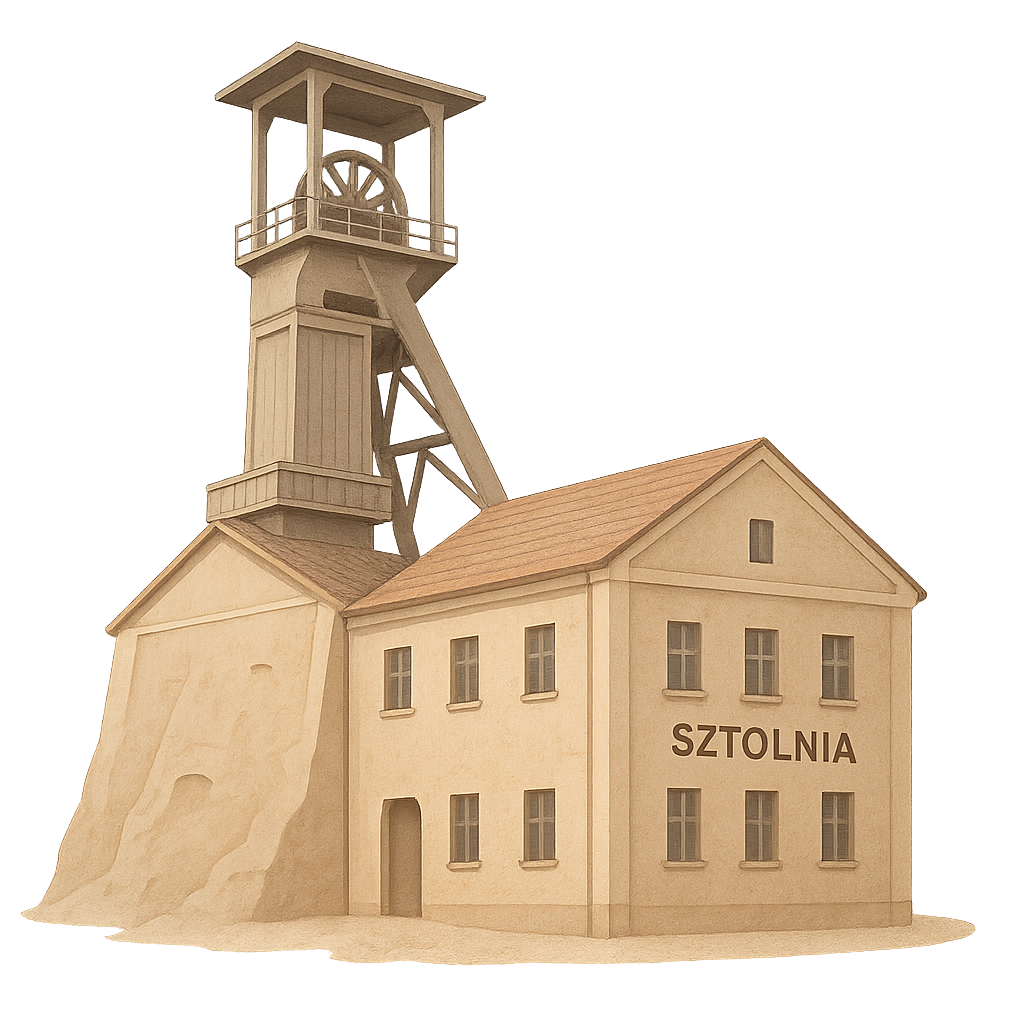
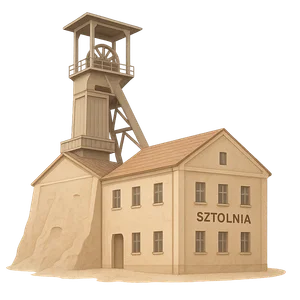
Imagine descending deep into the earth, where the air grows cool and still, and the walls around you glitter like a million tiny diamonds. If you were to touch your finger to a wall and taste it, you would find the flavor of the sea. Corridors twist and turn, opening into vast chambers carved by human hands over hundreds of years. This is not a cave made by water, but a secret city, a subterranean wonderland sculpted from pure rock salt. For centuries, I have held the stories of kings, miners, and artists within my crystalline heart. I am the Wieliczka Salt Mine, a treasure hidden beneath the fields of southern Poland, near the city of Kraków.
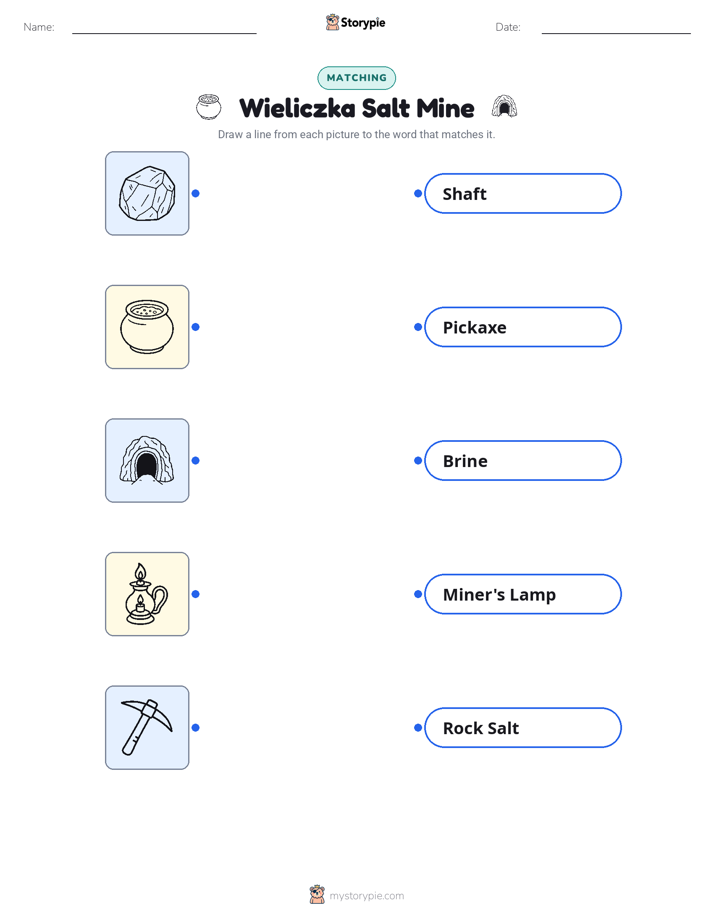
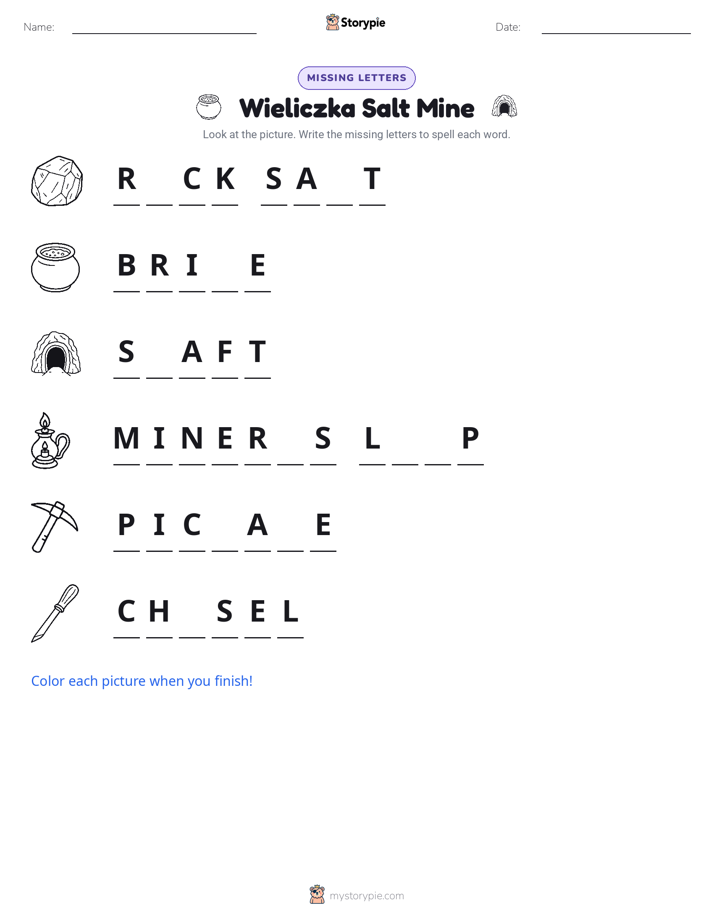
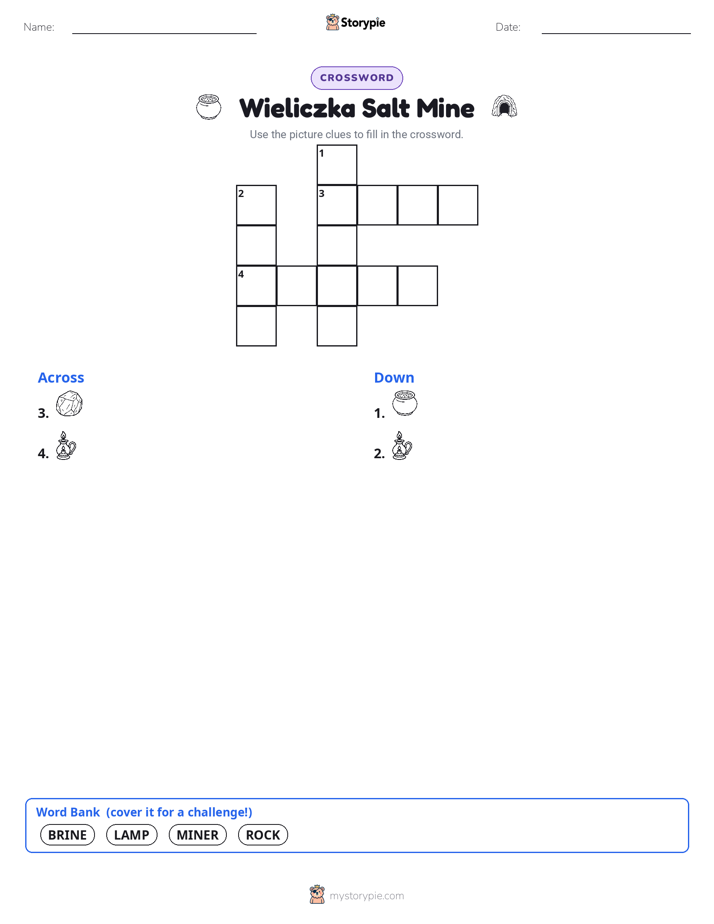
My story began long before any human set foot here, over 13 million years ago. A vast, ancient sea covered this land, and when it slowly evaporated under the sun, it left behind an incredible gift: massive deposits of rock salt. For thousands of years, my treasure lay hidden. The first people to discover my secret were from the Neolithic period, about 6,000 years ago. They didn’t dig deep; instead, they found salty springs bubbling to the surface. They would collect this brine and boil it down to get precious salt. But the real story of my depths began in the 13th century. That’s when miners, realizing the true extent of the salt deposits, began to sink the first shafts. They were searching for what they called 'white gold,' a mineral so valuable it was a form of currency. They chiseled and hammered, creating a labyrinth that would grow for the next 700 years, transforming me from a natural deposit into a bustling, world-renowned enterprise.
The Salt-Crystal Cathedral Beneath Poland
Imagine descending deep into the earth, where the air grows cool and still, and the walls around you glitter like a million tiny diamonds. If you were to touch your finger to a wall and taste it, you would find the flavor of the sea. Corridors twist and turn, opening into vast chambers carved by human hands over hundreds of years. This is not a cave made by water, but a secret city, a subterranean wonderland sculpted from pure rock salt. For centuries, I have held the stories of kings, miners, and artists within my crystalline heart. I am the Wieliczka Salt Mine, a treasure hidden beneath the fields of southern Poland, near the city of Kraków.
My story began long before any human set foot here, over 13 million years ago. A vast, ancient sea covered this land, and when it slowly evaporated under the sun, it left behind an incredible gift: massive deposits of rock salt. For thousands of years, my treasure lay hidden. The first people to discover my secret were from the Neolithic period, about 6,000 years ago. They didn’t dig deep; instead, they found salty springs bubbling to the surface. They would collect this brine and boil it down to get precious salt. But the real story of my depths began in the 13th century. That’s when miners, realizing the true extent of the salt deposits, began to sink the first shafts. They were searching for what they called 'white gold,' a mineral so valuable it was a form of currency. They chiseled and hammered, creating a labyrinth that would grow for the next 700 years, transforming me from a natural deposit into a bustling, world-renowned enterprise.
During the Middle Ages, I became the jewel of the Polish kingdom. In the 14th century, a wise king named Casimir III the Great recognized my immense value. He established formal laws to govern my operations, and the income from my salt funded castles, a university, and the kingdom's defense. I was the engine of Poland's economy. But this wealth came from the tireless work of the miners, the 'górnicy'. Their lives were spent in my twilight world, far from the sun. It was dangerous, demanding work, lit only by the faint glow of tallow lamps. To find strength and hope in the darkness, these miners brought their deep faith with them. They began to carve small, humble chapels out of the salt rock, creating sacred spaces where they could pray for safety. These simple acts of devotion were the seeds of the incredible artistry that would later blossom within me.
Of all the wonders inside me, none can compare to the Chapel of St. Kinga. It is a breathtaking cathedral carved entirely from salt. Its creation began in 1896, not by famous artists, but by a small team of self-taught miner-sculptors. For nearly 70 years, three men—brothers Tomasz and Józef Markowski, and later Antoni Wyrodek—dedicated their lives to this masterpiece. They sculpted everything you see. The grand altars, the statues of saints, and the intricate bas-reliefs depicting scenes from the Bible are all hewn from the gray salt walls. Perhaps most spectacular are the chandeliers that hang from the ceiling. The miners carved them from salt crystals, which they painstakingly dissolved and reconstituted to remove impurities, making them sparkle with crystal-clear light. This was not a job they were paid to do; it was a profound expression of their faith and a gift to the world, built one chisel mark at a time.
Over the centuries, I transformed from a center of industry into a place of inspiration. My guestbook includes names like Nicolaus Copernicus, Johann Wolfgang von Goethe, and Frédéric Chopin. But time brought challenges. My tunnels were always threatened by water, and after centuries of operation, the risk of flooding became too great. On June 30th, 1996, commercial salt mining finally came to an end. My days of producing 'white gold' were over. But my greatest honor was yet to come. On September 8th, 1978, I was recognized as a place of outstanding universal value. I was named to the very first UNESCO World Heritage List, one of only twelve sites in the world to receive that distinction in the inaugural group. It was a promise that my story and my beauty would be protected for all of humanity, forever.
Today, my salt-scented corridors are quiet of mining tools, but they echo with the footsteps of visitors from around the globe. I am a museum, an art gallery, a concert hall, and even a health resort, where the unique microclimate in my chambers helps people breathe more easily. I stand as a testament to the power of human ingenuity, faith, and resilience. I am proof that even deep beneath the earth, in the darkness, people can create light and astounding beauty. So come, walk through my crystalline halls, and listen. I have so many stories left to tell.
Wow facts
About
A historic salt mine in southern Poland, famous for its vast underground chapels, statues, and lake, all carved out of rock salt by miners over centuries. It is now a UNESCO World Heritage site.
Take a Quiz
Question 1 of 5
In your own words, retell the story of how the Chapel of St. Kinga was created, including who built it and why.
Explore next





Want to do even more?
Go beyond exploring. Unlock tools that turn every story into real learning.

Storypie Plus for families
Full stories, quizzes, and printables. Nights and car rides, sorted.
- Unlimited audio stories
- Create Mode: your child stars in the story
- Offline downloads
- Printable worksheets & coloring pages

Why Storypie for Schools
Students engaged. Prep in seconds. Evenings back to you.
- Worksheets & Quizzes
- Classroom Management
- Formative Assessment
- Custom Curriculum & Lesson Plans
- 27 Languages

Why Storypie for Homeschool
Curriculum done. They'll ask for more. Hours back in your day.
- Worksheet Generator
- First-Person Audio Stories
- Built-in Comprehension Quizzes
- Custom Curriculum & Lesson Plans
- Print & Go Activities