The Ancestral Puebloans cliff dwellings show human skill and clever design. These cliff homes sit in the Four Corners region. They appear in southwestern Colorado, Utah, Arizona, and New Mexico. Scholars and descendant peoples use the term Ancestral Puebloans. Also, avoid the outdated word Anasazi.
Where and when the Ancestral Puebloans cliff dwellings rose
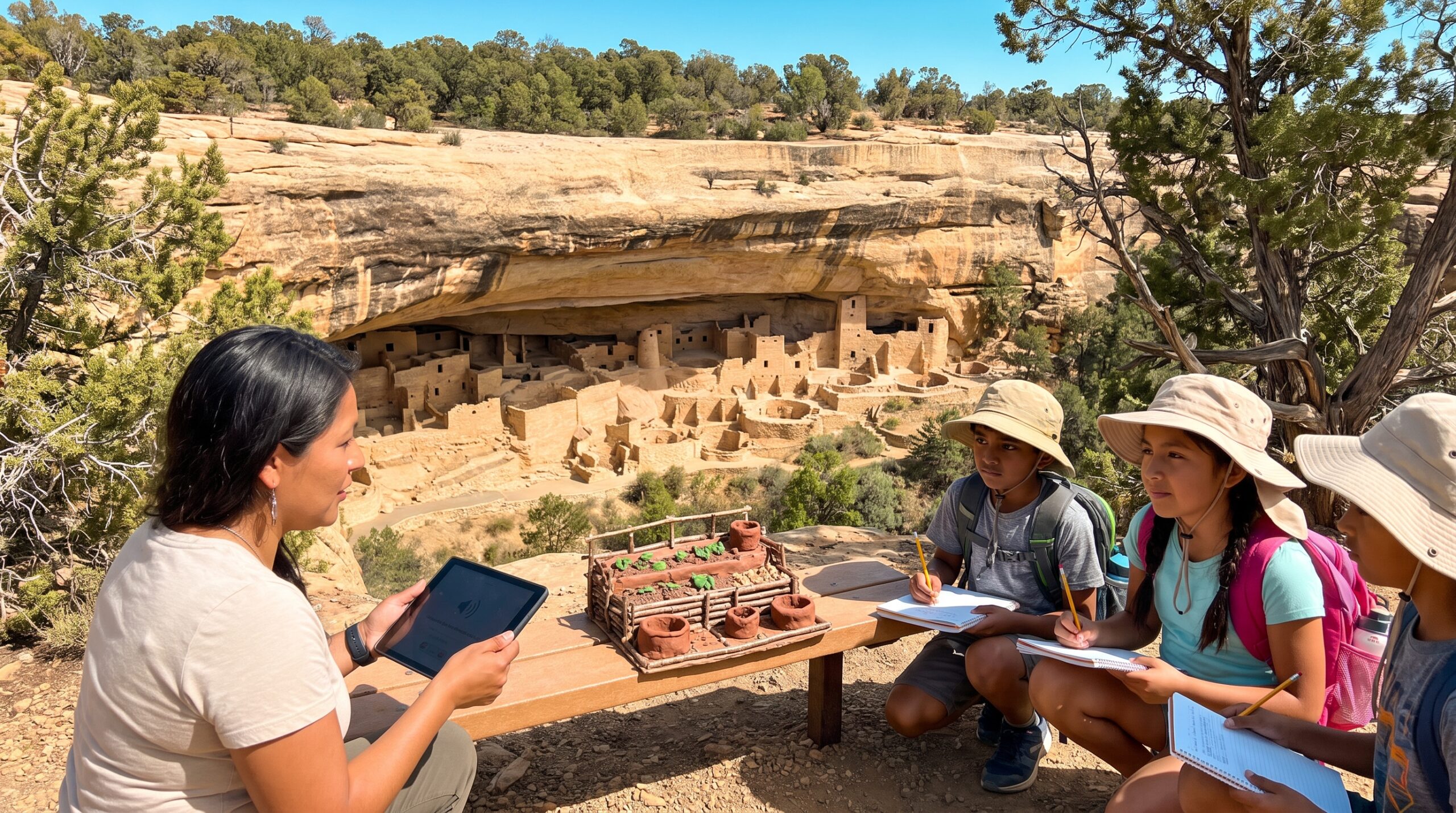
Most cliff homes date to Pueblo III, about AD 1150 to 1300. Builders shaped sandstone blocks and joined them with adobe mortar. Wooden beams called vigas and thin latillas held floors and roofs. Alcoves gave shelter and a handy microclimate. For example, Cliff Palace and Spruce Tree House at Mesa Verde remain famous today. In fact, Spruce Tree House—one of the most well-preserved Ancestral Pueblo cliff dwellings in Mesa Verde—contains about 130 rooms and eight kivas, and was home to approximately 60 to 80 people, illustrating the scale and complexity of their architectural achievements according to the U.S. National Park Service.
Daily life in cliff homes
Life in these communities stayed busy and creative. Families farmed corn, beans, and squash, the Three Sisters. They hunted deer and gathered wild plants. Pottery, weaving, and fine basketry were common crafts. Kivas served as special rooms. These round rooms often sat below ground. They hosted ceremonies, meetings, and daily talks. Many kivas had fire pits and benches. The average Ancestral Pueblo man stood about 5 feet 5 inches tall and the average woman about 5 feet; their average lifespan was around 35 years, with high infant mortality and few individuals surviving into their 50s or 60s as noted by the U.S. National Park Service.
Water, food, and adaptive smarts
The Ancestral Puebloans cliff dwellings show clever water and food work. People used dry farming, terraces, and check dams. In addition, they used small water harvesting methods. Granaries stored food for hard years. Science now shows a Great Drought from 1276 to 1299. Tree rings and dendrochronology reveal those dry years. At Mesa Verde, the outermost tree-ring date from construction wood is 1281 AD, indicating that by that year, Ancestral Puebloans had largely migrated away from the Mesa Verde and Four Corners region by 1300 AD according to the U.S. National Park Service. When water failed, life had to change.
Trade, networks, and wider worlds
These communities did not live in isolation. Trade routes moved turquoise, marine shells, and obsidian long distances. Pottery styles and ideas traveled too. In short, they belonged to a broad Southwest world with links reaching toward Mesoamerica. The Ancestral Puebloans’ cultural ‘Golden Age’ occurred between approximately 900 and 1150 CE, marking a significant period of cultural development as outlined in cultural studies.
Why many people moved
By about 1280 to 1300 many families moved away. A mix of pressures drove that change. Prolonged drought, soil strain, and resource limits all played a part. Social shifts and new opportunities also helped shape choices. Migration proved complex, not simple.
Archaeology, respect, and visiting
Archaeologists use tree rings, careful digs, and study of sandals, baskets, and textiles. Many fragile finds survive in dry alcoves. Laws and national parks protect sites. Mesa Verde stands as a UNESCO World Heritage Site. Modern Pueblo peoples such as Hopi, Zuni, and Tewa communities are living descendants. We owe them respect and consultation when we talk about these places. When visiting, please stay on trails and follow ranger guidance.
Read or listen to a story about Ancestral Puebloans (Cliff Dwellers) now: Read or listen to a story about Ancestral Puebloans (Cliff Dwellers) now: For 3-5 year olds, For 6-8 year olds, For 8-10 year olds, and For 10-12 year olds.
Also, try a hands-on idea for kids. Build a clay alcove or a Lego cliff house. Plant corn, beans, and squash seeds in small pots. Draw a cross section of a cliff house and a kiva. Ask short, curious questions. For example, what would you pack if one room held your whole family?
Finally, these cliff homes show human skill and adaptation. What a clever legacy. To hear more stories, visit Storypie and enjoy listen-along tales.