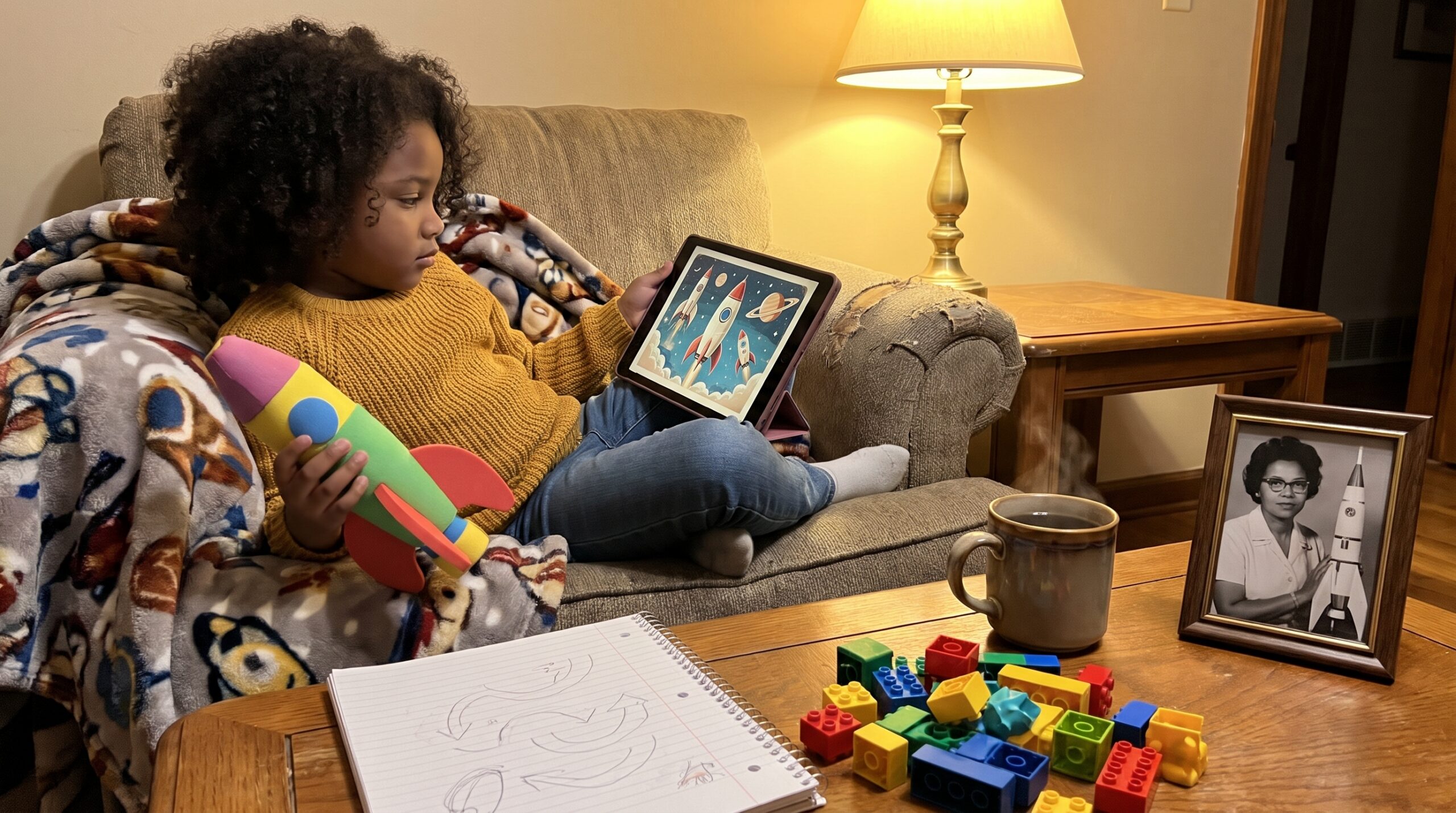
Annie Easley biography for kids begins with curiosity, numbers, and steady work. She started in 1955 at NACA, which became NASA in 1958. Because of her math skills, she helped turn calculations into real space missions.
Annie Easley biography for kids: Early life and career
Annie Jean Easley was born in 1933 in Birmingham, Alabama. She moved north and settled in Cleveland. In 1955, at age 22, Annie Easley began her career—spanning 34 years—as a “human computer” at the National Advisory Committee for Aeronautics (NACA), which later became NASA. Soon after, NACA became NASA. At first, Annie worked as a human computer. She did complex math by hand and with mechanical calculators. Then electronic computers arrived. She learned programming and moved into software work at NASA’s Lewis Research Center, now called Glenn Research Center.
What Annie Easley did at NASA
Annie Easley wrote and checked programs used to analyze rocket performance. Her code helped engineers study energy systems and battery technologies. For example, she worked on code for the Centaur upper-stage rocket. This rocket stage used powerful propellants to lift heavier payloads into higher orbits. Therefore, her analyses made missions safer and more likely to succeed.
Highlights of her work
- She moved from manual calculations to electronic programming as technology changed.
- She maintained and improved programs used in mission planning and rocket analysis.
- Her work supported the Centaur program and other spaceflight projects.
What made Annie Easley remarkable
Annie showed persistence, skill, and quiet leadership. While working full time and raising a family, she earned a bachelor of science in mathematics from Cleveland State University in 1977. She stayed at NACA and NASA for more than three decades, retiring in 1989. In addition, she served as an Equal Employment Opportunity counselor. She spoke to students and mentored younger employees. As a result, she opened doors for women and people of color in STEM.
Why Annie Easley matters today
Annie Easley biography for kids matters because it connects math, coding, and real missions. Her life shows how steady practice and curiosity can lead to big achievements. She worked during segregation and through the Apollo era, yet she quietly helped shape modern spaceflight. Today, families and classrooms can celebrate her as a role model for persistence, learning, and mentorship.
Read or listen to a story about Annie Easley now: Read or listen to a story about Annie Easley now: For 3-5 year olds, For 6-8 year olds, For 8-10 year olds, and For 10-12 year olds.
Finally, spark a little stargazing tonight. Ask a child what they would build with numbers and code. Annie’s path shows that small pencil marks and patient practice can become big, bright missions.