
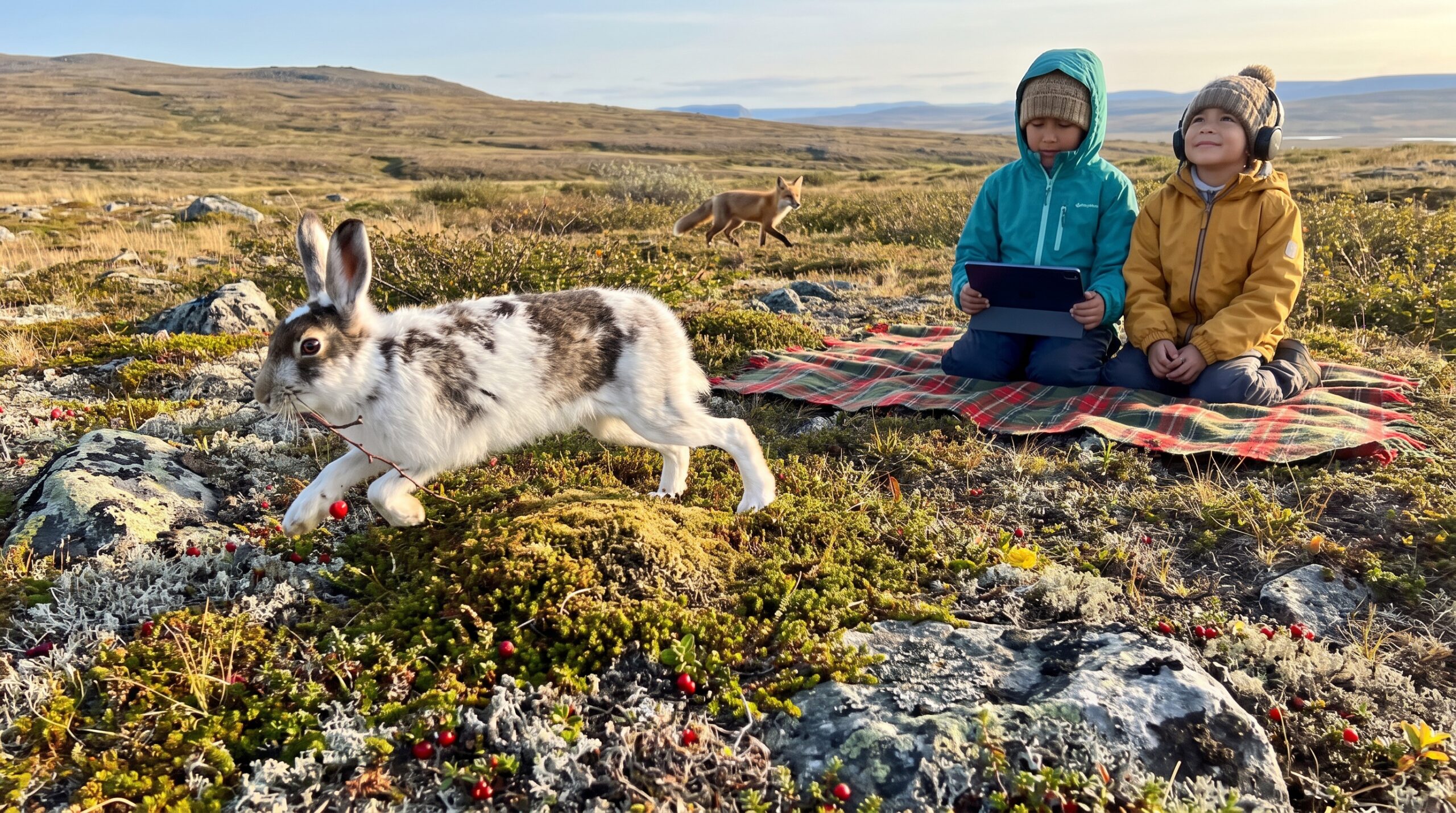
The Arctic hare facts for kids are simple and magical. Kids notice the winter coat and lean in with curious smiles. This Arctic hare (Lepus arcticus) lives on icy tundra and changes color with the seasons.
Arctic hare facts for kids: What it looks like
Arctic hares are stocky with short ears and large hind feet. Adults measure about 43 to 70 cm long and typically weigh between 3 to 7 kilograms (6.6 to 15.5 pounds) according to Canadian Geographic. Most weigh between 2.5 and 5 kg. In winter the coat turns snowy white. Then, in late spring, they molt to brown or gray. Daylight helps trigger the molt. The change helps them hide from predators and sneak across the tundra.
Diet and feeding habits of the Arctic hare
These hares are herbivores. They nibble willow and birch twigs, berries, grasses, mosses, and lichens. In the coldest months they chew bark and woody growth. They also practice coprophagy. That means they eat soft droppings to get more nutrients.
Movement, cold adaptations, and behavior
The Arctic hare runs fast to escape predators, reaching speeds of up to 60 kilometers per hour (37 miles per hour) in short bursts according to the National Wildlife Federation. Wide hind feet act like snowshoes. Thick fur covers their feet and bodies. Short ears and a compact shape save body heat. Hares shelter in snow depressions or use banks as windbreaks. They are usually solitary, but sometimes gather in winter.
Tracks, signs, and fun details
- Look for large hind tracks and small front prints.
- Find droppings and browse marks on twigs.
- Learn the word leveret. It means baby hare.
Life cycle, predators, and conservation
Breeding happens in spring and summer. Mothers make shallow nests called forms. Leverets are born furred and with open eyes. Litter sizes range from one to eight. Wild Arctic hares typically live for about 3 to 5 years according to the National Wildlife Federation. Predators include Arctic and red foxes, wolves, owls, and eagles. Humans have hunted hares for food and fur. Currently, the species is listed as Least Concern. However, climate change threatens the match between snow cover and coat timing. In a satellite-tracking study on Ellesmere Island, Arctic hares had average straight-line relocation distances of about 98 ± 18 km during fall movements, illustrating their migratory behavior as reported in a scientific study.
Simple activities and gentle tips
Try a short Storypie listen during quiet time. A 15 to 20 minute listen can boost focus. Ask children to sketch summer and winter coats. Compare which coat blends best with the background. Always observe from a distance and never feed wild hares.
Read or listen to a story about Arctic Hare now: For 3-5 year olds, For 6-8 year olds, For 8-10 year olds, and For 10-12 year olds.
Small but mighty, the Arctic hare teaches kids about camouflage and Arctic life. A short listen, a quick sketch, and a few questions turn quiet time into a curious moment.