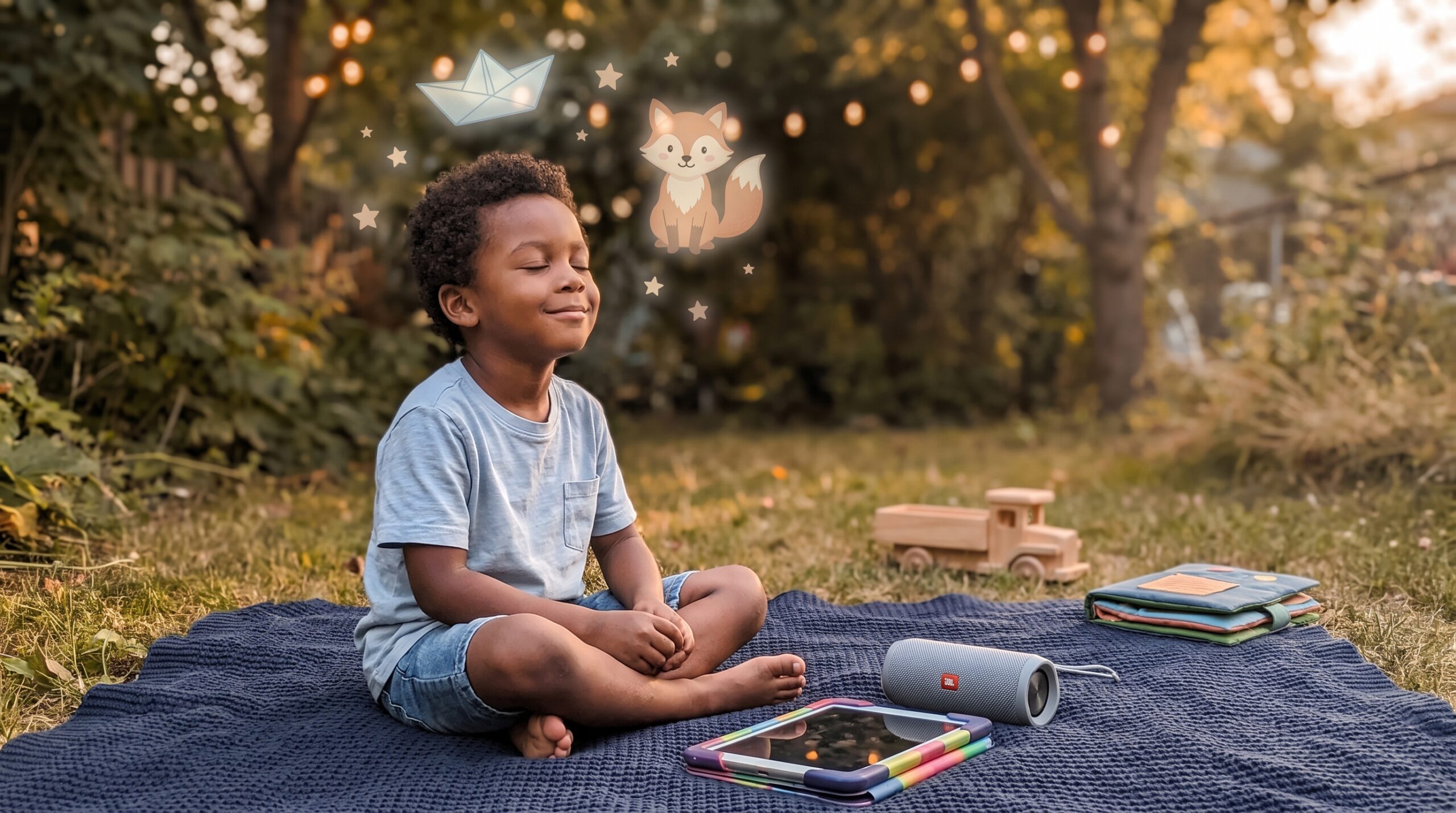
Audio first for kids brings calm and sparks imagination. I follow a simple rule: choose audio when you want quiet focus. Over hundreds of summer evenings I have watched the change. It feels like cozy magic and tiny imagination fireworks.
Audio First for Kids: Why it works
Choosing audio first reduces visual clutter. Because listening removes competing images, children use working memory to build the story. Cognitive load theory shows working memory is limited. So removing extra inputs helps kids hold characters, scenes, and plot threads. In fact, a 2024 study found that viewers reported significantly higher cognitive load when watching subtitled videos without sound, illustrating how audio can significantly reduce cognitive load.
Cognitive load and attention
Listening asks children to hold mental pictures and events. This practice strengthens attention and sequencing. Studies link regular story listening to better listening comprehension, vocabulary, and phonological awareness. Notably, research indicates that students who listen to material they have also read retain 20–40% more on follow-up tests than peers who only read. Also, when language leads, children create more personal visual details than they would from fixed images.
Benefits at a glance
- Lower extraneous cognitive load
- Stronger attention and memory
- Better listening comprehension and vocabulary
- Calmer, screen-free wind-down
Sleep, screens and calm
Audio helps at bedtime because it avoids screen light. Light from screens can shift circadian timing and suppress melatonin. A calm narrated story lowers arousal compared with quick, bright video. So short, predictable audio cues can become a reliable wind-down ritual.
Imagination and history
Oral storytelling has ancient roots. From campfires to radio, spoken stories invite listeners to imagine. Neuroscience finds listening activates visual association areas. Research from a 2023 meta-analysis found that using an imagination strategy—having learners form mental images—enhanced learning, reinforcing how audio can stimulate mental imagery. That means children do more than listen. They co-create the scene in their minds.
Accessibility and limits
Audio can be more accessible for families with limited bandwidth. It can also help children who find print hard. However, audio has limits. Children with hearing loss or auditory processing differences may need visual supports. The goal is not to replace all formats. Rather, choose audio-first when it fits your child.
Simple takeaways for parents and teachers
When you want calm, language practice, and active imagination, favor spoken stories. The science and history both support audio-first choices. A 2026 study by the National Literacy Trust found that 47.3% of children and young people aged 8 to 18 listened to audiobooks or podcasts, with 56.4% of listeners engaging at least once a week, highlighting the growing trend of audio consumption among youth. Try short sessions. Keep them predictable. Watch attention and language grow.
Try a short audio tonight
On a summer evening, swap a bright screen for a 10 minute story. Then notice the quiet that follows. For a gentle start, explore Storypie audio selections and try a short piece tonight. Visit Storypie to get the app and browse audio stories.
I do not mean audio solves everything. Instead, it is a powerful, low-stimulus option backed by cognitive science and centuries of oral tradition. For children with hearing or processing needs, pair audio with simple visuals or check with a specialist. For most families, short predictable audio sessions build language, attention, and a soft landing into sleep.
I love the quiet after a story. It sounds like tiny stars stitching the day into something soft and warm.