At Storypie I watch one simple swap work wonders. When parents choose audio-first stories cognitive load drops and imagination stretches wide. Listening gives children room to build pictures inside their heads. In short, audio helps focus and lets inner movies bloom.
Audio-first stories cognitive load: the science
Researchers divide mental effort into three types: intrinsic, extraneous, and germane. When screens flash, extraneous load climbs. As a result, children must juggle images, motion, and sounds all at once. By contrast, clear spoken stories remove competing visual demands. Therefore, the brain can use working memory for meaning and mental images. In fact, a study published in 2026 revealed that when children watched animated videos of stories, they engaged the brain’s imagination-related region around half as much as when listening to audio with static illustrations.
Neuroimaging and behavioral studies support this idea. For example, listening activates brain regions tied to sensory imagery. In practice, kids mentally paint scenes when they hear a story. A 2026 fMRI study found that participants who listened to instrumental music and imagined stories produced mental narratives that matched a consensus narrative 94% of the time when listening to explicit spoken stories.
Why that helps learning
Audio-first stories cognitive load benefits learning in several ways. First, listening reduces simultaneous inputs. So children can focus on words, ideas, and feelings. Second, audio invites internal visuals. This creates richer mental images without external pictures. Third, repeated spoken stories support vocabulary and sentence patterns. A 2026 study by the MIT McGovern Institute found that students who struggled with reading learned significantly more new vocabulary when audiobooks were paired with explicit one-on-one instruction, compared to those using audiobooks alone. As a result, language and narrative skills grow.
- Better focus: fewer inputs to juggle in working memory.
- Richer imagery: verbal cues prompt internal pictures.
- Language gains: steady spoken rhythms boost vocabulary.
Design choices that matter
Good audio is more than talking. Clear narration, calm pacing, and limited competing sounds reduce extraneous load. For preschoolers, short and repetitive episodes match attention spans. For older children, layered stories build stamina and inference skills. At Storypie we aim for steady pacing and clean mixes so listening feels effortless.
Also, episode length matters. Brief pieces help very young listeners. Slightly longer tales aid school-age children. Above all, keep narration inviting and uncluttered.
A short vignette and simple steps
Last week a parent told me they swapped a cartoon hour for a Storypie episode. Their five year old hummed a market scene for days. Small delights like that happen when kids make their own inner movies. A 2026 survey by the National Literacy Trust revealed that 47.3% of children and young people listen to audiobooks or podcasts, with over a quarter stating that listening to audio sparks their interest in reading books.
Try this tonight:
- Swap 10 minutes of screen time for a Storypie audio episode. Visit Storypie.
- Keep the room dim and voices calm.
- Ask one playful question after listening: “What did you picture first?”
Safety and balance
Audio-first is powerful, but not exclusive. Face-to-face talk, picture books, and hands-on play remain vital. Also, check volume and choose age-appropriate episodes. Whenever possible, co-listen to deepen connection.
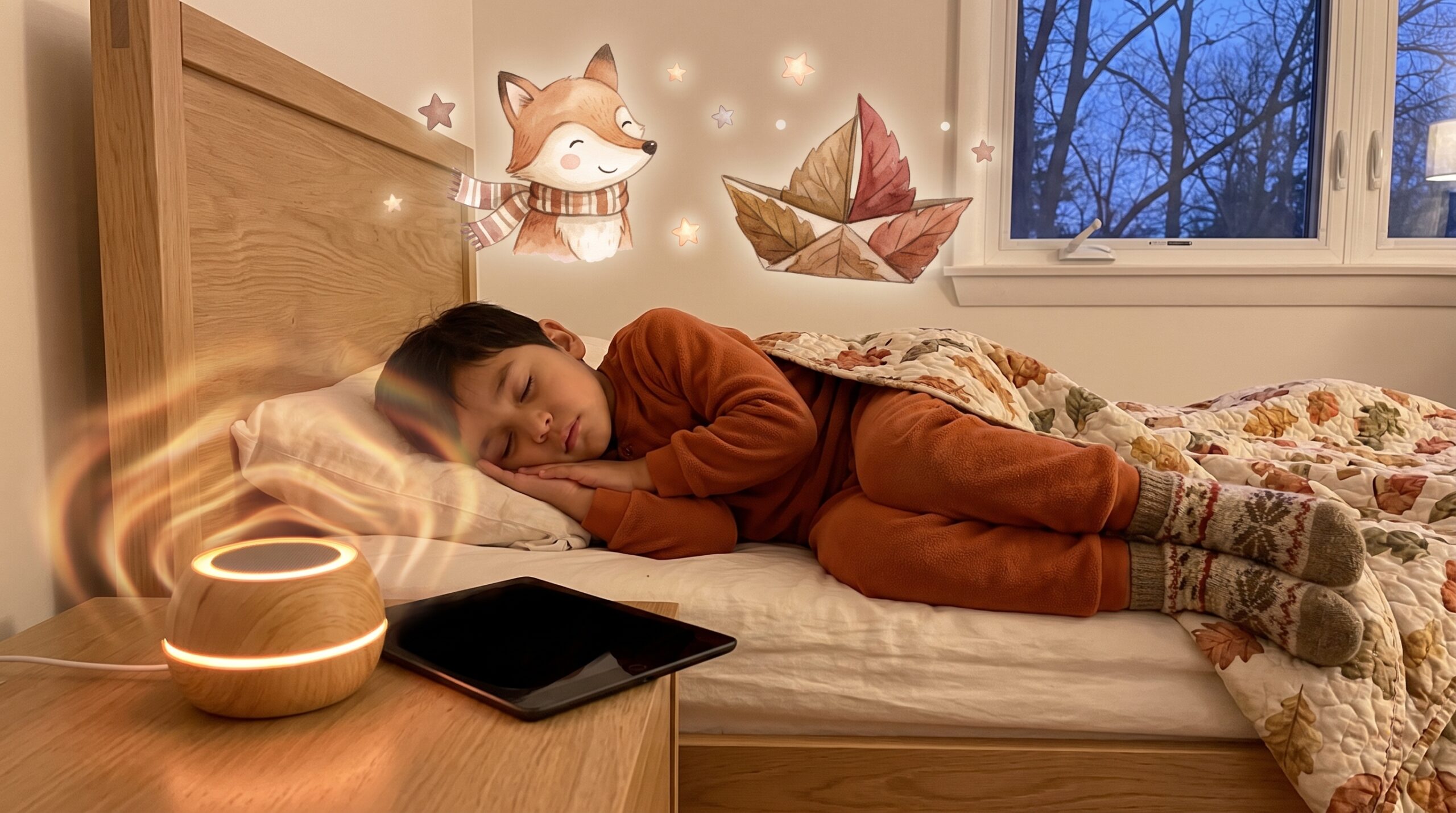
Listening before bed also avoids blue light and reduces late-night stimulation. Therefore, bedtime audio can help children settle down for sleep.
Final note
Audio taps a deep human habit: oral storytelling. In short, audio-first stories cognitive load falls. At the same time, imagination grows. If you want a gentle place to start, visit Get the Storypie app. Give your child a quiet space to imagine and see what blooms.