
I like to tell small stories to make facts stick. This post is about automobile for families and how a drive can spark curiosity. I keep sentences short and playful. Also, I add a tiny experiment you can try tonight.
A tiny history of the automobile for families
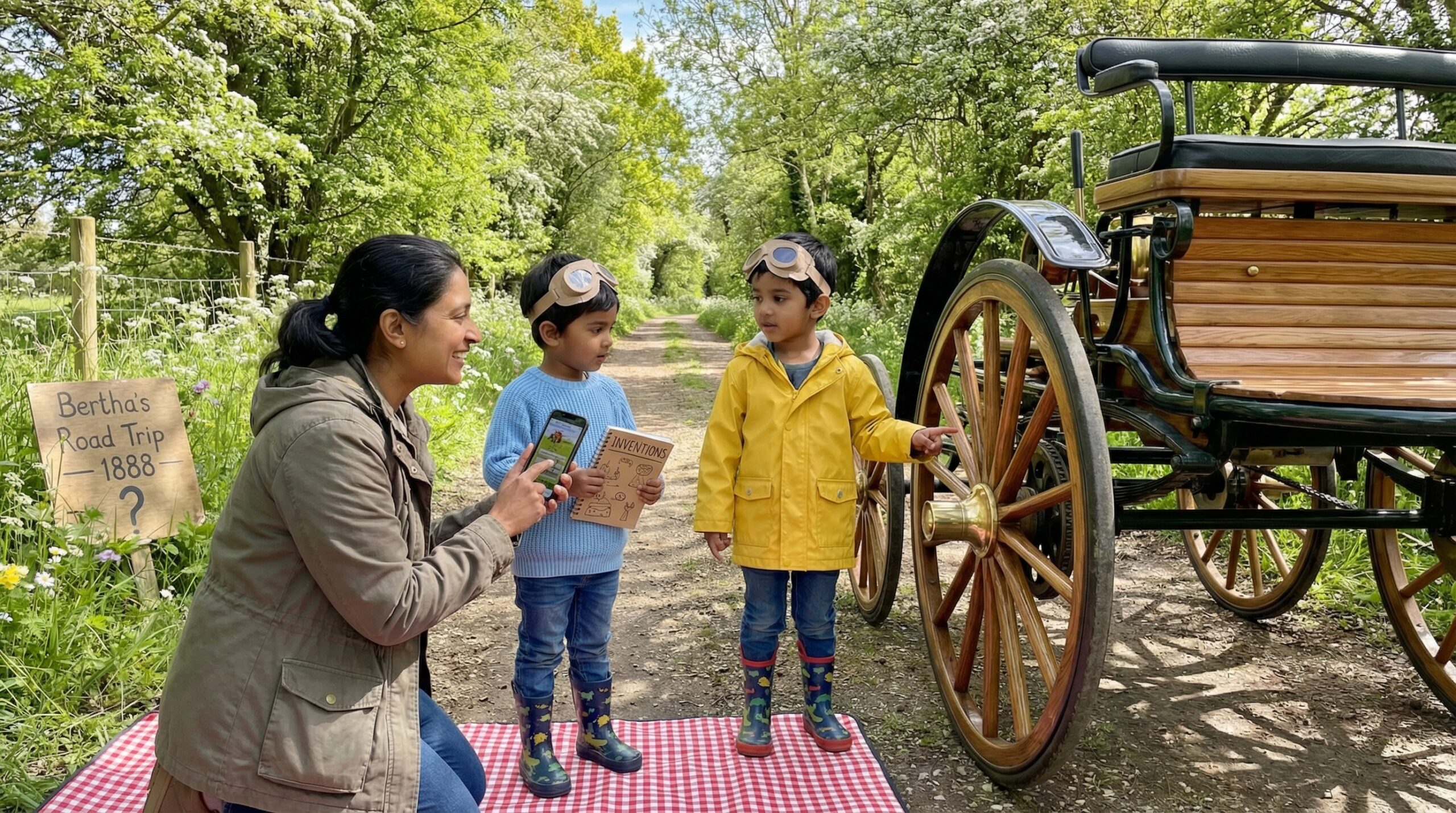
First, Karl Benz built and patented a gasoline powered Motorwagen in 1886. Then Bertha Benz drove far in 1888 and proved it worked. Also, Gottlieb Daimler and Wilhelm Maybach made early high speed engines. Henry Ford made cars many families could buy with the assembly line around 1913. Early electric cars existed in the late 1800s. Hybrids grew in the 1990s, and modern electric vehicles became common in the 2000s and 2010s. In fact, by the end of 2023, the global stock of light-duty plug-in electric vehicles reached 40 million units, with a market share of 18% in new car sales for that year, highlighting the growing preference for electric options among families according to Wikipedia. These steps changed how families travel.
How a typical car works
The engine or motor makes motion. The transmission sends power to the wheels. Brakes slow the car. Steering points the car where you want to go. The battery stores electricity. The body and chassis hold everything together.
For internal combustion cars, fuel and air burn in the engine. Tiny explosions push parts and turn the wheels. For electric cars, the battery sends electricity to a motor that spins. Therefore, no burning happens in many modern vehicles. In 2024, electric car sales topped 17 million worldwide, representing more than 20% of new passenger cars, with the global electric car fleet reaching almost 58 million by the end of that year according to the International Energy Agency.
Types you will see on drives
Here are common types you might spot. Many now come in electric versions too.
- Sedan and hatchback, comfy for small families
- SUV, bigger and higher off the ground
- Pickup trucks, with an open cargo bed
- Minivan, for many passengers
- Convertible, a roof that opens
Safety and the planet
Use seat belts every trip. Also follow maker instructions for child seats. Keep infants rear facing as recommended locally. Never leave a child alone in a parked vehicle. Teach kids not to play near cars.
Gas cars make CO2 and other pollution. Cleaner fuels, catalytic converters, hybrids, and electric vehicles reduce some harms. For instance, in the European Union in 2024, battery-electric cars held a 13.6% market share of new passenger-car registrations, with total new EU car registrations around 10.6 million units according to the European Automobile Manufacturers’ Association. Walk more, carpool, bike, or use public transit when you can. Finally, choose efficient vehicles and keep tyres pumped for better mileage.
A zippy, tiny experiment
I once built a cardboard balloon car with my daughter and she squealed when it zoomed. Try this quick model to feel push and resistance. It is simple and fun. It shows how a force makes motion, like engines do.
Read or listen to a story about Automobile now: For 3-5 year olds, For 6-8 year olds, For 8-10 year olds, and For 10-12 year olds.
For more curious kid-friendly facts, visit Storypie. You can also get the Storypie app for easy listening.