
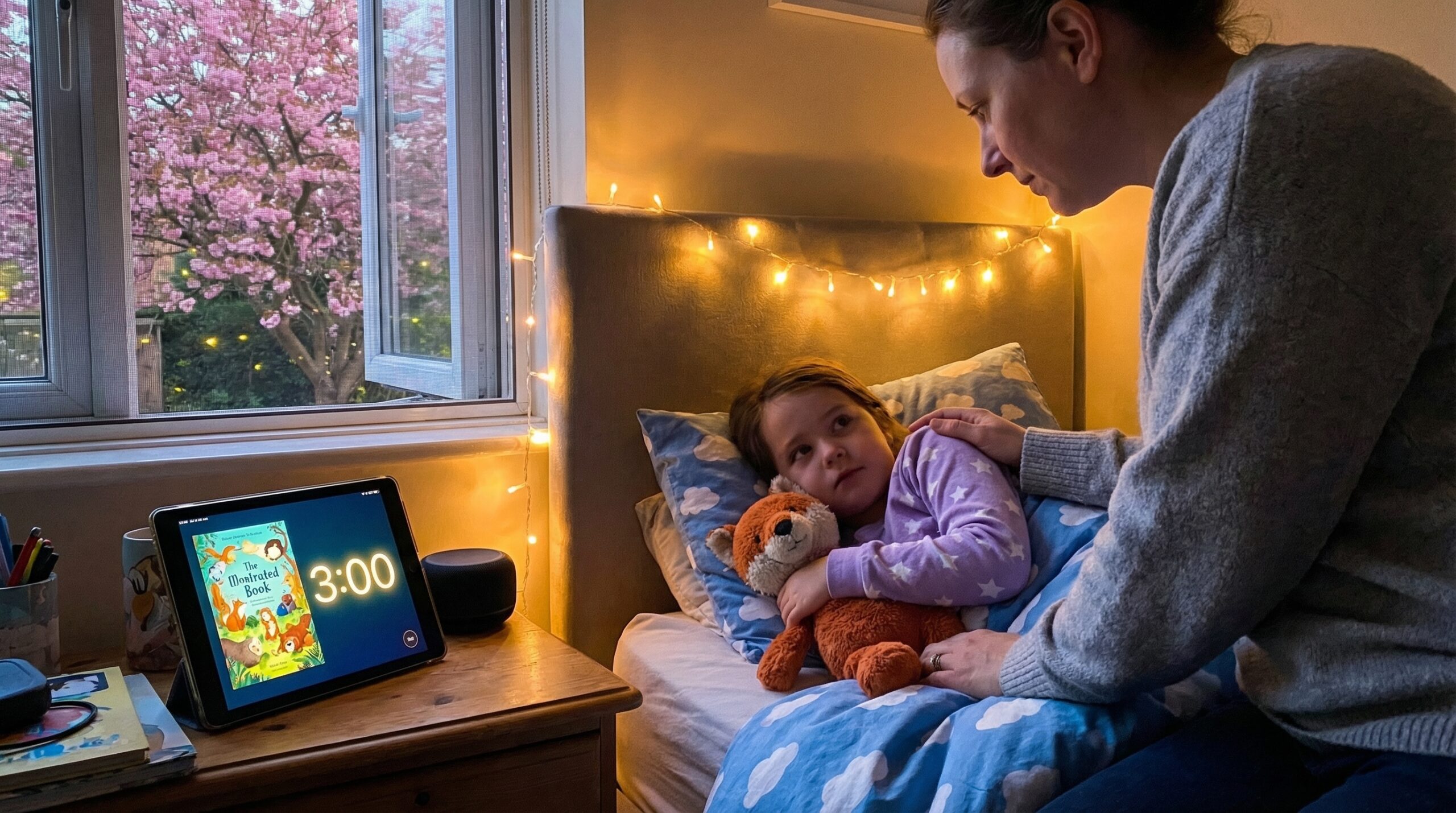
Bedtime mini story ritual is a tiny, predictable story used at tuck-in. It lasts two to five minutes and signals that day is done. For busy families, this little routine brings calm and steady sleep cues. In fact, a 2025 study found that 71% of parents agreed that storytelling helps their children wind down at bedtime, with 49% naming it their preferred method.
What it is
A bedtime mini story ritual is short, soft, and rehearsed. Parents use it as a gentle cue at the bedside. It has three parts: a cue, the story, and the settle. First, dim the light or offer a hero line on a card. Next, use calm narration with quiet verbs and few surprises. Finally, hold a hug then a soft exhale. Over time the mini story becomes a reliable sleep cue. The National Sleep Foundation recommends a short, consistent bedtime routine for children (about 30 minutes is typical) and advises dimming lights and turning off screens in the lead-up to bed; 20–30% of babies and toddlers experience sleep problems.
Why the bedtime mini story ritual works
Predictable routines lower arousal. As a result the body shifts from busy to rest. Heart rate eases and sleep-friendly hormones rise. Repetition builds emotional safety. Also, the brain links the mini story to sleep. The result is faster sleep onset and fewer night wakings. Research shows that a 2025 Sleep Health study found that 62% of parents of infants reported having a bedtime routine, which was associated with longer consolidated night sleep and fewer parent sleep disturbances.
Small language gains
Short stories nudge vocabulary and listening skills. In fact, three minutes of repeated, predictable language boosts early comprehension. So the ritual doubles as a tiny language builder. Moreover, a 2024 longitudinal analysis found that substituting 50% of weekly screen-based media time with book reading (about 20 minutes/day) was associated with improved overall sleep quality in preschoolers.
Checklist for a quick tuck-in
- Length: aim for 2 to 4 minutes. Three minutes is ideal.
- Tone: soft, steady, present or soothing past tense.
- Predictability: choose the same opening and closing lines.
- Physical cue: dim lights, lower your voice, tuck the blanket.
- Delivery: parent read first or use audio. Keep screens off or very dim.
Formats that travel well
Paper books work. A single board page or a two-page spread will do. Also audio-only tracks play from a bedside speaker. In addition, narrated apps offer curated calming stories with length tags. Hybrid works too: a short line read by a grownup followed by a three-minute audio fade out.
Spring and travel tips
Spring evenings are perfect for a gentle tuck-in. On the road, bring a small travel lamp and one favorite short book. Also try audio-first with different caregivers. The ritual travels well because it is portable and consistent.
Who benefits
Toddlers and preschoolers show the biggest change quickly. Early school-age children enjoy short, predictable end-of-day stories too. For infants, focus on voice and touch instead of narrative. As kids grow, offer a tiny choice like picking the hero line or the final hug. Interestingly, a 2025 study reported that a two-week nightly bedtime reading routine improved empathy and creativity in children aged 6–8, showing significant gains in cognitive empathy and creative fluency.
Signs it is working
You will notice less time to fall asleep. Tucking will feel calmer. Night wakings may ease. Bedtime fights should fade. If these things happen, the ritual is doing its job.
Practical notes
Minimize bright screens before bed. Use night mode and low volume when needed. Prefer audio-first when possible because it helps keep hands free. A whisper of magic, a pocket-sized calm, and five extra minutes saved for everyone.
Try the bedtime mini story ritual tonight. For a gentle start, explore calming stories on Storypie or find short audio tracks that match a three-minute tuck-in.