
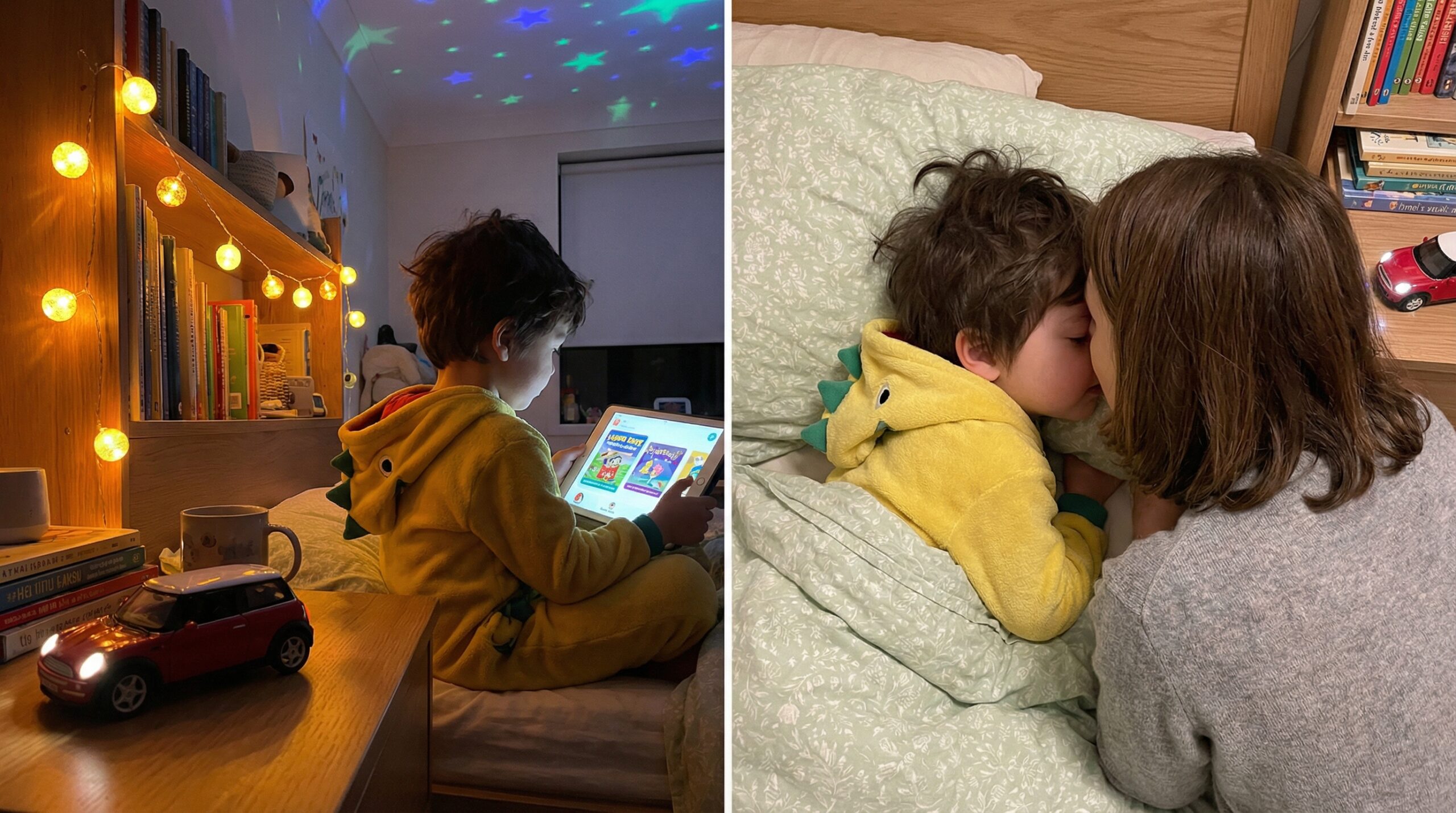
Start a bedtime wind-down mini story ritual tonight and watch the hush spread. This simple last story signals calm. Over time, the cue helps a child relax and settle faster. In fact, a 2025 survey found that 71% of parents agreed that storytelling helps their children wind down at bedtime, with 49% naming it their preferred method.
What the bedtime wind-down mini story ritual looks like
Keep the ritual short and steady. First, finish teeth and pajamas. Then, dim the light. Choose one brief tale that lasts three to seven minutes.
Use a soft voice or low-volume audio. Avoid bright screens and fast plots. Consistency turns the single story into the final sleep cue. Research shows that consistent bedtime routines, including storytelling started as early as 3 months, are associated with fewer night-time awakenings, reduced sleep problems, and longer sleep durations by age 3.
Structure, length, and the gentle rule of small
Short and simple wins every night. For toddlers and preschoolers, aim for three to seven minutes. For school-age children, five to ten quiet minutes work best.
For babies under one, focus on steady sounds and caregiver touch. If a child feels restless, shorten the tale. If they need comfort, add a one-minute quiet chat after the story.
Practical checklist
- Teeth and pajamas first
- Dim the lights and lower voices
- Pick one short story and play it last
- Keep devices out of reach and volume low
Why the mini story ritual works
Routines shape sleep. Predictable habits reduce resistance and shorten time to fall asleep. Repetition trains the brain to link one cue to sleep.
Also, brief listening supports language growth. Even a tiny story adds new words and sentence patterns. Most of all, the ritual builds attachment. The hush and the hug tell a child they are safe. According to the American Academy of Pediatrics, pediatricians are now recommended to promote shared reading ‘starting at birth and continuing at least through kindergarten’ as an essential component of primary-care pediatric practice.
Age adjustments and small tweaks
For infants, choose humming and soothing talk instead of a plot. For toddlers, pick calm themes and simple images. For older kids, keep chapters short and low-key.
Finally, watch your child. If nothing changes after two to three weeks, try a new timing, a shorter story, or a different voice. Small tweaks make big differences.
Signs the bedtime wind-down mini story ritual is working
You will notice calmer evenings. Bedtime battles ease. Sleep onset becomes quicker. Night awakenings may drop. The room will hold a softer hush.
If improvements do not appear, change one thing at a time. Try a shorter story, move the ritual earlier, or swap the audio voice.
A tiny invitation
Try one tonight. Dim the lamp. Smooth a warm blanket. Choose a calm tale and let that single story be the last voice your child hears.
For families who prefer audio, try Storypie for clear narration and a simple player. The app keeps the ritual hands-free and screen-free so a gentle five-minute story is always ready. In fact, Scholastic’s Kids & Family Reading Report found that 51% of preschoolers (ages 0–5) are read aloud to at home 5–7 days a week, demonstrating a strong foundation for bedtime story rituals.
Keep it small. Keep it steady. When your child drifts off on their own, the ritual is working. Pure bedtime magic, truly delightful.