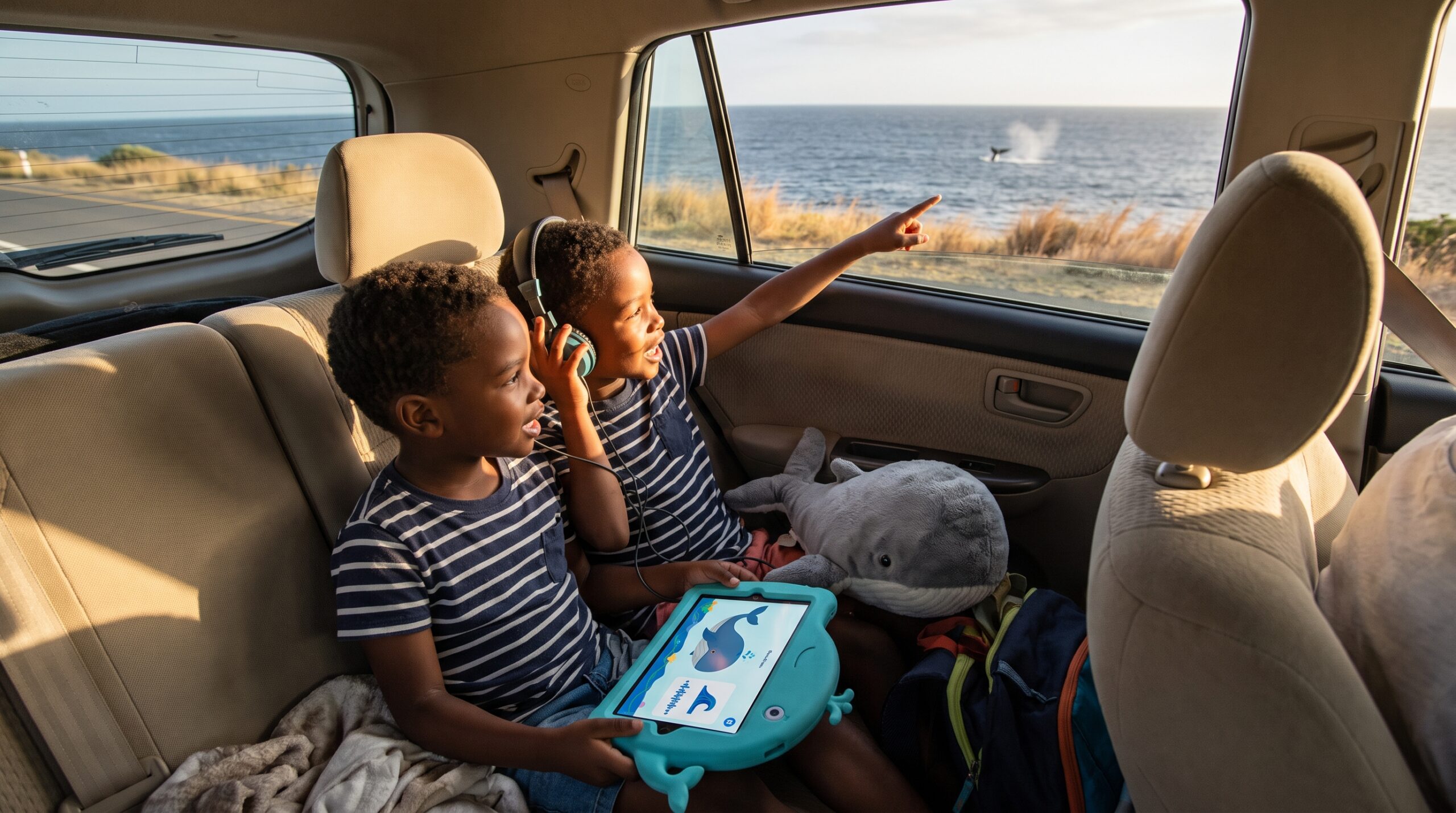
I love sharing blue whale facts for kids at bedtime. These short facts surprise and delight. Also, they work great on a summer afternoon. Tip: Play a Storypie story during a 3pm car ride to spark curiosity.
Read or listen to a story about Blue Whale now: For 3-5 year olds, For 3-5 year olds, For 6-8 year olds, For 8-10 year olds, and For 10-12 year olds.
Blue Whale Facts for Kids: Quick snapshot
The blue whale is Balaenoptera musculus. It is astonishingly huge and wonderfully graceful. Adults usually measure 24 to 30 meters long, but they can reach lengths of up to 33.5 meters (approximately 110 feet) in rare cases. They weigh about 100 to 200 tonnes. That mass tops several school buses. Their skin looks bluish gray with pale mottles. Also, they have a broad flat head and a small dorsal fin near the tail.
How they eat and live
Blue whales eat tiny shrimp like animals called krill. In feeding season a whale can eat three to four tonnes of krill a day when food is dense. They lunge forward with a giant mouthful of water and krill. Then they push the water out through baleen plates. This style of feeding looks dramatic and sounds mighty.
Where they travel and sing
Blue whales live in all major oceans. Many travel long distances from cold feeding grounds to warmer breeding waters. Also, they sing. Their calls sit near 10 to 40 Hz. Those low tones travel hundreds of kilometers underwater. Scientists use recordings to learn where whales roam and how they communicate.
Growing up and looking after calves
Gestation lasts about 10 to 12 months. Mothers usually give birth to a single calf. Newborns measure roughly 6 to 7 meters long. They grow fast and gain many kilograms each day. Nursing provides very rich milk. Lifespans often reach 70 to 90 years.
History, threats and how scientists help
Commercial whaling once cut blue whale numbers dramatically. Today conservation groups list them as endangered. Major threats include ship strikes, entanglement, ocean noise, and changing krill supplies from warming seas. Scientists track whales with surveys, satellite tags, and acoustic monitoring. That work guides better protections.
How families can learn and help
If you go whale watching, pick a responsible operator. Keep a safe distance, often 100 to 300 meters. Also, never touch or try to rescue a stranded whale yourself. At home try a mini challenge: draw a blue whale next to a bus to show scale. I dare you to show the drawing at dinner tonight.
- Fun tiny facts: A blue whale’s heart is about the size of a small car.
- Also, its mouth can hold hundreds of liters of water.
- Scientists tag whales to follow them and record songs with hydrophones.
Listen to whale calls on Storypie and imagine the deep rumble. For more family-friendly stories and the app, visit Storypie. Also, try the drawing challenge and share it at the dinner table.