
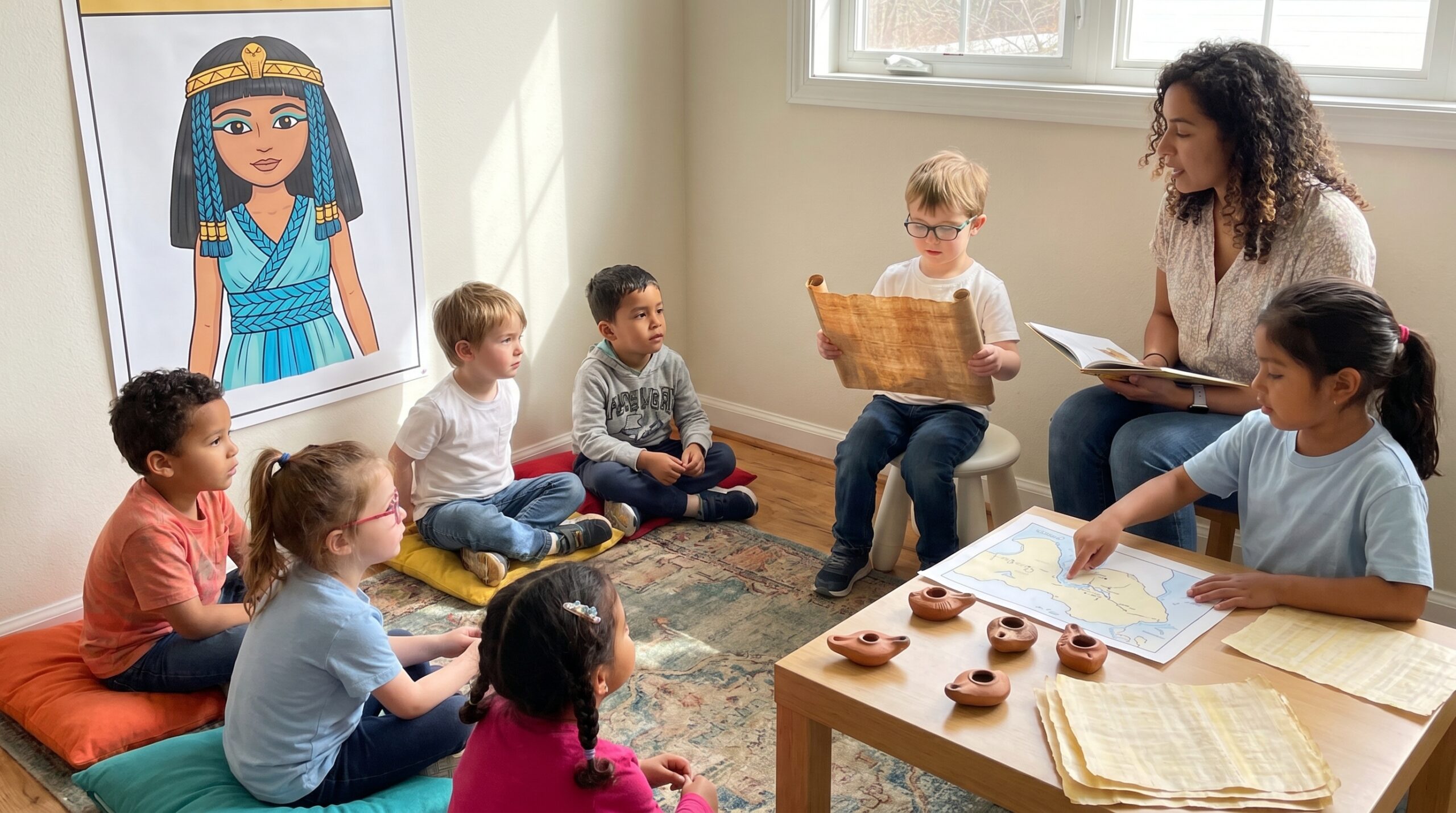
Cleopatra VII biography for kids introduces Cleopatra VII, the last active Pharaoh of Egypt. She lived about 69 to 30 BC. Clever and curious, she spoke many languages. She loved her kingdom and worked hard to protect it.
Who was Cleopatra VII? A short Cleopatra VII biography for kids
Cleopatra VII Philopator was born around 69 BC and died in August 30 BC in Alexandria, Egypt. She came from the Ptolemaic dynasty, a Macedonian Greek royal family. After Alexander the Great, her family ruled Egypt. Cleopatra ruled Egypt for 21 years, from 51 BC until her death in 30 BC. At first, she ruled with her father. Later she shared power with her brothers. Court life mixed family politics and co-rulership. Cleopatra was the first member of her dynasty to learn the Egyptian language, in addition to her native Greek. She used education and language to connect with Egyptians. Because she spoke Egyptian and Greek, she won trust and respect.
How Cleopatra VII ruled
Cleopatra did more than wear crowns. She managed grain shipments and guided diplomacy. Also, she took part in military planning. She used Egyptian religious symbols to reach her people. For example, she linked her image to the goddess Isis. Coins, statues, and written records show a ruler who chose Egyptian styles to speak to her people.
Rome, alliances, and the fall of the Ptolemies
Cleopatra formed important alliances with Rome. In 48 BC she met Julius Caesar. Their meeting helped her regain the throne. Their son, Caesarion, became a political symbol. Cleopatra had four children: Ptolemy XV Philopator Philometor Caesar (known as Caesarion) with Julius Caesar, and Alexander Helios, Cleopatra Selene II, and Ptolemy Philadelphus with Mark Antony. After Caesar died, Cleopatra allied with Mark Antony. Their story mixes politics and romance, and then it turned tragic. Their fleet lost at Actium in 31 BC. Finally, in 30 BC, Cleopatra’s death marked the end of the Ptolemaic dynasty and the beginning of Roman rule in Egypt.
Myths and facts about Cleopatra VII
Stories about Cleopatra often feel dramatic. Ancient writers sometimes shaped them to serve politics. As a result, some accounts are biased. Historians rely on coins, Egyptian records, and archaeology in Alexandria. They also read old texts carefully to separate fact from fancy.
Why Cleopatra VII matters to kids
Cleopatra shows leadership, curiosity, and courage. She learned local languages to lead better. She made bold choices to defend her country. Because of this, her life offers rich examples for children. For teachers and families, her story can spark empathy and discussion about identity and power.
Simple activities and a short timeline
Try quick, child-friendly activities that bring history to life. For example, ask a child to name one brave choice Cleopatra made. Also, draw a coin portrait and compare it with a modern photo.
- Timeline highlights:
- Birth c. 69 BC
- Meets Caesar 48 BC
- Actium 31 BC
- Death 30 BC
Read or listen to a story about Cleopatra VII now: Read or listen to a story about Cleopatra VII now: For 3-5 year olds, For 6-8 year olds, For 8-10 year olds, and For 10-12 year olds.
Tip for teachers and families: pronounce her name KLEE-oh-PUH-truh and show a map of Alexandria on the Mediterranean. Use coins and portraits to explain bias. Also, share that archaeologists keep finding palace remains under the sea. Historians ask questions to sort facts from fancy.
We bring Cleopatra VII’s story to life for curious kids. Try Storypie for friendly narration, simple timelines, and kid-safe activities. Get the Storypie app for narrated biographies and more.
Final thought: Cleopatra mixes fact and legend. She teaches us about courage, language, and leadership in a wonderfully human way.