
Clothes dryer care keeps your machine safe, efficient, and family-friendly. Once a novelty in the 1930s, the clothes dryer gave families warm clothes and more free time. Today, a little care keeps that comfort going. In fact, the average household operates their clothes dryer for approximately 213 cycles per year, contributing to domestic energy use that exceeds $7 billion annually in the United States, which is equivalent to 27 million tons of CO₂ emissions according to Earth.com.
Clothes dryer care: How a dryer works
A dryer tumbles clothes inside a rotating drum. Warm air moves through the drum and helps moisture evaporate. Vented models push moist air outside. Condenser dryers collect water in a tank or send it to a drain. Heat-pump dryers reuse heat and use much less energy. A removable lint screen catches fluff and keeps air flowing. Proper maintenance is crucial, as in 2023, the U.S. Consumer Product Safety Commission estimated that 15,500 clothes dryer fires occur annually, causing an average of 10 deaths and over $84.4 million in property damage according to the U.S. Fire Administration.
Types of dryers at a glance
Families choose from a few common dryer types. Each has clear traits and needs basic care.
- Vented: Simple. It blows moist air outside and needs a vent.
- Condenser: No external vent needed. It collects water in a tank or drain.
- Heat-pump: Very energy smart. It recycles heat for better efficiency.
- Gas: Uses gas for heat. It still needs venting and checks.
Common features and settings
Most machines offer timers, moisture sensors, and heat settings. Many include steam refresh cycles and anti-crease options. You will also see child locks and capacity listed in kilograms or cubic feet. Typical cycles take 30 to 80 minutes. Load size, fabric, and cycle choice affect time.
Safety basics for clothes dryer care
Good clothes dryer care prevents fires and keeps families safe. Clean the lint filter after every load. Also inspect vent ducts and clean lint buildup. Empty condenser tanks or check drains on condenser and heat-pump models. Regular maintenance is vital as dryer fires are a serious risk, with an estimated 15,500 occurring each year in the U.S. According to the U.S. Fire Administration, these incidents can lead to significant injuries and property damage.
- Never dry items soaked with flammable liquids like gasoline or certain solvents.
- Use child locks and never let children play inside the drum.
- If venting runs outside, check the outlet for blockages and animal nests.
Clothing care and settings
Read labels for tumble dry symbols. High heat can shrink cotton and felt wool. Also delicate synthetics can lose shape. Choose lower heat for mixed loads. Use short cycles for delicates. These simple steps protect clothes and the dryer.
Practical family tips
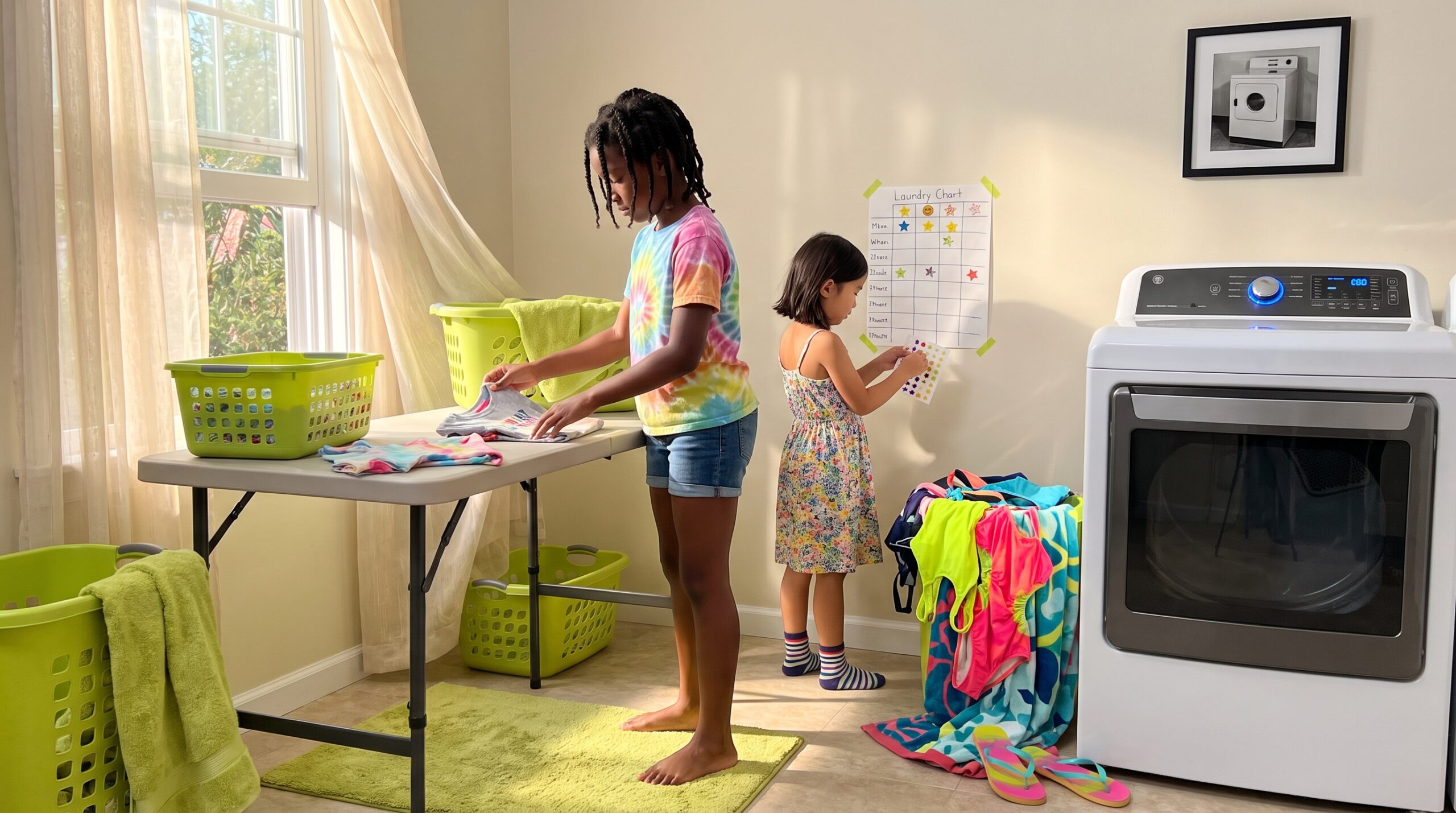
Turn drying into a tiny chore routine. For example, have kids fold one item per load or race to match socks. Warm, snuggly pajamas feel extra special after a spin in the dryer. Try a small reward for helpers, like a sticker or a bedtime story. It really sticks.
Troubleshooting and when to call a technician
If clothes take longer to dry, first check the lint trap and venting. Strange noises may mean an object in the drum or a worn belt. No heat, persistent error codes, or blocked vents deserve a qualified repair visit. For safety, get professional help when in doubt.
Final thought
From clotheslines to modern heat-pump machines, dryers changed family life. Simple clothes dryer care keeps the warmth and convenience coming. A few small habits protect your appliance and your home for seasons to come.
Read or listen to a story about Clothes Dryer now: For 3-5 year olds, For 3-5 year olds, For 6-8 year olds, For 8-10 year olds, and For 10-12 year olds.
Learn more on Storypie: Storypie.