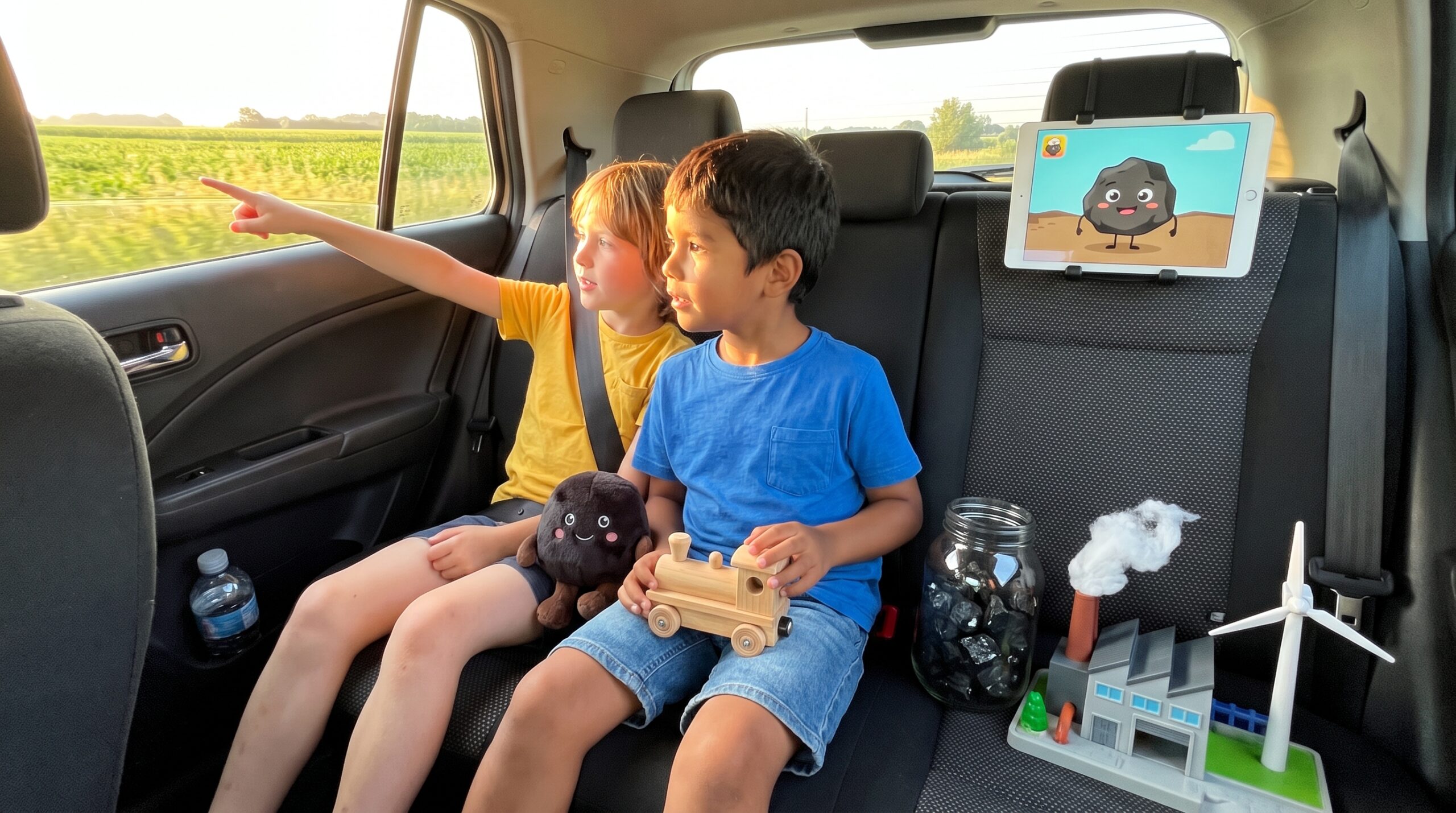
One summer morning I played the Coal story on Storypie while making breakfast. Coal for kids is a great conversation starter. My child sat very still and then asked a question I love: how did this black rock get so hot and useful? So here is a short, friendly answer that sparks chat and even a goofy experiment.
Coal for kids: how coal formed
First, coal began as plants. Lots and lots of plants grew in swamps and peat bogs. Then the plants piled up and got squashed by other plants and dirt. Over millions of years, heat and pressure slowly changed that plant pile into coal.
Next, the change has stages you can name. For example:
- Peat is the first soggy layer.
- Lignite follows as a soft, brown coal.
- Subbituminous and bituminous are next.
- Finally, anthracite is the hardest and hottest burning.
Bituminous coal is the most common for power and for making coke for steel. Anthracite burns hottest and cleanest of the coals.
Simple timeline and history
Long ago, during the Carboniferous era, many coal beds formed. That was about 359 to 299 million years ago. Then, during the Industrial Revolution, people burned coal to run steam engines, trains and factories.
In the 20th century, coal fed many power plants. Today, use falls in some wealthy countries. In fact, in 2024, U.S. coal production declined by 11.3% from the previous year, reaching 512.5 million short tons, reflecting the ongoing challenges in the industry.
Where coal comes from and how we get it
People mine coal two main ways. First, surface mining scrapes away soil to reach coal seams. Second, underground mining tunnels down to remove coal. Both methods change the land and need careful safety rules.
Also, mining brings risks. Miners can face collapses, methane explosions and long term lung disease. Therefore, communities built around mines depend on these jobs. So transitions away from coal matter for real families.
What we use coal for now
Coal heats boilers to make steam. Then the steam spins turbines and drives generators to make electricity. Also, coal becomes coke for steelmaking and it supplies industrial heat.
Finally, although coal is a heavy hitter in some countries, its share is shrinking in others.
Big tradeoffs
Burning coal releases carbon dioxide. Because of that, coal makes climate change worse. Also, coal smoke carries sulfur, nitrogen oxides, mercury and tiny particles that harm lungs and hearts.
Coal ash can pollute rivers if people do not manage it well. Governments and companies use scrubbers, filters and coal ash rules to cut pollution. Meanwhile, people talk about carbon capture and storage, called CCS. However, CCS is expensive and still rare. So the phrase clean coal feels hopeful to some and controversial to others.
How to explain coal to kids
Show a lump of coal and ask, how old do you think this is? Then say: it started as plants, and got squashed and slowly cooked. Try a simple demo: stack books on a wet sponge to show pressure. Also, point out that coal is nonrenewable. It takes millions of years to form. Once we use it, it is gone for our lifetimes.
Safety and a quick family prompt
Do not play near mines. Coal dust is messy and can be harmful. If you want a five minute spark, ask: would you power your town with coal, sun, wind or both? Let your child pick and explain one reason.
Then ask them to draw a tiny idea of a cleaner town. Tonight, ask your child to name one thing they would power with coal and one with wind. Celebrate both answers. That tiny conversation grows curiosity and confidence, and it only takes a few minutes.
Read or listen to a story about Coal now
Read or listen to a story about Coal now: For 3-5 year olds, For 6-8 year olds, For 8-10 year olds, and For 10-12 year olds.
If you liked this quick guide, try a Storypie story with your child tonight. It is an easy, gentle way to bring science and wonder home.