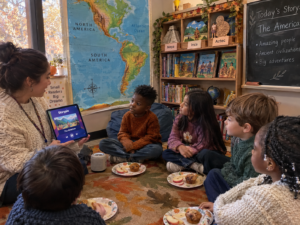

Create your own hero is the heart of this weekend imagination challenge. It invites families to invent a bright, original hero together. In just a few minutes kids light up and proudly tell one more scene.
What the weekend imagination challenge is
This weekend imagination challenge is a short, family activity. It centers on inventing a hero as a shared moment. Typically, sessions last 10 to 30 minutes. They stay fast, playful, and social-media friendly.
Origins and purpose
The challenge grew from simple family play ideas. Parents and teachers wanted a tiny, repeatable ritual. As a result, it now helps families add imagination to a busy weekend. Above all, it focuses on joy, language, and confidence. In fact, in 2023, 85% of Chief Marketing Officers (CMOs) globally viewed creativity as a catalyst for economic growth, highlighting the importance of creative activities like this one within families according to Dentsu Creative.
Why families try the challenge: create your own hero
Families use this challenge for clear, practical reasons. First, it sparks confidence in children. Also, it boosts vocabulary and sequencing skills. Finally, it strengthens parent-child bonding with a short shared activity. That payoff feels real and immediate. Moreover, research shows that imaginative play, such as creating heroes, can lead to stronger social skills and better theory-of-mind abilities, especially in children who engage with imaginary friends as found in a study by Paige E Davis et al..
Typical features
The weekend imagination challenge often includes these elements. These features make it quick and repeatable.
- One friendly prompt to start the idea.
- A name, a strength, and a small flaw for the hero.
- A sensory detail like a sound or color.
- A brief enactment, drawing, or telling moment.
- A short follow-up at bedtime where the child continues the tale.
Age range and formats
Parents can adapt the weekend imagination challenge for ages three to twelve. For preschoolers, keep prompts visual and concrete. For older kids, add choices, small obstacles, or a sidekick. Moreover, this activity scales across low tech and digital tools. For instance, you can save and play stories with Storypie. Try saving a hero sketch and an audio clip to replay later. Use the app to keep privacy settings on and avoid sharing precise locations.
Inclusivity, safety, and celebration
Include characters from different cultures and abilities. Also use inclusive language and props. For safety, avoid full names and exact locations when sharing. Celebrate by posting a drawing on the fridge or recording a short audio of the child telling the next scene. Joy matters more than polish. Notably, nearly 2 out of 3 children—approximately 66%—have imaginary friends during childhood, which underscores the significance of such imaginative activities according to the Cleveland Clinic.
Signs it worked
Success shows up as more play, more retelling, and more pride. Children who enjoy the challenge often ask for one more scene. They beam when adults notice their ideas. That moment is the real reward. Additionally, as creative collaboration evolves, it’s interesting to note that in 2023, 60% of creative teams operated in a hybrid working model, indicating a growing trend in teamwork that can inspire family activities from Screendragon.
Want to keep a story safe? Save and play the story with Storypie (Storypie website). Or get the Storypie app to store voices and drawings (download the app).
Short and sweet, the weekend imagination challenge helps families build lasting, silly memories. Try a quick hero idea and watch imagination win.