What is the create your own hero challenge?
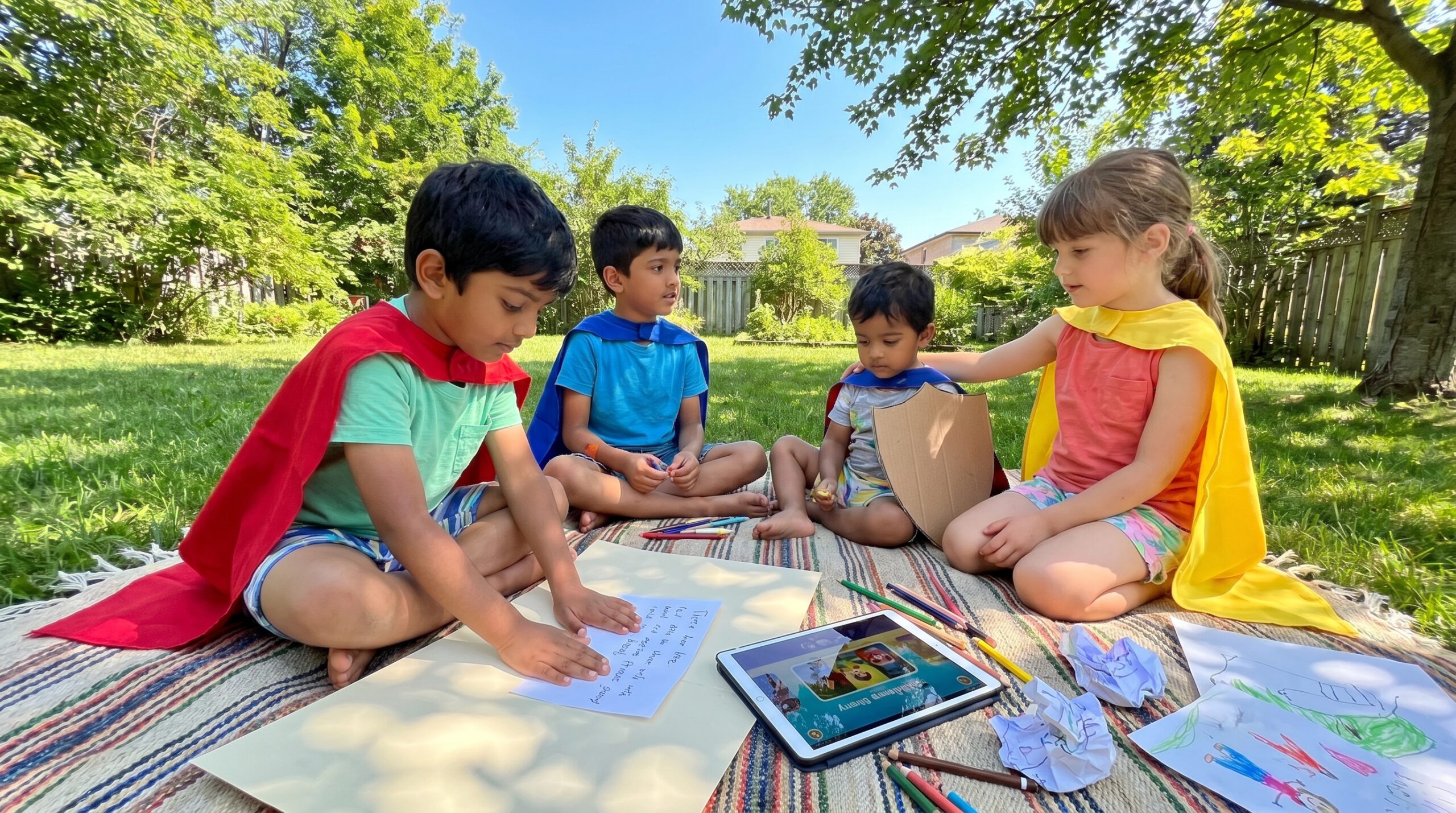
The create your own hero challenge invites families to spend a weekend moment building a new hero together. It fits a quick 15 to 30 minute burst or a longer afternoon. Above all, it stays playful and low pressure.
Families name a hero, pick one brave or kind choice the hero makes, and list a few traits or abilities. The prompt sparks empathy, language, and imaginative play in a tiny, mighty package. A 2025 study involving 300 children aged 4–6 found that a 16-week intervention using digital games (creative painting, digital scenarios, story creation) led to significant improvements in creative expression, showcasing the positive impact of creative activities on children’s imagination.
Why the create your own hero challenge works
Naming a character gives children control and voice. When a child names a hero and chooses one kind action, they practice expressive language and perspective-taking. Research shows imaginative play supports vocabulary growth, planning, and social-emotional skills. For these reasons, the challenge blends fantasy with moral thinking. In fact, a 2025 meta-analysis of 78 studies involving 21,456 participants found that creative play positively influences creativity development in children, with variations based on age, culture, and play type.
Also, asking for a single brave or kind choice keeps the scene simple. That single choice helps kids imagine consequences and feel for others. Over time, the moments add up to bigger confidence. Additionally, a 2023 study showed that children aged 5–6 who used digital devices with siblings or peers exhibited significantly higher imagination flexibility scores compared to those who played alone or with an adult, emphasizing the social aspect of imaginative play.
How to run the challenge
Pick a weekend slot. Fifteen minutes works well. Or stretch it into an afternoon of drawing and play.
- Start with name and trait. Try: “Hero name, one brave choice, one thing they care about.”
- Keep materials simple. Paper, crayons, or spoken prompts work fine.
- Share safely. If you show scenes online, use a family account and avoid personal details.
Next, repeat the challenge often. Replay builds longer stories and richer language.
Example scene
Hero name: Rain-Runner. Rain-Runner sees a small duck stuck in a puddle, lifts it gently with a towel, and hums a brave little tune to calm it. The rescue is simple, sweet, and makes everyone near smile.
What to expect and how to celebrate
Expect more words and longer ideas each time you play. A preschooler may offer two words and a gesture. An older child might sketch motivations or name a fear the hero must face.
Celebrate with a quick read-aloud. Or try an “author chair” moment. You can also record a short audio and save that memory.
For more prompts and audio playbacks, try the Storypie app. Storypie helps turn short scenes into shareable audio moments. Visit Storypie for tools that spark repeat play and parent-child bonding.
Accessibility and inclusivity
The create your own hero challenge needs no special equipment. Use one-word prompts for multilingual children. Or use tactile materials for children who prefer sensory support.
Encourage diverse heroes so all children see themselves reflected. Also avoid glamorizing danger. Focus on prosocial courage, problem-solving, and helpfulness.
Tips and playful flourishes
- Ask one big question: What brave or kind thing does your hero do? That single question does heavy lifting.
- Try silly names and sound effects. Giggles are learning too.
- Keep praise specific: “I loved how your hero shared their sandwich.” That kind of praise feels real and helpful.
Final thought
The create your own hero challenge turns weekend free time into a small, meaningful learning moment. It builds language, empathy, and bonding without pressure. For more playful prompts, visit Storypie and make imagination part of your family rhythm. Notably, a 2025 longitudinal study found that 52.4% of children showed low increases in engagement with superhero toys, indicating a sustained interest in imaginative play, making the hero creation challenge particularly relevant for children.