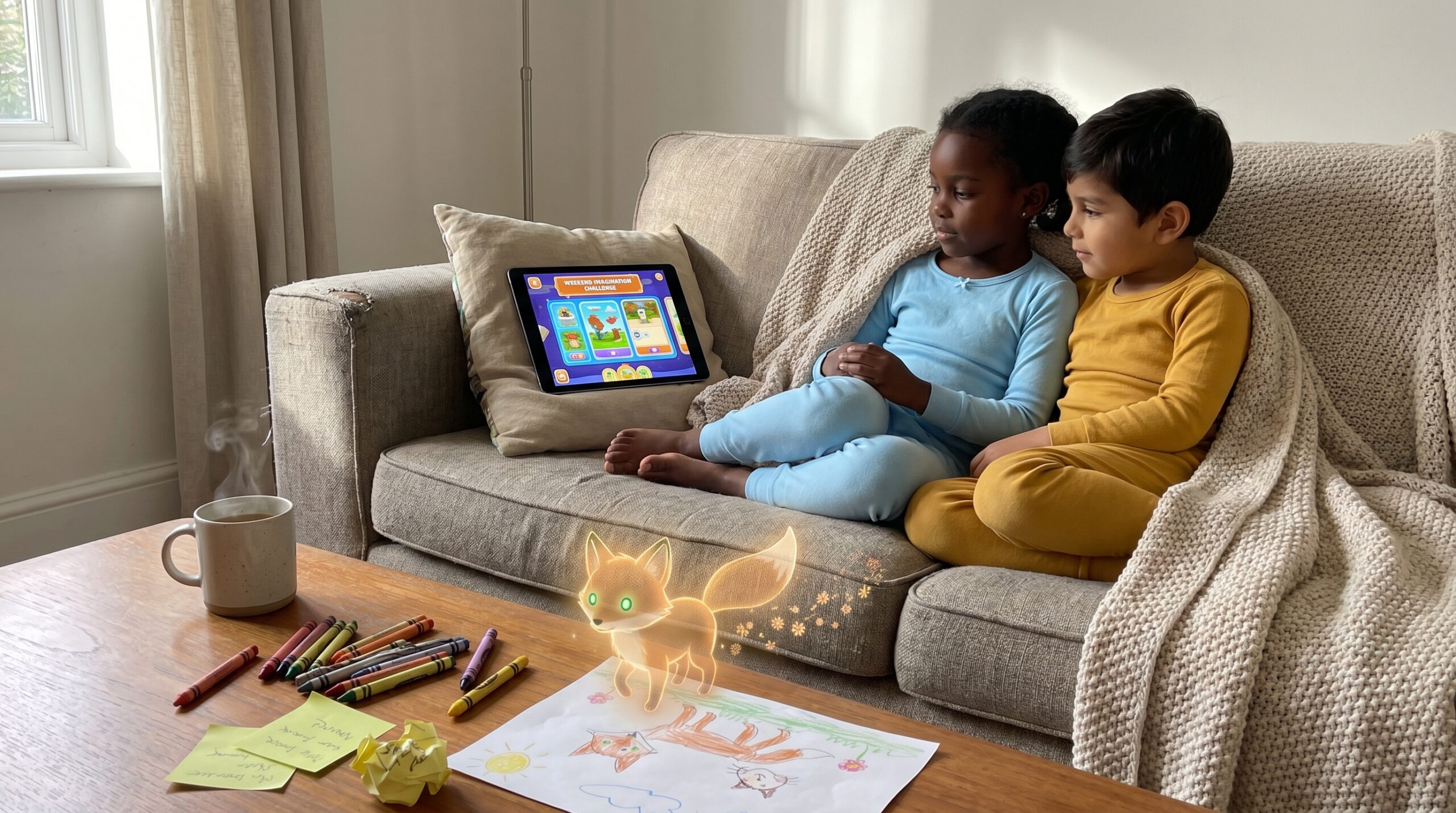
The create your own hero challenge is a short family ritual. It often starts as a ten minute spark and turns into an afternoon of play. Parents and teachers love it because it is simple, joyful, and low friction.
Create your own hero challenge: why it works
This challenge gives kids agency. They pick a name, a surprising power, and a kind deed. As a result, children practice language and social thinking. Research shows that there is a small but statistically significant positive relation between pretend/imaginative play and children’s social competence, emphasizing the importance of imaginative play in developing social skills, which is central to the hero creation challenge according to a 2024 meta-analysis. Also, it invites moral choices within tiny stories. Those choices help build empathy and narrative skills.
It lands in many homes. Younger kids answer with one idea. Older kids add backstory and costumes. Meanwhile, siblings practice cooperation. Caregivers get a gentle window into a child’s thinking. In short, it is small, safe, and surprisingly powerful.
Starter prompts and defining features
The challenge usually uses three short prompts. These prompts are the core characteristics of this activity:
- Name: one cool name helps a child own the story.
- Surprising power: a gentle or quirky gift, like laughter that heals plants.
- Kind deed: a single helpful action the hero does in the world.
These prompts keep the challenge open ended. They are short by design. So creativity does not feel intimidating. Additionally, research shows that children thrive when given choices in play; in fact, 56% of 5–6-year-old children choose their own digital games, demonstrating their desire for agency, paralleling the agency they experience in creating their own heroes. Also, offering two choices per prompt often speeds decisions and keeps momentum.
Formats, saving stories, and inclusion
The create your own hero challenge appears in many formats. It can be a ten minute spark or a longer afternoon project. Families often add drawing, a quick audio note, or a simple costume prop. For digital saving, many caregivers store tales in Storypie. Visit the Storypie homepage to learn about saving and organizing stories. You can also get the app to capture voice clips and drawings.
Inclusion and safety are core traits of this challenge. Invite diverse heroes with different bodies, families, and abilities. Offer nonverbal options using pictures and symbols. For sensory sensitive kids, skip noisy props. When sharing outside the home, remove full names and location details to protect privacy.
Why caregivers should try the challenge
Caregivers see quick, meaningful returns. Kids practice naming feelings and choices. Siblings learn to negotiate and cooperate. Adults gain fresh insight into a child’s imagination. Over time, small rituals like this build confidence and kindness. For instance, during the COVID-19 pandemic, 32% of children engaged frequently in ‘pandemic play’, showcasing how children naturally engage in imaginative play during challenging times, reinforcing the value of the hero challenge.
Want a gentle next step? Save a one line recording, a sketch, or a short note. Then repeat the challenge next weekend. Celebrate attempts, not polish. For easy story saving, try Storypie’s tools to keep each tiny hero tale in one place.
Playful, warm, and adaptable, the create your own hero challenge turns small ideas into tiny wonders. Try it again, and watch simple sparks become lasting memories. Moreover, storytelling plays a vital role in child development; for example, Reach Out and Read reports that families in their program are about 2.5 times more likely to read aloud to their infants/toddlers, highlighting the importance of these storytelling interactions in fostering creativity and language skills.