
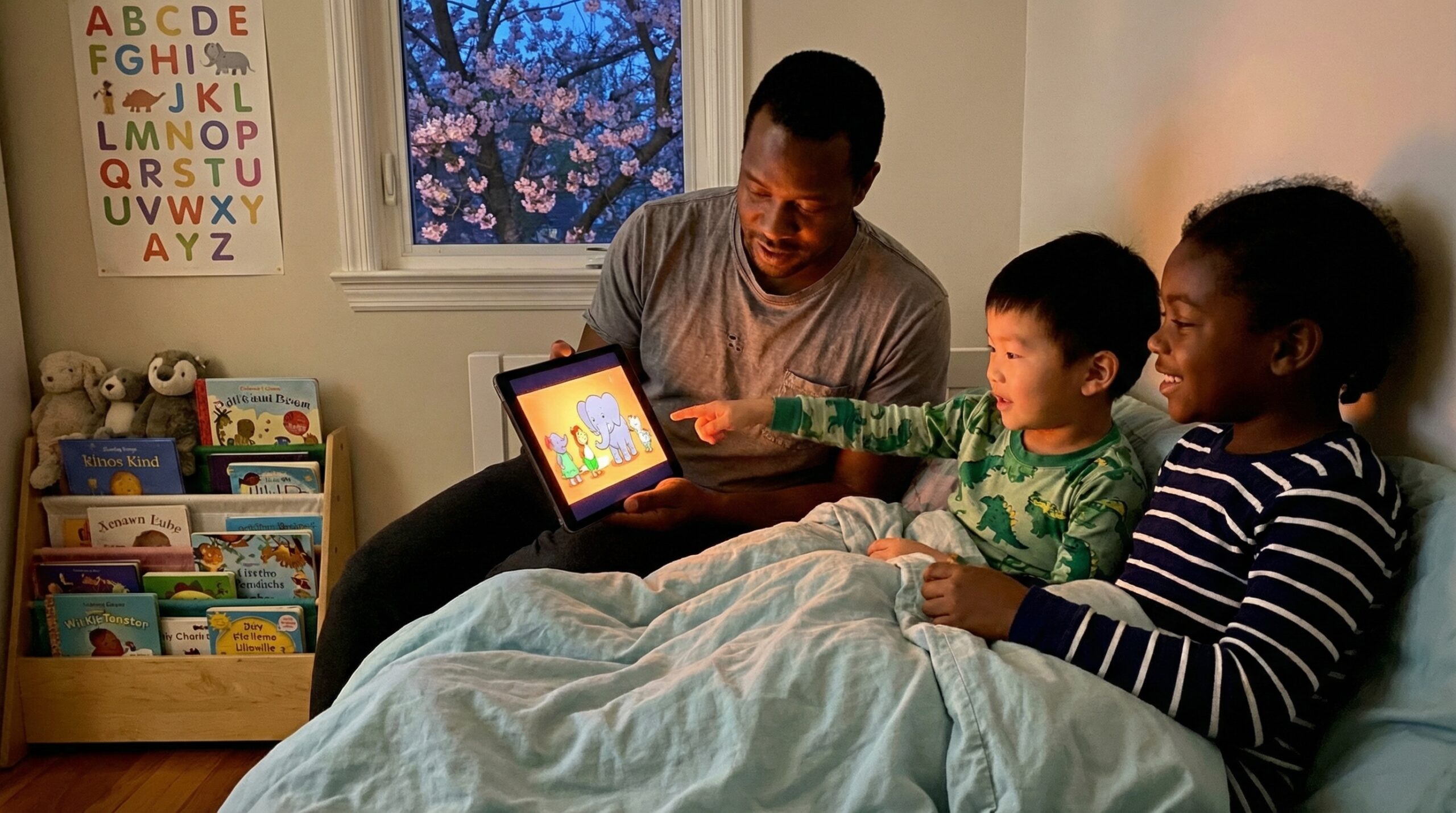
Education through storytelling ages 3-12 helps words, memories, and feelings hold tight. Parents press play. Kids listen, sigh, and wake up using a new word. Small rituals make big learning last. A 2025 systematic review highlights the strong impact of storytelling on vocabulary development, crucial for children in this age range.
Why stories work: a clear brain-friendly pattern
Stories map experience. Neuroscience and psychology show people prefer events with people, causes, and endings. A 2025 study found that substituting standard language instruction with teacher read-aloud for just one hour a day significantly enhanced children’s intelligence, showcasing the effectiveness of storytelling in education.
Therefore, stories give children memory cues all at once. A short plot, a repeated line, and an emotional hook help recall. For example, a five-minute tale with a sing-song phrase often becomes a sticky memory.
Education through storytelling ages 3-12: what the research says
Jerome Bruner named the narrative mode as a key human meaning maker. In short, our brains organize facts as events. Shared listening also aligns attention across listeners. As a result, routine stories move memories into long-term storage more easily. A longitudinal study published in May 2024 found that storytelling connectedness in children ages 5-8 predicted phonological awareness and reading comprehension, demonstrating long-term benefits of storytelling on literacy skills.
Sound and routine matter
Sound helps. Tone, rhythm, and repetition are memory magnets. Also, bedtime stories before sleep support consolidation. In addition, hearing the same story regularly gives brains repeated practice. Research from a 2025 meta-analysis indicates that interactive reading produces a medium aggregate effect on young children’s narrative ability, particularly in children aged 4-5 years, enhancing their storytelling skills.
What to expect by age
Ages 3-5
Young children grow vocabulary and symbolic play. Keep tales short and vivid. Use a 5 to 10 minute scene with a repeated phrase. Then ask one simple question, such as, “Who did that?” Signs of progress include new words in play. You may also hear a two-sentence retell. Tiny rituals bring big payoff.
Ages 6-8
Comprehension deepens. Attention grows. Use slightly longer stories and link tales to a simple fact, like why seeds sprout. Ask for beginning, middle, and end. A 2025 neuroimaging study showed that listening to narratives activates brain regions related to social cognition, indicating that storytelling promotes social understanding.
Expect longer summaries, questions about cause and effect, and story ideas showing up at school.
Ages 9-12
Children handle layered plots and moral nuance. Invite them to rewrite an ending or argue a character’s choice. This age practices inference and perspective-taking. Signs of growth include persuasive explanations and tying a tale to history or science.
Practical tips and small rituals
Make it a habit. A consistent five-minute story before sleep is a tiny magic trick. Also, add a ritual basket with a bookmark or a gentle lamp. Keep short books face-out so kids can choose.
- Use a repeated line for memory.
- Pick a short scene rather than a long lecture.
- Ask one clear question after the story.
Short, repeated story exposures beat random facts every time. Playfulness helps too. A whispered line or a silly wink can make learning feel cozy and fun.
Digital story apps and shared routines
Well-designed audio or animated stories can reproduce live reading cues. They work best as part of a shared routine. Try one short piece together.
Browse the Storypie collection for short tales you can try tonight. For parents and teachers, Storypie offers quick, repeatable stories that fit busy evenings.
Science in a sentence and a gentle next step
Stories stick because our brains prefer events with people, causes, and endings. So play one five-minute Storypie story tonight and watch what happens.
To try a short tale, visit Storypie or get the app at Storypie get app. Enjoy the ritual. Notice the small changes. They add up fast.