Electricity for kids begins with small, dazzling moments. At Storypie, we tell that story in first person. So children step inside the journey from rubbing amber to Franklin’s kite to Edison’s lamp.
What is electricity for kids?
Electricity is the presence and flow of electric charge. For example, think of water in a pipe. Voltage is the pressure that pushes the water. Current is the flow of water. Resistance is a narrow part of the pipe that slows the flow. Power shows how much energy arrives each second. In short, electrons move through metal wires to run lights, motors, tablets, and more.
Where electricity comes from
Current electricity moves in a loop called a circuit. Also, a circuit needs three things. First, a source like a battery or generator. Next, a path like a wire. Then, something that uses energy such as a lamp. Static electricity acts differently. For example, it is a build up of charge that makes a balloon stick to hair.
How we make electricity
Power stations turn motion into electricity. Generators at dams and wind farms make current. Also, coal and gas plants and solar panels create electricity in different ways. In fact, in 2024, global electricity generation increased by over 1,200 TWh, marking a 4% rise—significantly higher than the 2.6% average annual growth seen between 2010 and 2023. Over 80% of that increase came from renewables and nuclear sources. Batteries store chemical energy and give us direct current. An electrical grid moves power long distances. Finally, transformers change voltages for safe use at home. Note: household mains use about 120 V in the United States and about 230 V in the United Kingdom and much of Europe.
Tiny timeline
- Thales noticed static from amber long ago.
- William Gilbert studied magnetism and static around 1600.
- Benjamin Franklin explored lightning and named positive and negative charge.
- Alessandro Volta made the first battery in 1800.
- Faraday found how magnetism makes electricity in 1831.
- Maxwell tied electricity and magnetism together.
- Edison built a practical light bulb and DC systems.
- Tesla and Westinghouse championed AC power for cities.
Simple, safe demos to spark curiosity
Try a few tiny experiments to make electricity tangible. Always ask an adult first.
- Rub a balloon on hair and watch it stick. This shows opposite charges attracting.
- With adult supervision, light an LED from a small battery to show a simple circuit.
- Compare two devices: which uses more watts? Ask kids to guess first.
Safety rules for children
Safety matters most. Never put objects into sockets. Keep devices and cords away from water. Do not touch frayed wires. Unplug by the plug, not the cord. If someone is injured by electricity, call emergency services right away. Always get an adult to help with experiments.
Why it matters
Electricity shapes how we live and how we care for the planet. Burning fossil fuels to make power creates CO2. Clean energy like wind, solar, and batteries can lower emissions. Also, simple conversations with children about where power comes from build curiosity and responsible choices.
Listen and explore
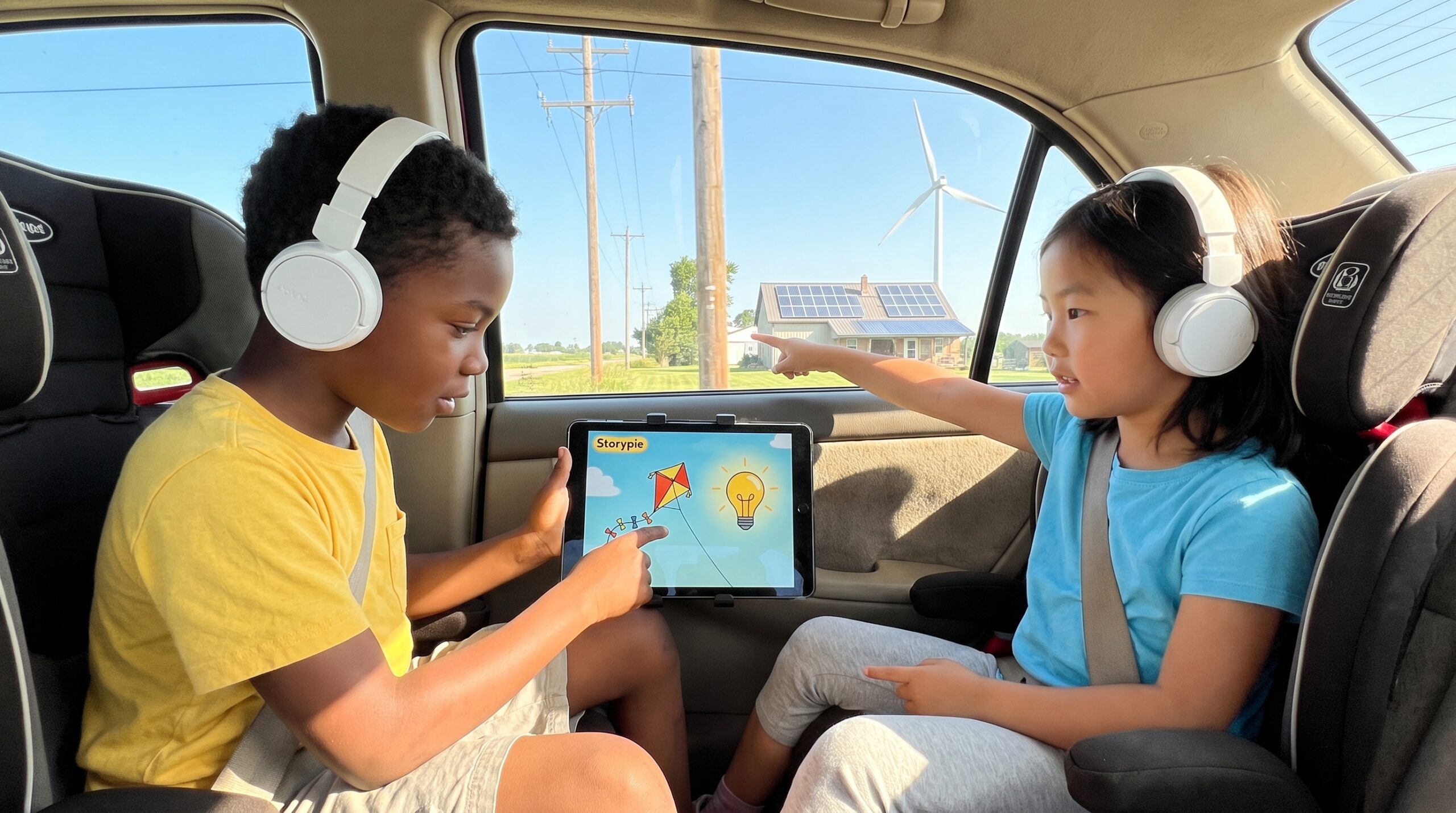
Play this story on a short car ride to spark questions about how things work. Also, try Storypie for more stories and prompts. Read or listen to a story about Electricity now: For 3-5 year olds, For 3-5 year olds, For 6-8 year olds, For 8-10 year olds, and For 10-12 year olds.
Ready to listen? Then get the Storypie app for more joyful science stories. Get the Storypie app.