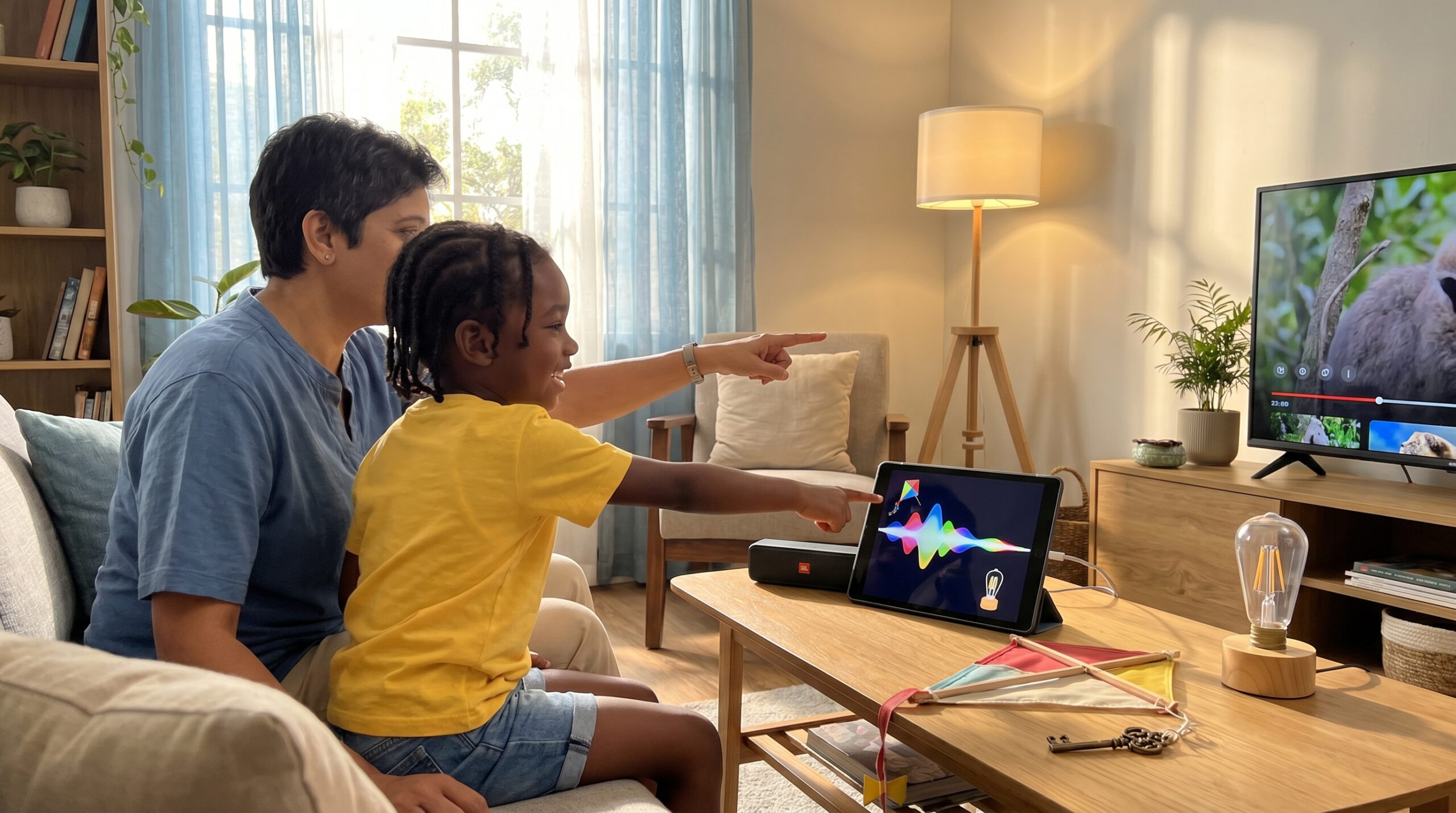
Electricity for kids can feel like a tiny river of sparks. Say that image out loud. It makes the idea simple and joyful.
Read or listen to a story about Electricity now: For 3-5 year olds, For 6-8 year olds, For 8-10 year olds, and For 10-12 year olds.
Electricity for kids: What it really is
Electricity is the movement and interaction of electric charges. In most materials, the moving particles are electrons. Say the word electrons and many things click into place.
Why the tiny river image helps
Think of voltage as the push when you turn on a hose. Current is how fast the water flows. Resistance is the narrow part of the pipe that slows the water down. These simple images make electric ideas easy and fun.
Key words to remember
- amp (A) means current
- volt (V) is the push, or pressure
- ohm (Ω) stands for resistance
- watt shows power
- kWh is what shows up on your bill
A short history of electricity
People noticed electrical sparks long ago. The Greeks saw static when amber was rubbed. Then Benjamin Franklin flew a kite to learn more. Alessandro Volta built the first battery. Michael Faraday found how to make generators work. Later, Edison and Tesla helped bring light and power to cities. These moments form a simple story of progress.
How electricity reaches our homes
Power stations make electricity by turning turbines with steam, water, or wind. Solar panels make electricity directly from sunlight. Next, transformers raise voltage to travel long distances. Then other transformers step voltage down for local streets. For example, in the UK mains is about 230 V AC at 50 Hz. In 2024, total U.S. electricity generation was 4,388,669 gigawatt-hours (GWh), marking a 3.1% increase over 2023, indicating a growing trend in energy supply.
Circuits and simple rules
A bulb lights only when the circuit is closed. In a series setup, one broken bulb can darken the whole string. In parallel, each device gets the same push. So they work independently.
Safety first and always
Be plain and firm about safety. Keep cords tidy and out of reach. Use socket covers for little hands. Never touch sockets with wet hands. Try experiments only with an adult watching. Fuses, circuit breakers, and RCDs protect homes from faults.
Small experiments to try together
Here are a few safe, supervised activities that show electricity in action. Try them slowly and with an adult present.
- Rub a balloon on hair to show static electricity.
- Make a lemon battery to light a tiny LED with supervision.
- Build a low-voltage circuit with a small battery, wires, and a bulb.
- Spot solar panels outside and watch them wake in sunlight.
Glossary for quick wins
Use these words to help children learn fast. Repeat them in play and conversation.
- amp – current
- volt – pressure
- ohm – resistance
- watt – power
- kWh – energy on your bill
Finish with an action
Ask your child to name three things electricity powers. Then go find them together. Celebrate the tiny river of sparks you just spotted. For more gentle stories about electricity, visit Storypie.