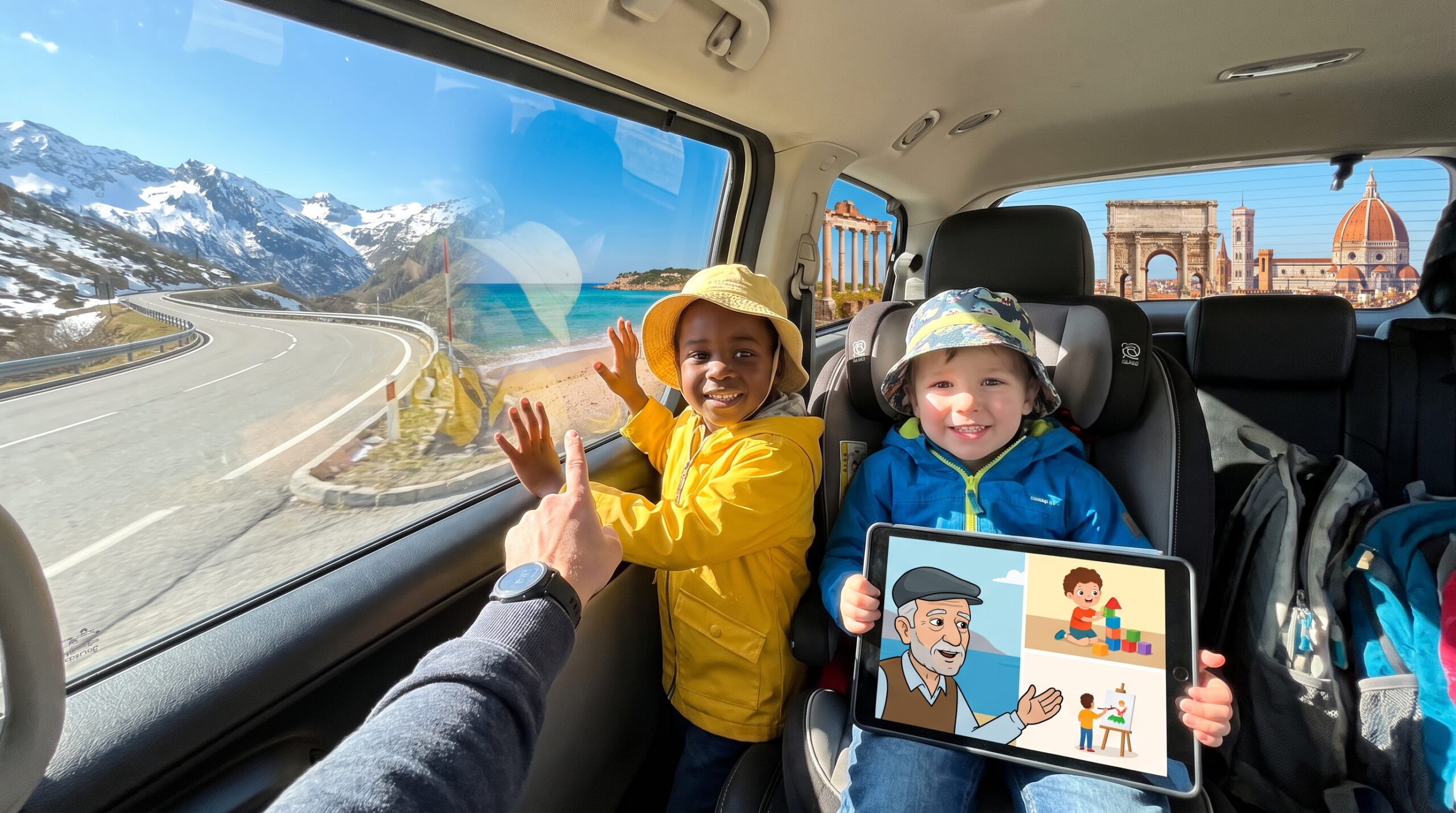
Europe for kids wakes curious minds with bright plazas and snowy peaks. Start the day with a sunny morning tour full of small wonders.
Europe for kids: What and where
Europe for kids sits west of Asia and feels compact and full of stories. For families, its eastern edge often follows the Ural Mountains, the Ural River, the Caspian Sea, the Greater Caucasus, the Black Sea, and the Turkish Straits.
Also, Europe covers about 10.18 million square kilometers. It holds roughly 740 to 750 million people. Depending on how you count, there are about 44 to 50 countries. That makes a great map game for little explorers. In 2023, the European Union’s population was approximately 448.8 million, with a population density of 112.3 people per square kilometer, providing a clear understanding of the demographic scale and density of the region.
Mountains to climb and rivers to follow
Europe for kids has dramatic high places and long rivers to spark the imagination. The Alps and the Pyrenees feel big and close. Meanwhile, the Carpathians and Scandinavian Mountains add more scenes to the map.
For example, Mont Blanc is the highest peak in the Alps. If the Caucasus counts, Mount Elbrus may be the tallest in Europe. Rivers like the Volga, Danube, Rhine, and Seine carry people and stories across the continent. Fun fact: the Danube touches or borders ten countries.
Famous places kids will love
You will find famous sights that make great pictures and bigger smiles. Think the Eiffel Tower, the Colosseum, the Acropolis, Big Ben, and the Sagrada Familia. Castles such as Neuschwanstein look like storybook homes. These places light up imaginations and invite questions.
A quick timeline for curious minds
Ancient Greece taught ideas about democracy and rich myths. Then the Roman Empire built roads and cities that last today. Next came the Middle Ages with castles and cathedrals. Later, the Renaissance revived art and science. After that, the Age of Exploration and the Industrial Revolution reshaped travel and trade. Finally, the 20th century brought wars and then new efforts to cooperate, like the European Union.
Languages, food, nature, and travel
Europe for kids bursts with many languages and flavors. In fact, the continent has more than 200 indigenous languages. Major families include Romance, Germanic, Slavic, and Uralic. Food is a fun window into each place. Families can imagine pasta, pizza, tapas, crepes, dumplings, and meze.
Nature varies from peat bogs to Mediterranean scrub to alpine meadows. You can spot deer, foxes, wolves, and many birds. Also, trains, ferries, and short flights make family travel easy and often scenic. In 2023, the share of the European Union’s population aged 65 and over was 21.6%, up from 16% in 2002, highlighting the aging population trend in Europe, which is important for understanding social dynamics and services for families.
Fun activities and family tips
Simple games keep little travelers happy and curious. Try sticker maps, mini passports, or a three-senses game naming what you see, hear, and smell. Play landmark photo bingo on walks. Also, do a simple timeline craft with stickers.
Packing tips help too. Bring plug adapters and small change. Also, keep passports handy and choose trains for short scenic hops. These small moves make travel smoother and smiles bigger.
Read or listen to a story about Europe now: For 3-5 year olds, For 3-5 year olds, For 6-8 year olds, For 8-10 year olds, and For 10-12 year olds.
Finally, try the Storypie app for on-the-go story collecting. It helps families keep short, vivid stories from each stop.
Europe is a patchwork of places, languages, foods, and wild spaces. Keep curiosity bright, ask small questions on car rides, and turn each stop into a tiny, vivid story. Families will find treasures everywhere. Additionally, in 2023, the European Union’s Gross Domestic Product (GDP) was approximately €17,933.7 billion, with services accounting for 72.7% of the value added, illustrating the economic scale of the EU and the dominance of the service sector, which is relevant for understanding job markets and economic opportunities.