
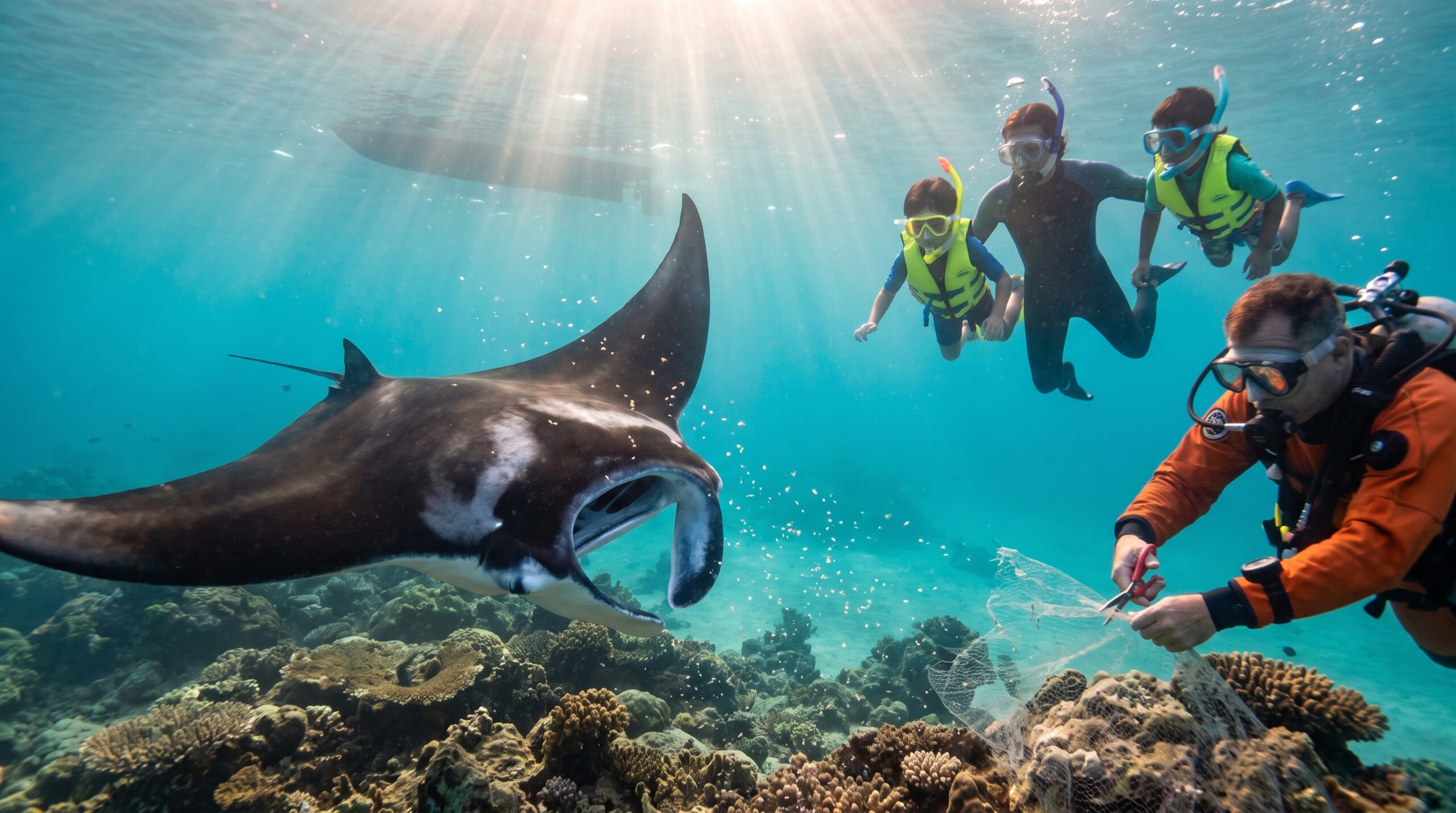
Giant manta ray for families is a warm, simple way to introduce kids to a sea giant. These gentle animals float like flying carpets. Play a soft Storypie at bedtime and spark calm curiosity.
Meet the Giant Manta Ray
The giant manta ray is Mobula birostris. Adults can span five to seven metres across and can reach a wingspan of up to 7 meters (approximately 23 feet) and weigh up to 2,000 kg (4,400 lb), making them one of the largest species of rays. They are dark on top and white below. Each manta has a unique pattern of belly spots. Scientists use those spots like fingerprints to tell individuals apart.
Giant Manta Ray for Families: Where They Live
Giant manta rays live in tropical and subtropical oceans worldwide. They spend time in open water and near reefs. Also, they visit cleaning stations and feeding hotspots. Often they migrate long distances to follow plankton and seasonal changes.
How They Eat
Mantas are filter feeders. They swim with wide open mouths and scoop tiny plankton. Their forward-facing head fins, called cephalic fins, help funnel food. Sometimes they perform graceful barrel rolls to gather dense plankton patches. They feed by day and at night when plankton rise toward the surface.
Social Life and Reef Cleaning Stations
Mantas are peaceful and social in their own way. For example, they often return to the same reef cleaning stations. At these stations small fish and cleaner shrimp remove parasites and dead skin. Think of a cleaning station as an underwater spa. Divers and snorkelers may see mantas visit again and again.
Reproduction and Life Span
Mantas grow slowly and live for decades. They are ovoviviparous, so eggs develop inside the mother. Then she gives birth to live pups. Usually only one pup is born after a long pregnancy. Therefore, populations take time to recover when numbers fall.
Threats and Conservation
Major threats include fishing bycatch, targeted harvest for gill rakers, boat strikes, and plastic pollution. The species faces pressure and is listed as threatened. Conservation actions include protected areas, photo-ID research, and tagging. Also, responsible wildlife tourism can help local communities and mantas.
How Families and Children Can Help
- Keep a respectful distance when watching wildlife. No touching or chasing.
- Reduce single-use plastic and pick up beach trash.
- Choose wildlife-friendly tours that follow local rules.
- Take photos from a distance and add them to citizen science projects when possible.
- Share simple stories about mantas to grow care and curiosity.
Fun Facts for Kids
Mantas sometimes breach, leaping clear of the water. They have no stinging tail, so they are not dangerous to people. Their cephalic fins act like scoops to funnel food into a big, wide mouth.
Read or listen to a story about Giant Manta Ray now: For 3-5 year olds, For 6-8 year olds, For 8-10 year olds, and For 10-12 year olds. You can also visit the main page at https://www.mystorypie.com/learn/en/animal/giant-manta-ray/ to explore more.
Finally, giant manta rays are slow to reproduce but quick to inspire wonder. When a child spots a unique belly pattern, they are spotting an individual with a story to tell. That story is worth protecting. To enjoy more Storypie bedtime moments, try the app for soft play and calm learning at https://www.mystorypie.com/get-app.