What is Hinamatsuri for families?
Hinamatsuri for families celebrates Japan’s Doll Festival on March 3, recognized as one of the five traditional sekku (seasonal festivals) in Japan. It is called Girls’ Day. Families pause to wish for girls’ health and happy growth. The day feels small, warm, and like a quiet blessing you can hold.
Origins and history
First, Hinamatsuri grew from hina-nagashi, a river ritual in the Heian period. People floated paper or straw dolls down rivers. They believed the dolls would carry away impurities and bad luck. Over time, the practice moved indoors. The origins of Hinamatsuri trace back to the Edo period (1603–1867), when the festival began as a form of play for noble girls, becoming common among households after World War II. By the Edo period, families set up tiered doll displays on red cloth. Thus, public ritual slowly became a private family ceremony.
Doll displays and their meanings
The hina display is the visual heart of Hinamatsuri. Families often display either a simple two-doll set (emperor and empress) or an elaborate seven-tier arrangement with 15 figures, including three court ladies and five musicians. At the top sits the imperial couple. Below, attendants and musicians add life and detail. Some sets stay compact. Others become large, treasured heirlooms.
Also, peach blossoms often frame the scene. Their soft pink says spring and protection. Color matters too. For example, the three-layered hishi-mochi shows pink, white, and green. Those colors suggest seasonal change and good health. Tiny sweets like hina-arare and clear clam soup often appear. Each object carries a small meaning.
Food and simple activities
Food for Hinamatsuri stays easy and shareable. Think small portions. Serve chirashizushi, sweet amazake for children, and colorful rice crackers to nibble. Clam soup carries symbolic meaning too. Keep plates small and inviting.
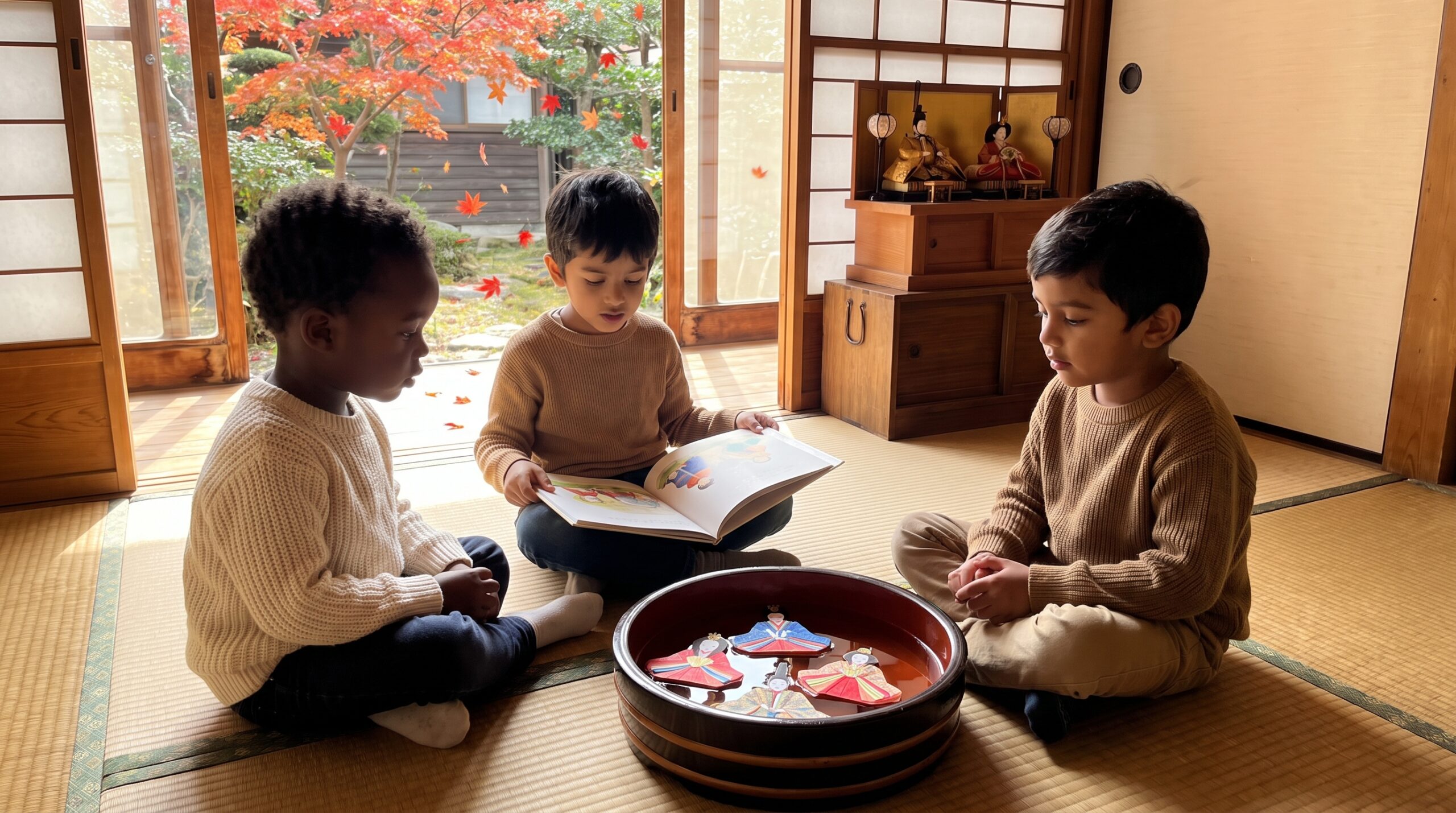
For a hands-on family activity, make small paper dolls and float them in a shallow bowl at home. Use biodegradable paper and supervise children closely. This keeps the spirit of hina-nagashi while avoiding pollution. Also, keep tiny parts away from toddlers. Place one bowl of paper dolls near your main display so ritual and play can sit side by side.
Timing, care, and modern variations
Many families set up displays a few days or weeks before March 3. Then they take them down soon after the festival. There is an old belief that leaving dolls up late brings bad luck. Treat that belief as gentle etiquette rather than a strict rule. Store heirloom sets safely between seasons. Handle them with clean hands and a calm table.
Today, regions and families vary in their celebrations. Some schools hold parties and shrine visits. Others keep a pared back scene with one hero doll and a basket of tiny rituals. Adaptation is part of the point. Make Hinamatsuri meaningful for your family. Notably, the ‘Big Hina Matsuri’ in Katsuura Town showcased approximately 30,000 hina dolls in 2026, marking its 38th anniversary, illustrating the scale and community involvement in Hinamatsuri celebrations. Additionally, at Kasuisai Temple in Fukuroi City, Shizuoka Prefecture, the annual Hina Matsuri festival features the largest hina doll display in Japan, with approximately 1,200 dolls arranged on a 32-tier doll stand.
Storypie connection
Storypie offers a warm story that links to the festival’s past. For example, Storypie’s autumn tale “Hana in Heian Japan” gently explains the river doll ritual that became Hinamatsuri. It is perfect for a cozy listen with kids. Visit Storypie to learn more and hear stories together.
Read or listen to a story about Hinamatsuri now: For 3-5 year olds, For 6-8 year olds, For 8-10 year olds, and For 10-12 year olds.
Finally, if you want a gentle place to start, visit Storypie’s Hinamatsuri event page: Read or listen to a story about Hinamatsuri now. Enjoy the quiet success of the festival when a child returns to the dolls on their own.