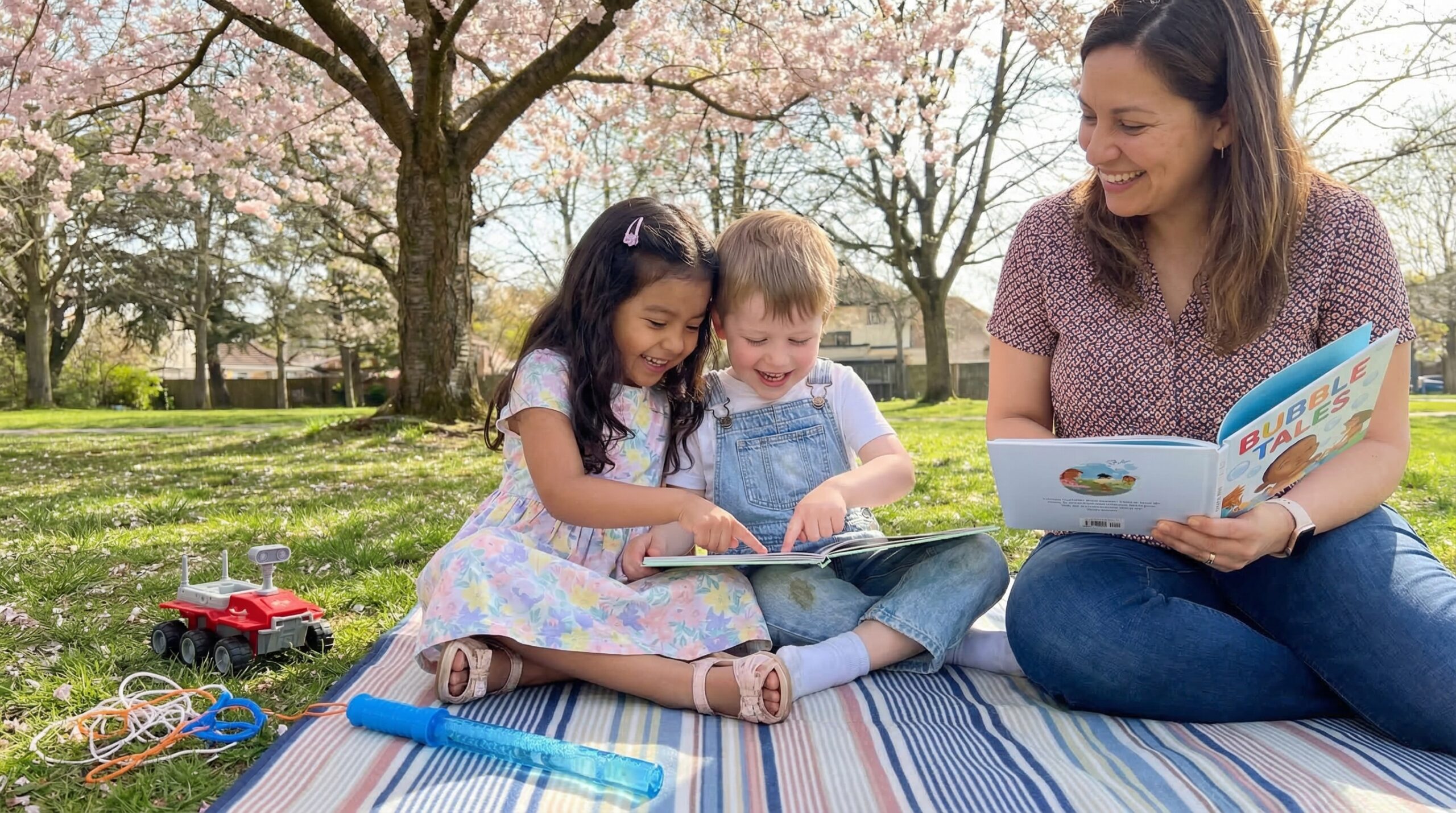
Random curiosity: how bubbles work for kids is a tiny, joyful science moment. A bubble is a pocket of air wrapped in a thin skin of soapy water. It floats, shines, and pops in ways that feel simple and wonderfully rich.
How bubbles work for kids: the basics
First, a soap bubble is a very thin liquid film with air inside. Soap molecules sit on each surface of that film. They lower surface tension and help the film act like an elastic skin. Surface tension pulls the skin to shrink and use the least surface area. Therefore a free bubble becomes a sphere. That sphere holds the most air with the least surface. It looks like instant sparkle.
Why bubbles shine and show color
Light reflects from the outer and inner faces of the soapy skin. Because of thin film interference, wavelengths add or cancel. So different spots show shifting rainbows. Very thin areas can look dark. Watch a bubble tilt and see the colors run like oil on water. Also, moving bubbles change color as the film thins and thickens.
Why bubbles pop and how to help them last
Gravity, evaporation, and touch make the film thin. Liquid drains down and the top thins. When the film becomes too thin it ruptures. A stray grain of dirt or oil can cause popping too. To keep bubbles alive longer, try simple tricks:
- Add a little glycerin or a splash of corn syrup to slow evaporation.
- Blow when the air is calm and pick a humid day.
- Use a reliable dish soap and a gentle wand.
Foam, packs and a quick rule
When bubbles crowd together they stop being perfect spheres. Neighboring films meet at steady angles and form polyhedral clusters. In foam, small bubbles often shrink while bigger ones grow. Gas moves from small to big bubbles. It is neat to watch and helps explain sink foam versus a single blown bubble.
Simple experiments and prompts
Try these quick, playful tests with children. They build language and curiosity:
- Basic solution: 6 parts water, 2 parts dish soap, 1 part glycerin. Or add 1 to 2 tablespoons corn syrup per cup.
- Compare lifetimes: blow bubbles from plain soap and from the glycerin mix. Which lasts longer and why?
- Observe colors: hold a bubble against light and ask, Why do bubbles shine?
Safety and tiny glossary
Use non toxic dish soap. Avoid eyes and mouths. Supervise toddlers. Rinse skin if it becomes soapy and keep floors dry to prevent slips.
Film and surfactant: the thin soapy layer and the soap molecules that stabilize it. Surface tension: the skin-like pull on the liquid surface. Interference: the color trick from two light reflections.
For a cozy follow up, blow bubbles together and then listen to a short bubble story on Storypie. Also try a simple curiosity question like, “Why do bubbles shine?” to spark new words. Visit Storypie to find bubble stories and the app: https://www.mystorypie.com/get-app