
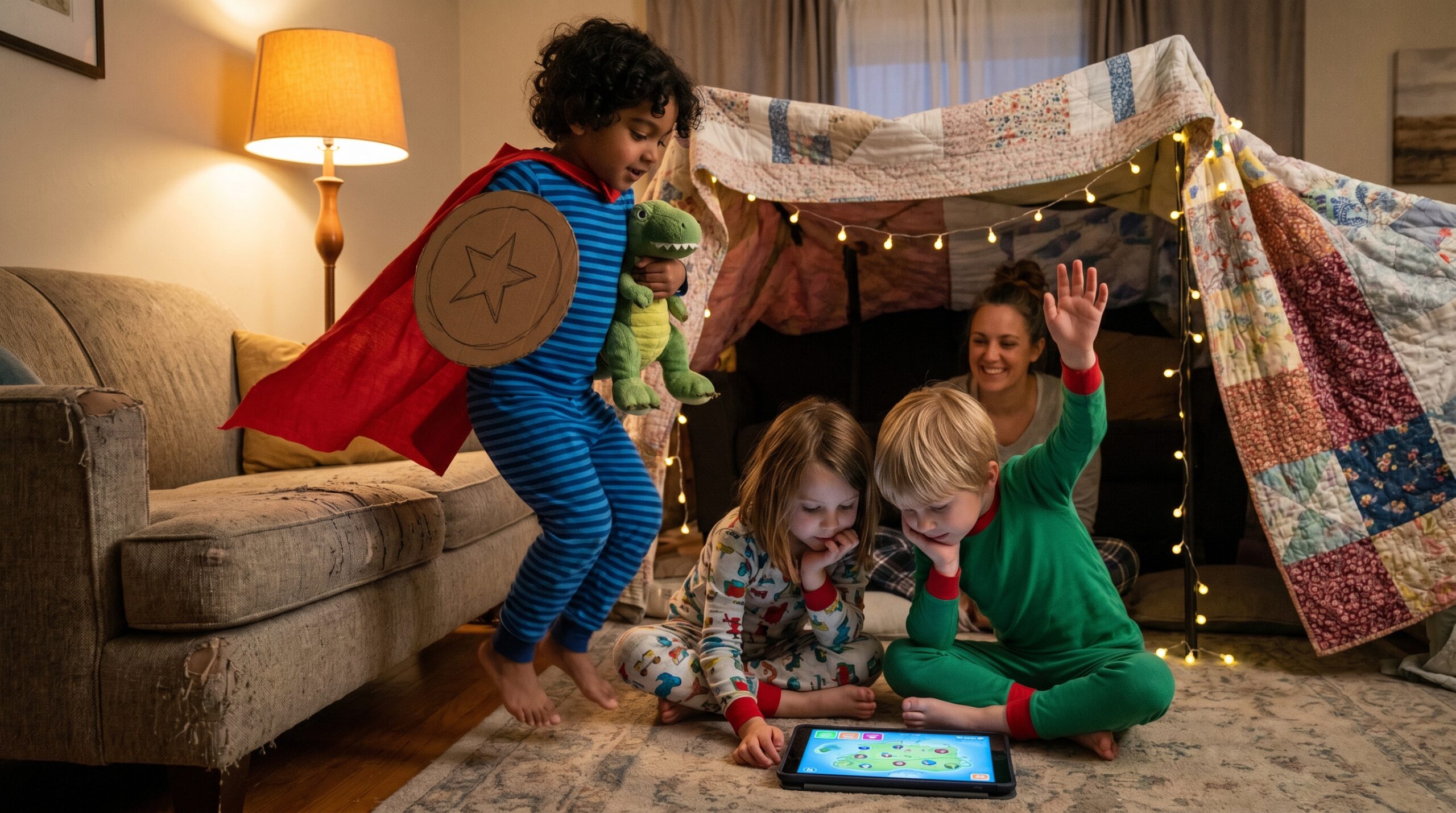
kids become the hero the moment play lets them choose the path. This is a tiny, joyful magic. Parents and teachers see it in a child’s quick grin.
What it looks like at each age
Preschoolers act out simple rescues and everyday heroics. They use bodies and props. Young school children follow longer sequences and make moral choices. Older children solve multi-step problems and explore identity and leadership. A 2023 study by the Institute for Self Directed Learning found that 85% of learners expressed a strong desire to learn new things, showing that children have a natural drive to become heroes in their own narratives.
Key features of hero play
Hero experiences share clear features. They give agency and choice. Also, they offer personalization and a clear goal. Good adventures balance safe risk with feedback and reflection. For example:
- Agency: children make real choices.
- Personalization: names, tools, and roles fit the child.
- Safe risk: challenges are small and recoverable.
- Feedback: wins build confidence and setbacks teach persistence.
How kids become the hero at home and school
Parents and educators can design chances for hero play. First, match activities to age and skill. Next, mix screen-based adventures with hands-on play. Also, pick titles with inclusive characters and adjustable challenge. In fact, research from Pew Research Center indicates that in 2024, 26% of U.S. teens reported using ChatGPT for their schoolwork, reflecting the increasing reliance on technology that can empower children to take charge of their learning journeys.
When using apps, prefer tools with parental controls and clear privacy settings. Storypie offers guided, personalized adventures that keep safety in mind. Explore Storypie for ideas and gentle prompts.
Practical benefits children gain
Hero-play supports many skills. Cognitively, it strengthens vocabulary and problem solving. Socially, children practice perspective-taking and cooperation. Emotionally, they build resilience and self-efficacy. A 2024 study found that higher levels of health confidence and self-efficacy were associated with increased physical activity among primary school children, underscoring the importance of self-efficacy in various aspects of a child’s life. Repeated small wins motivate children to try harder.
Accessibility and inclusion
Accessible features help more children play the hero. Use audio narration, simplified interfaces, or visual supports. Also, ensure representation matters. When children see themselves in the center role, engagement and confidence increase. The OECD reports that around seven out of ten 15‑year‑old students (≈70%) report using digital resources during their leisure time to create or edit personal digital content, which highlights the role of creative play in developing their unique stories.
Simple micro-activity to try
Try this short activity to spark hero play:
- Say one vivid line, for example, “We found a glowing map.” Pause for predictions.
- Let the child choose a goal and a tool.
- After the scene, ask one reflection question, like “What would you do next?”
These three steps take minutes. Yet they start a meaningful, playful conversation.
Final thought
Letting kids become the hero feels powerful and joyful. It helps children learn, grow, and imagine. Moreover, a 2024 systematic review concluded that storytelling-based interventions enhance psychological resilience in children, a key trait for navigating their adventures and challenges. For gentle, personalized adventures to try at home, explore Storypie and turn quiet time into a mini quest.
Note: This post focuses on how kids become the hero in their own adventure. It emphasizes features, age differences, and practical supports parents and educators can use.