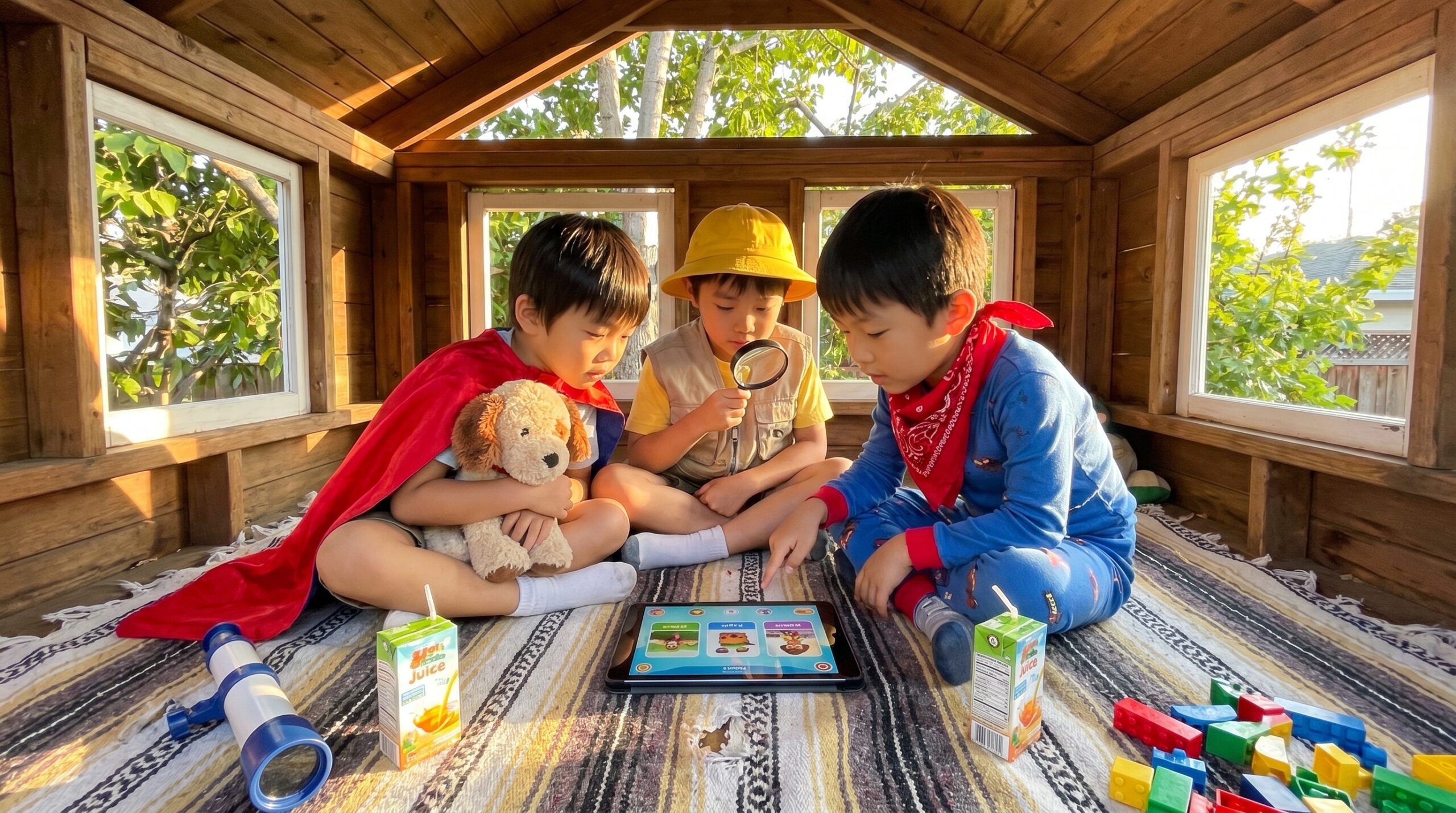
How kids become the hero in their own adventure is a simple, powerful idea. It describes moments when children step into the story as active agents.
What “kids become the hero in their own adventure” means
This phrase names a narrative stance. Children take the lead. They make choices and face consequences inside a safe story frame.
Historically, listeners joined in oral tales. Later, printed gamebooks let readers steer plots. Today, audio-first apps and branching formats continue the tradition.
Origins and brief history
For centuries, oral cultures invited listener participation. Then, mid 20th century gamebooks gave readers explicit choice. These formats taught agency and exploration. Today, technology revives the same promise with new tools.
Why this kind of story matters
Psychology shows clear benefits. For example, social learning theory links role taking to confidence. A 2023 meta-analysis of universal school-based social and emotional learning (SEL) interventions found that participation significantly improved skills, attitudes, behaviors, school climate, and academic achievement. Also, narrative practice supports vocabulary and sequencing. Finally, acting as an agent helps executive function.
In short, when kids become the hero in their own adventure, they rehearse real-life skills in low-risk settings. In fact, in 2024, the Head Start program served 805,919 children ages birth to 5 and pregnant women, providing early childhood education and support services that empower children to actively participate in their learning.
Core characteristics of hero-centered adventures
- Child-centered perspective: the child is the story’s focal point.
- Clear, meaningful goals: quests matter to the child.
- Visible choice and consequence: decisions shape outcomes.
- Manageable stakes: challenges feel solvable, not terrifying.
- Representation: characters mirror diverse identities and abilities.
Formats that present the pattern
Formats vary, and each highlights different skills. Physical role-play uses bodies and social cues. Audio branching gives access to non-readers. Tabletop versions add rules and negotiation.
Age-aware differences
Development changes how children engage. For instance, preschoolers prefer pretend-play and simple choices. Early school-age children handle structured branching and brief goals. Tweens seek longer arcs and identity work.
Therefore, designers and educators adapt complexity to age. They match demands to developing skills.
Representation and safety
Seeing yourself as hero increases belonging. When narratives reflect a child’s gender, culture, or ability, engagement rises. Moreover, safe framing keeps threats age-appropriate. Frame problems as puzzles to solve rather than horrors to fear.
Where to explore hero-centered stories
Many platforms now offer steerable audio tales and branching adventures. For example, try the Storypie app for examples of child-led audio paths. Visit Storypie to learn how the platform presents hero-centered experiences.
Overall, when kids become the hero in their own adventure, stories move from passive listening to active rehearsal. The result is practice, confidence, and genuine delight. Additionally, a 2023 study found that higher levels of self-efficacy in children were associated with increased consumption of vegetables and fruits, as well as higher levels of physical activity, reinforcing the idea that children can take charge of their own health and well-being. Furthermore, research indicates that imaginative play can empower children to become self-regulated learners, with a 2023 study showing that 68.1% of children’s self-regulation skills manifested in play could be predicted by their play skills. This illustrates how play is vital for developing self-regulation, an important aspect of their adventures.