
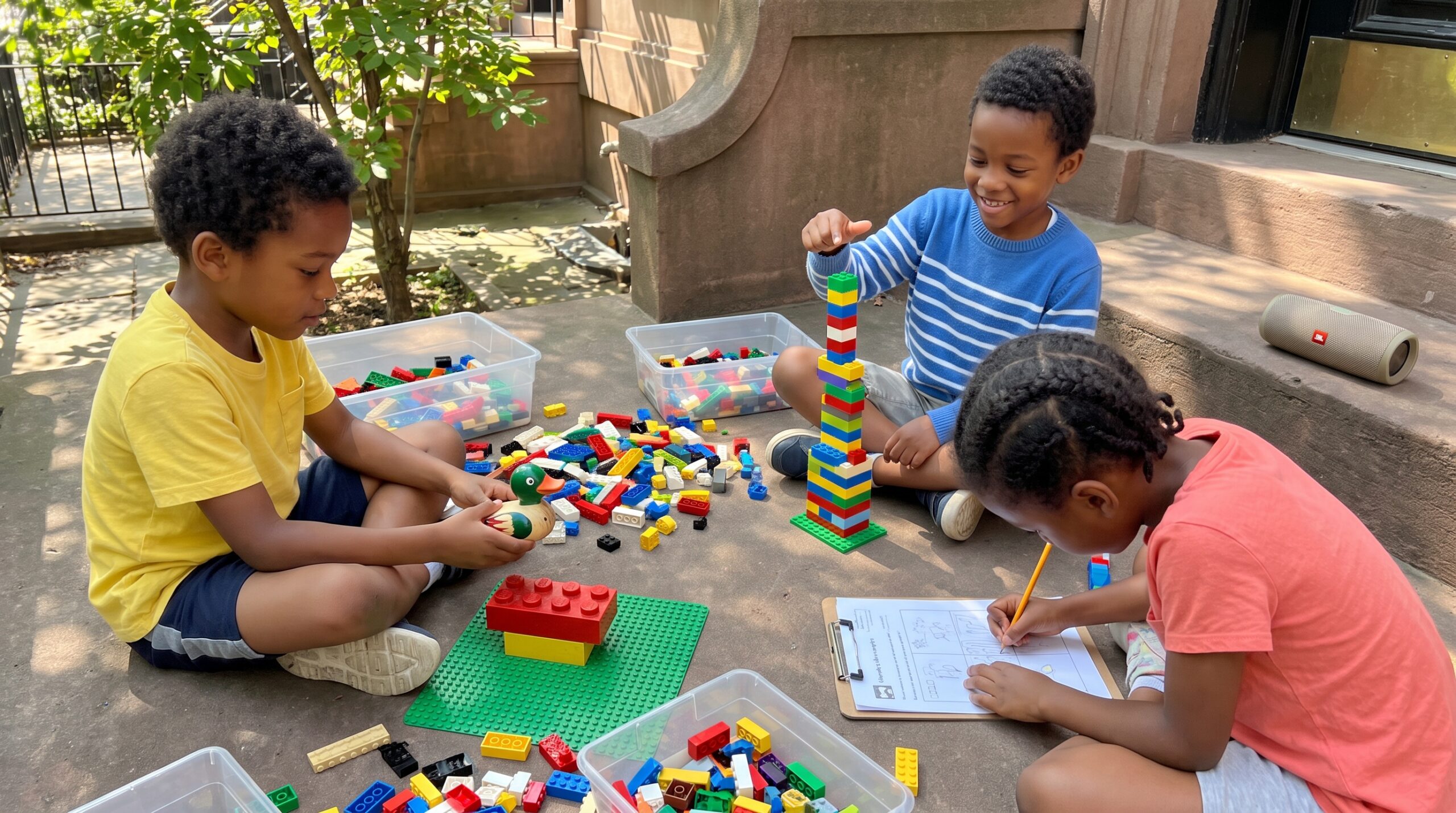
The LEGO brick still surprises. Small but commanding, it makes children lean in. The first snap draws attention, and the click promises worlds to come.
Why the LEGO brick matters
The story starts in Billund, Denmark. Ole Kirk Christiansen founded the company in 1932. He named it from leg godt, which means play well. In the 1940s LEGO moved from wooden toys to plastic. Then the Automatic Binding Bricks appeared in 1949.
However, the modern interlocking system arrived in 1958. Godtfred Kirk Christiansen patented the stud-and-tube design that year. Because of that patent, pieces made decades apart still click together today. That backward compatibility is quietly powerful. In fact, the iconic interlocking LEGO brick design was patented in 1958, and bricks made then still interlock seamlessly with today’s pieces.
Design in a nutshell
Studs on top, tubes below. That geometry creates clutch. The module uses an 8 mm grid and a 9.6 mm brick height. As a result, a yellow brick from the 1960s fits with a modern blue one. Plates, baseplates, and the minifigure (introduced in 1978) joined the system so play could grow with a child.
Materials and manufacturing
Most classic bricks use ABS plastic for strength and shine. Molding requires exact tolerances. Quality control keeps that satisfying snap consistent, pull after pull. Recently LEGO began adding bio-based polyethylene for some plant elements. Also, the company set a long-term goal for more sustainable materials. In 2023, LEGO increased spending on environmental initiatives by 60% compared to 2022, highlighting its commitment to sustainability and environmental responsibility.
What play teaches and safety tips
Short builds teach planning and fine motor skills. A 20-minute session can boost spatial reasoning and creativity. When a model wobbles, a child tests ideas and revises the design. Small failures become problem-solving moments, and that is pure learning in action.
Follow age labels. Small pieces are a choking hazard for children under three. For families, cleaning is simple: warm soapy water, rinse, and air-dry. Avoid high heat or strong solvents because they can warp parts.
Cultural reach and a quick activity
Hundreds of billions of bricks have been made. Adult fans, museums, and large public models celebrate the brick as an icon. Because the system stays compatible, heirloom sets still join new ones. That continuity makes the LEGO brick feel like a family heirloom that keeps giving. In 2023, LEGO released 698 new sets across 36 themes, showcasing its ongoing appeal to consumers.
Try a short mid-morning session. Give a loose pile of bricks and a 20-minute prompt: build a bridge, a secret door, or a tiny zoo. Then ask your child how they would fix a wobbly model. Short, focused challenges boost planning and confidence.
At Storypie we retell the LEGO Brick’s journey, from a wooden toy in 1932 to Godtfred’s 1958 click that unlocked worldwide play. Tip: this summer mid-morning, do a 20-minute build and story; ask your child how they’d fix a wobbly model to boost problem-solving.
Read or listen to a story about LEGO Brick now: For 3-5 year olds, For 6-8 year olds, For 8-10 year olds, and For 10-12 year olds.
Final thought: a LEGO brick is more than plastic. It is a learning tool, a connector across generations, and a tiny engine of imagination. Invite short builds, ask curious questions, and enjoy that satisfying click. Happy building!