
Mass–energy equivalence (E=mc²) feels like a tiny secret I whisper to kids. I say mass and energy are two sides of the same coin. Then I show a quick coin-and-flashlight trick. It usually makes their eyes go wide.
What mass–energy equivalence (E=mc²) means
In its simplest form the formula says E equals m times c squared. Here E stands for energy. The m means mass. The c means the speed of light in a vacuum, which is approximately 299,792,458 meters per second. Squared, c squared becomes enormous. Therefore a tiny amount of mass can hold a huge amount of energy. In fact, the energy equivalent of just 1 kilogram of mass is approximately 89.88 petajoules, which is roughly equivalent to 21.5 megatons of TNT.
Rest energy and total energy
Often people mean rest energy when they say E equals m c squared. Rest energy is the energy an object has just for being itself. However, moving objects carry more energy. In physics, the fuller relation shows that. It links energy, momentum, and mass. Photons have no rest mass. Yet they still carry energy because energy and mass relate in this way.
Big, real examples
The Sun gives a clear example. For example, the Sun fuses hydrogen into helium. In doing so, it loses roughly 0.7 percent of the fused mass as energy. That tiny loss powers light and heat for Earth. Likewise, nuclear fission and fusion free energy from tiny mass differences. A single U‑235 fission releases approximately 200 MeV per fission, averaging about 8.2×10¹³ J per kg of U‑235 (≈82 TJ/kg). Also, matter meeting antimatter can turn almost all mass into light. Wow, that is dramatic.
Why we do not see mass change in daily life
Mass–energy conversion happens all the time. Yet chemical reactions hide it well. Burning wood or digesting food frees chemical energy. Still, the mass change is far tinier than the object’s mass. Thus we do not notice mass shifts in everyday life.
A quick demo to spark a conversation
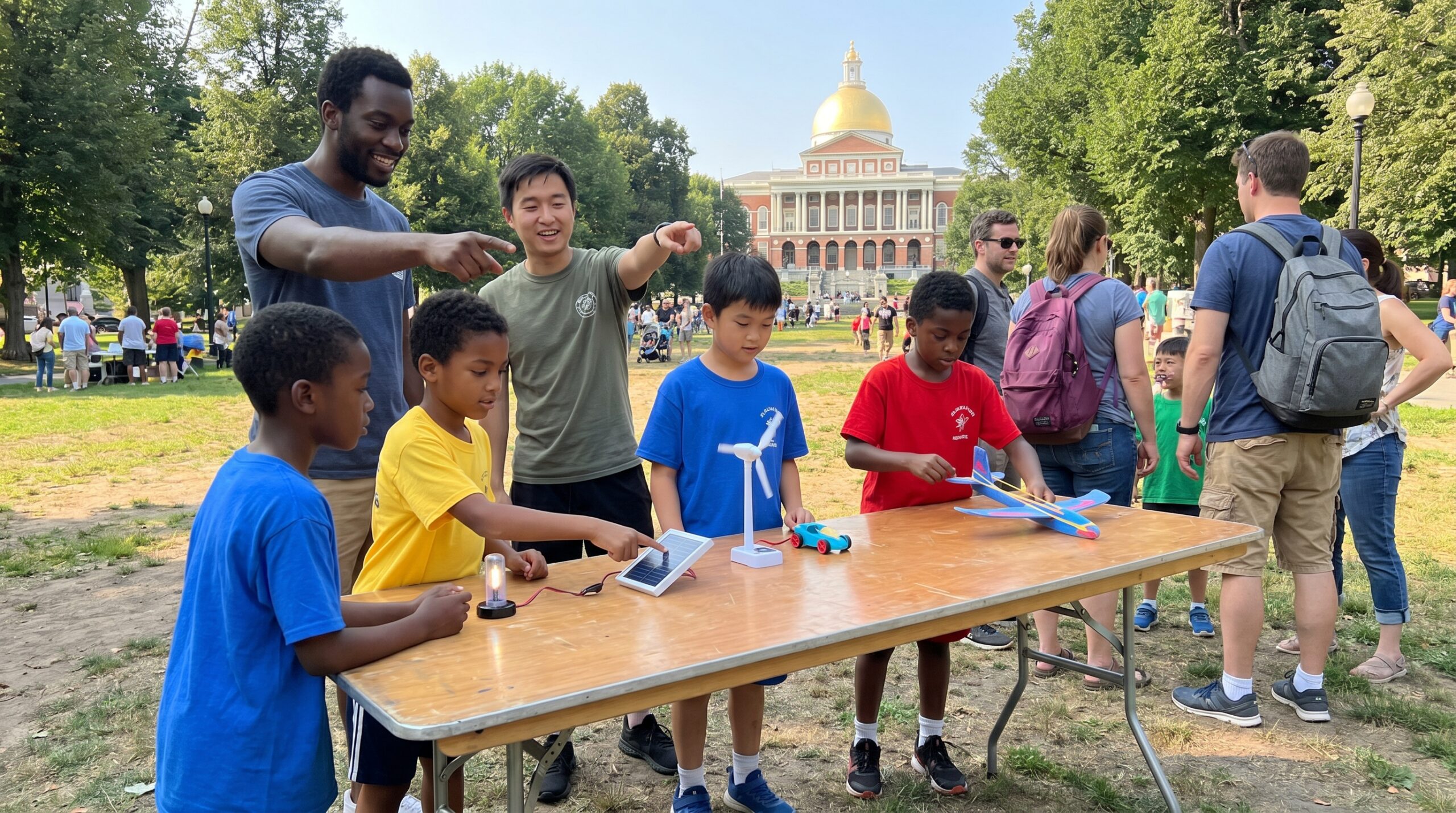
Try a low-tech demo. For example, build a lemon battery or hook a simple solar cell to an LED. Then ask your child where the energy came from and how it moved. That short chat can lead to the idea that mass sometimes acts as stored energy. Mostly this shows up in nuclear or particle processes, not in a lemon.
Tiny glossary
- Rest mass: the mass an object has when still.
- Binding energy: energy released when parts stick together and the system loses a bit of mass.
- Annihilation: when a particle meets its antiparticle and turns into photons.
- Photon: a particle of light that still carries energy.
Safety, ethics, and curious minds
The same physics explains peaceful reactors and destructive weapons. I talk about this plainly and age-appropriately. That way kids learn both context and care. Also try asking your child to name three examples of energy changing forms. It makes a great conversation starter.
Read or listen to a story about Mass–energy equivalence (E=mc²) now: Read or listen to a story about Mass–energy equivalence (E=mc²) now: For 3-5 year olds, For 6-8 year olds, For 8-10 year olds, and For 10-12 year olds.
For more background and kid-friendly stories visit the Mass–energy equivalence concept page on Storypie. Enjoy the sparks and the wide-eyed wonder.