
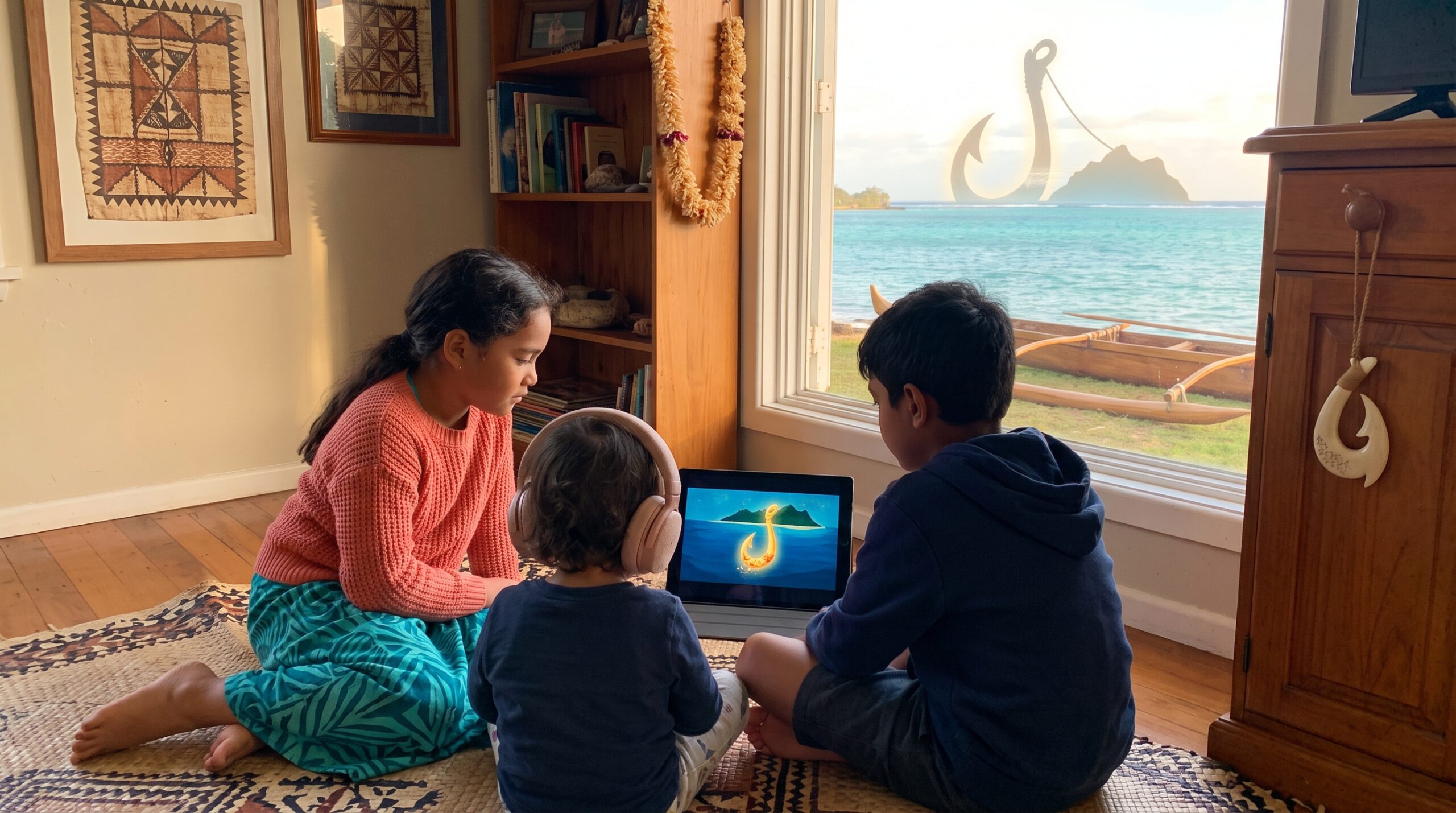
Maui and the Fish Hook – Polynesian is a lively island tale about a clever trickster and a magical hook. It invites curiosity, wonder, and a deep link to the sea. Cozy and bold, the story travels across islands.
Maui and the Fish Hook – Polynesian across the islands
Maui is a household name across Polynesia. He appears in Māori, Hawaiian, Tahitian, Samoan, Tongan, and other island stories. The tone shifts by place, yet the heart stays the same. He shows cleverness, daring, and a strong ocean bond.
Often, tales begin on a canoe. Brothers or companions row. Maui casts a hook. The hook finds the ocean floor and the sea resists. Then the struggling catch becomes land. In Māori tradition, the North Island of New Zealand is called Te Ika-a-Māui, meaning “The Fish of Māui.” This name ties story to ridge and bay and makes the land a living memory. According to Māori mythology, Māui used a fish hook made from his grandmother’s jawbone to fish up the North Island, showcasing the cultural significance of the hook in shaping New Zealand’s geography.
The magic and names of the fish hook
The fish hook is more than a tool. It is often magical. For example, some versions say the hook was carved from bone. Sometimes the bone came from an ancestor. In Hawaiian mythology, Māui’s fish hook is called Manaiakalani, and he is said to have created the Hawaiian Islands by tricking his brothers into paddling hard while he pulled up islands from the ocean floor. Also, some tellings name and bless the hook. Still, names and details change with each island.
Because people pass the story by voice, no single, canonical version exists. Therefore versions evolve. Local custodians keep the deepest meanings. Respect and credit matter when sharing the tale. Museums hold artifacts and recordings, but living communities are the primary knowledge holders.
The hook in art, carving, and memory
The fish-hook motif lives in art. The curved hook appears as hei matau in carving and pendants. It symbolizes safe passage, prosperity, skill, and a strong sea link. Traditional Hawaiian fish hooks were crafted from materials such as bone, shell, hardwood, and stone, with bone being particularly prized for its density and durability, highlighting the significance of the fish hook in daily life. You will find it in wood, bone, metal, and tattoo. It feels tactile and joyful to share with curious hands.
Modern retellings also appear in books, films, and crafts. They can be vivid and fun. However, some modern versions blend island traditions. That blurs origins. So when possible, acknowledge the place the story comes from. Ask permission and credit elders, iwi, hapu, or whanau when you can.
Read or listen to a story about Maui and the Fish Hook – Polynesian now: For 3-5 year olds, For 6-8 year olds, For 8-10 year olds, and For 10-12 year olds.
Storypie makes it easy to find age-appropriate versions. Also, the site links to related items and recordings. Visit Storypie to explore more stories and cultural notes.
In short, Maui and the Fish Hook – Polynesian maps courage, craft, and the long conversation between people and sea. It feels like a tiny marvel in a child’s hand. Tell it kindly and with respect.