
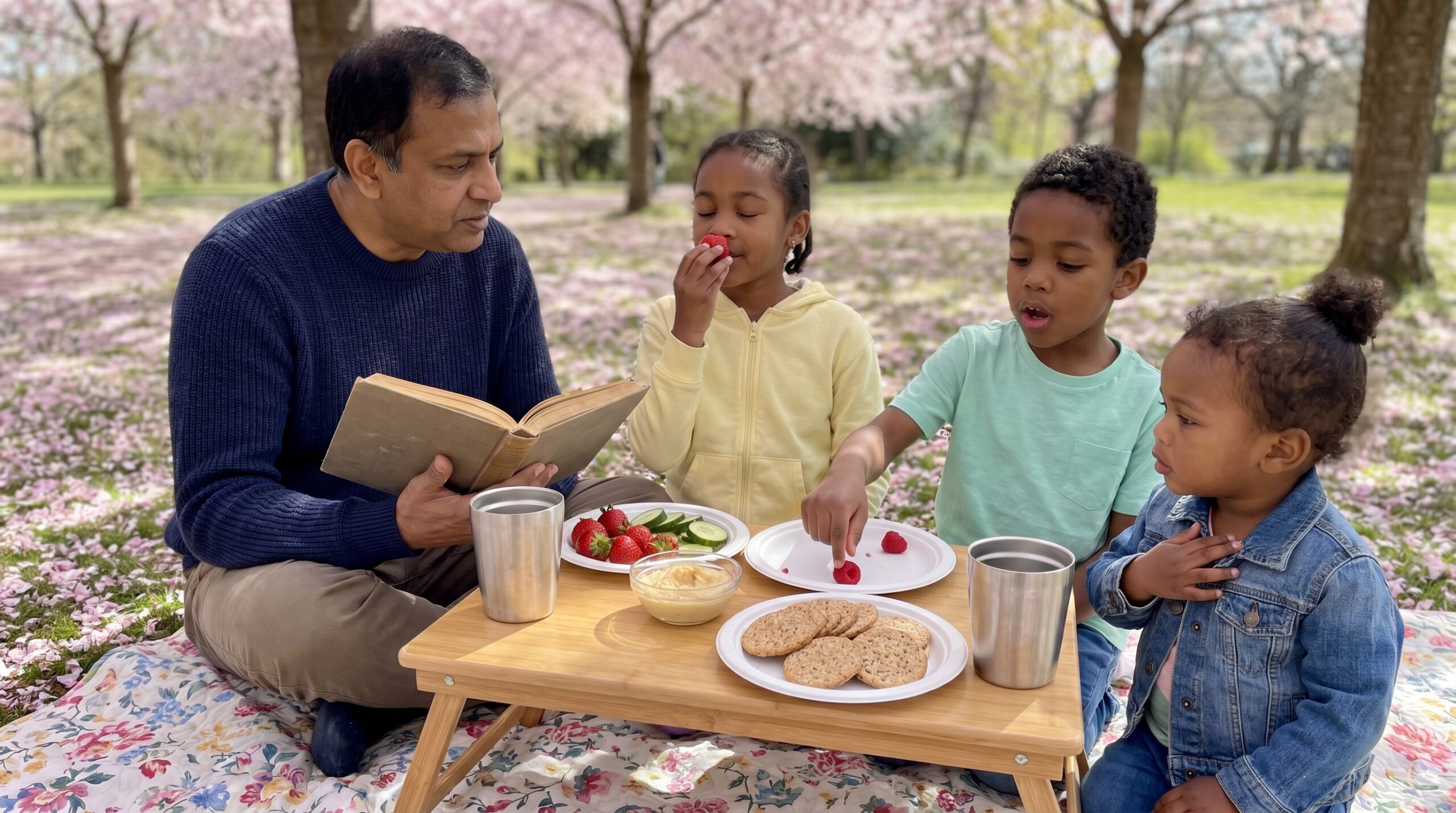
Mindful eating for kids brings calm and curiosity to mealtime. It asks children to use all their senses and notice hunger and fullness. Parents and teachers can guide short, playful moments that build self-regulation. In fact, in 2023, a study involving 13,768 participants revealed that individuals with higher mindful eating levels were more likely to follow healthy plant-based diets, highlighting the importance of promoting mindful eating among children for healthier eating habits (Scientific Reports).
What is mindful eating for kids?
Mindful eating is paying full, nonjudgmental attention to the experience of eating. It asks people to notice appearance, smell, texture, and flavor. Historically, these ideas come from Buddhist mindfulness. Later, clinicians adapted them into programs like mindfulness-based stress reduction and MB EAT. Researchers find mindfulness-based approaches can reduce binge and emotional eating in older groups. A systematic review and meta-analysis of mindful-eating interventions published in 2023 concluded that these interventions were at least as effective as other established interventions on cardiometabolic and behavioral outcomes. For children, short sensory exposure and tiny practices increase willingness to try new foods and strengthen self-regulation.
Why it matters
Mealtime becomes calmer when kids pay attention. Also, children learn body signals for hunger and fullness. Over time, these habits help with emotional awareness and better eating behaviors. However, mindful eating is not a substitute for clinical care when a child has a complex feeding disorder. Interestingly, in 2023, a study involving 1,798 U.S. adults with lower incomes found that higher mindful eating scores were associated with better diet quality, especially important for children in economically disadvantaged situations (Journal of the Academy of Nutrition and Dietetics).
Simple habits to try
Core habits are simple and playful. First, slow down and remove screens. Then, pause before the first bite. Use curiosity instead of labels like good or bad. Finally, keep each practice very short and repeat it daily.
- Pause before a bite: Take one sip of water and notice hunger.
- Name three things: Ask a child to name three things they notice about their food.
- Crunch test: Chew one bite slowly and count to five or until the crunch fades.
- Taste detective: Find three words that describe the flavor.
Age friendly ideas
Match practices to a child’s age. For preschoolers try a 30 to 60 second “name three things” game. For school age kids try a slow chew or count to ten exercise. For older kids and teens offer a 3 to 5 minute reflection about hunger, fullness, and feelings. Also, avoid asking toddlers to slow down unless you supervise. Otherwise you may increase choking risk. Cut food into age-appropriate pieces and teach safe chewing.
Tips and safety for families
Make mealtimes device-free and keep rituals short and consistent. Model mindful eating by describing what you taste and by pausing between bites. Use sensory language, not moral labels. If a child resists, offer a tiny, joyful experiment like trying a single pea. Repeat short practices daily for best results. In 2025, 19% of Americans reported following a mindful eating diet, making it the second most common diet after high protein, showing its growing popularity and relevance (IFIC Food & Health Survey).
For children with diagnosed feeding disorders or medical concerns, coordinate mindful eating with pediatricians, dietitians, or therapists. Supervise young children and keep instructions simple. Brief, frequent practices build attention and self-regulation over time.
Read or listen to a story about Mindful Eating now: For 3-5 year olds, For 6-8 year olds, For 8-10 year olds, and For 10-12 year olds.
Try Storypie’s new lunchtime short story for a quick cue to use the senses. Also, get the app to make these tiny rituals fun and easy: Get the app.
Final thought
Mindful eating for kids is a tiny, powerful skill. With short, playful steps you can turn a rushed lunch into a calm, curious moment. Celebrate discovery and watch self-regulation grow. What a tasty surprise!