
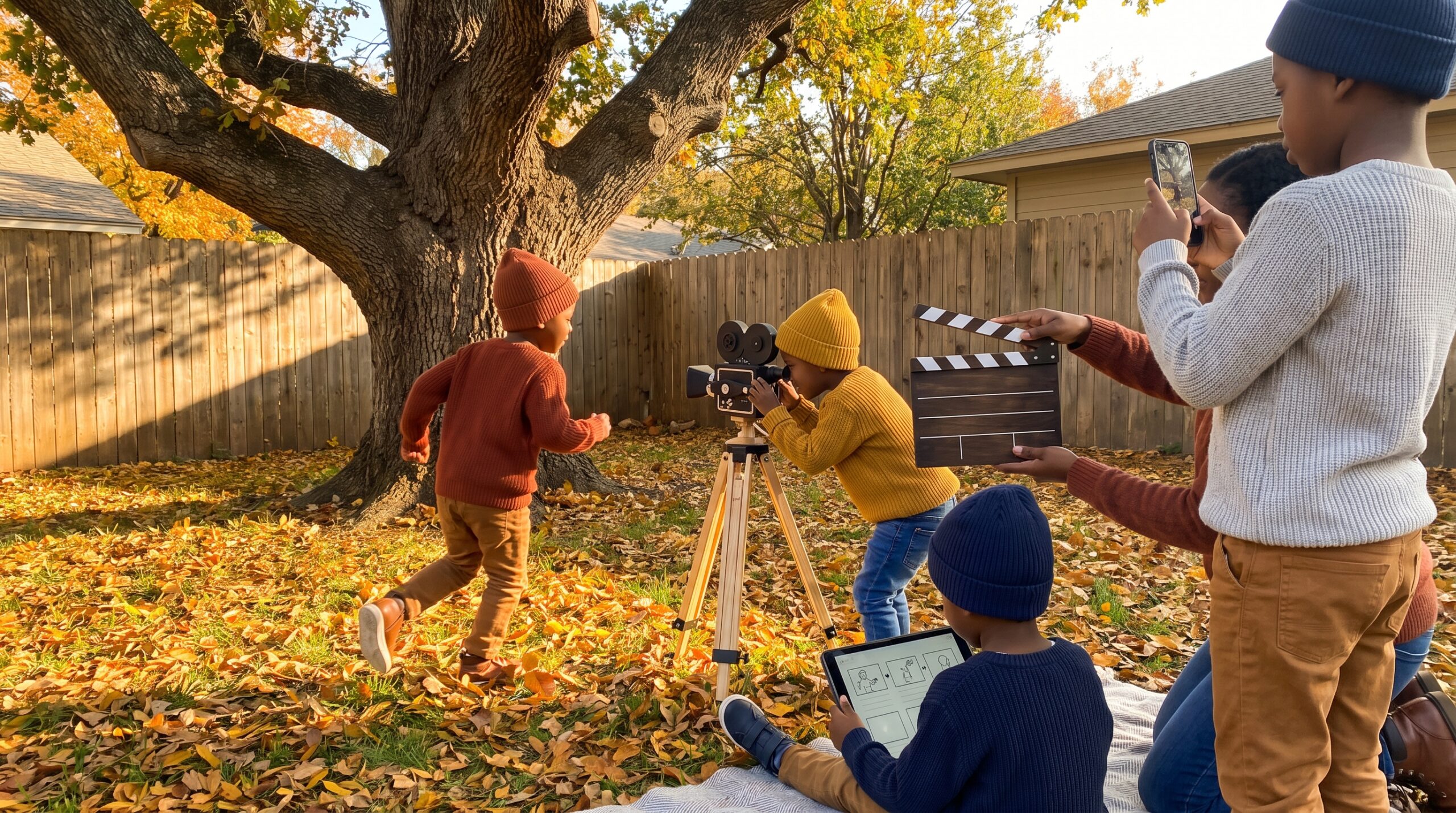
The motion picture camera for kids explains how moving pictures form. It records many quick images. Then the pictures play in order. Finally the brain sees smooth motion. This simple trick still feels like magic.
Early experiments and inventors: motion picture camera history
Inventors chased the idea for years. In 1878 Eadweard Muybridge photographed a running horse. Next, Étienne-Jules Marey captured steps in sequences. Then Louis Le Prince filmed Roundhay Garden Scene on October 14, 1888, in Leeds—this is the earliest surviving motion picture, captured using his single-lens motion picture camera, marking a significant milestone in the history of filmmaking. Thomas Edison and William K. L. Dickson built early movie machines in the 1890s. W.K.L. Dickson, working under Edison, designed the Kinetograph, a successful motion picture camera patented in 1891; it used 35 mm-wide Eastman Kodak celluloid film and was first publicly shown in 1893 via the Kinetoscope. The Lumière brothers staged the first public screenings in 1895. George Eastman later made flexible roll film practical. Together these steps shaped the motion picture camera and cinema.
How a motion picture camera works
A camera has a few simple parts. The lens acts like an eye. The shutter times each picture. The film or digital sensor remembers the image. A viewfinder helps frame the shot. A tripod mount holds the camera steady. Change one of these parts and the image changes too. Also, frame rate decides perceived speed. Silent films ran at about 16 to 18 frames per second. In contrast, modern movies use 24 frames per second. Thus, speed affects how motion looks. In 2025, traditional digital cinema cameras held 66.43% of the cinema camera market by revenue share, indicating a strong preference for contemporary technology in filmmaking.
Formats and the camera’s look
Different formats give different feels. Filmmakers chose film gauges and lenses for character. For example:
- 8mm and Super 8 feel cozy and homey.
- 16mm suits education and indie projects.
- 35mm powers most commercial cinema.
- 70mm and IMAX create very large, breathtaking images.
Film stock added grain, color bias, and texture. Digital sensors now offer cleaner pictures and higher resolutions. Still, makers pick formats for mood and effect. As of 2025, feature film studios accounted for 41.74% of the demand for cinema cameras, while independent and documentary filmmakers are growing at a compound annual growth rate (CAGR) of 8.01% through 2031, showing a shift in the filmmaking landscape.
Care, archives, and preservation
Film needs careful storage. Early nitrate film is highly flammable. Archives store it in special vaults. Acetate film can suffer vinegar syndrome. Institutions like the George Eastman Museum and the Library of Congress lead preservation work. They keep originals cool and dry. They also digitize fragile reels to protect them for future audiences.
Families, curious kids, and Storypie
Families can enjoy the history and wonder of the motion picture camera together. For example, watch a short Lumière or Méliès film. Visit a local film museum. Share old family movies and talk about how they were made. At Storypie, we love sparking curiosity in young minds. Read or listen to a story about Motion Picture Camera now: For 3-5 year olds, For 6-8 year olds, For 8-10 year olds, and For 10-12 year olds.
Also, explore more Motion Picture Camera resources on Storypie. Visit our invention page to learn further: Read or listen to a story about Motion Picture Camera now. For a gentle next step, try the Storypie app for more tales.
In short, the motion picture camera turned curiosity into moving stories. Share a short film and watch imagination roll.









