
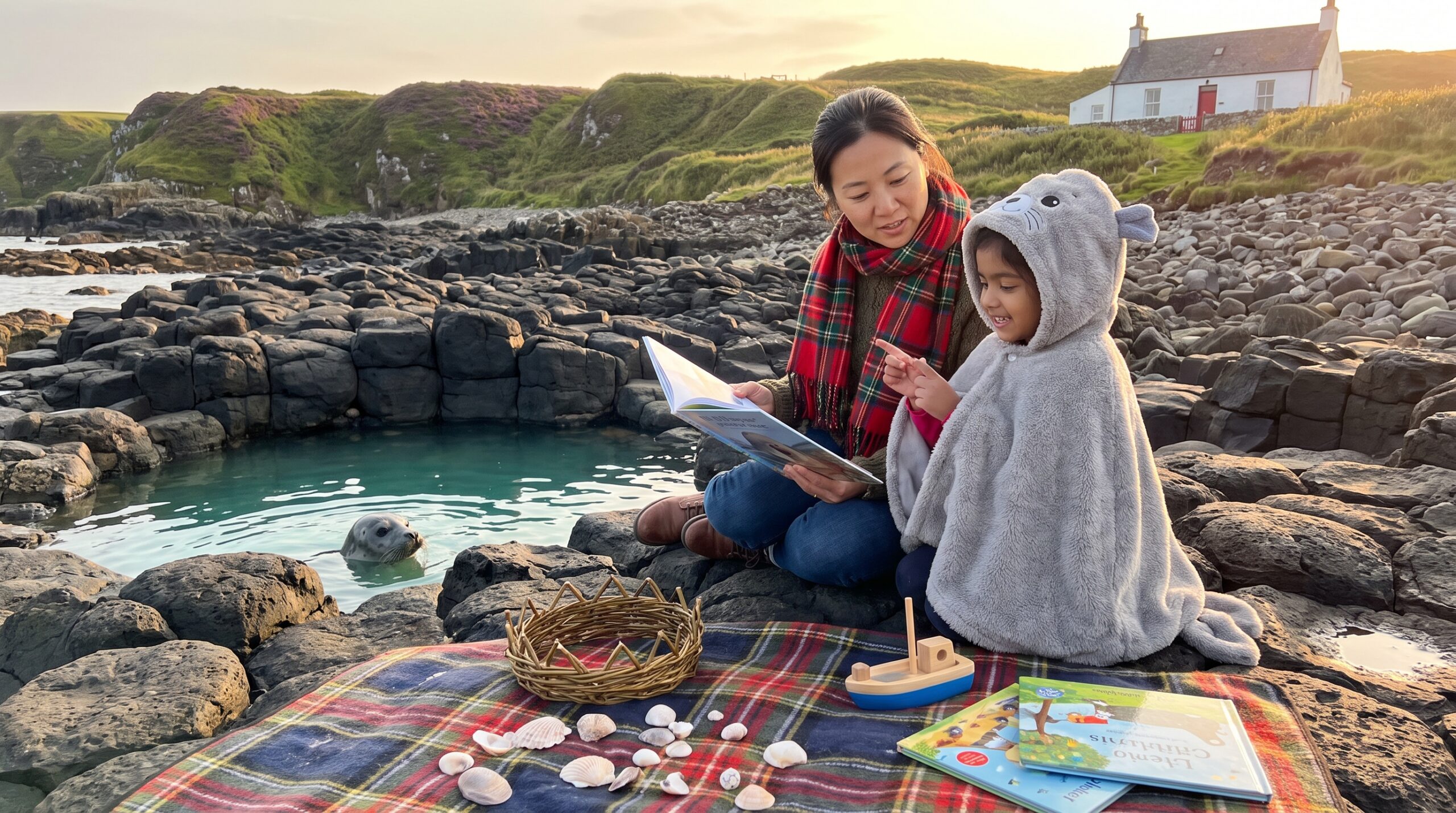
Selkie – Scottish stories are sea-salted tales about seal-people who come ashore. A selkie can shed a seal-skin and walk as a person. The term ‘selkie’ originates from the Orcadian (Orkney dialect) word meaning ‘seal,’ and selkie tales are especially rooted in the Orkney Islands—the Northern Isles of Scotland. These gentle tales feel wistful and quietly beautiful, full of tides and longing.
Where Selkie – Scottish tales live
First, these tales thrive in Orkney, Shetland and the Hebrides. Also, similar versions appear in Ireland and parts of Scandinavia. Island life shaped stories that mix daily work and small wonder. Selkie stories were widely collected in the 18th and 19th centuries across the Hebrides, Orkney, and coastal Scotland and Ireland, forming part of the oral Gaelic and Norse-influenced tradition documented during that period, highlighting their significance in Scottish folklore.
Common motifs
Most selkie tales share a few clear parts. Often a selkie leaves the sea and walks in human form. Then a human hides the seal-skin. Next, the selkie stays as a spouse until the skin is found. Finally, finding the skin often leads to a poignant return to the sea.
- Seal-skin or coat as the key motif
- Children who blend seal and human traits
- Island and tidal settings
Why families love Selkie – Scottish tales
Themes are simple and deep: belonging, identity and longing. For parents and teachers, these stories invite calm conversation. In particular, selkie tales work best when told as gentle sea-people rooted in respect for nature, not as scary monsters. Local seals such as grey seals and harbour seals inspired selkie images. However, these animals are protected and best admired from a distance. According to VisitScotland, folklore varies by island, and storytellers keep the tradition alive by changing details with each telling.
As of 2021, some folklore accounts assert that ‘Selkie pups’ (children born of a human and a selkie) are typically born with webbed fingers and toes, and demi-selkies reportedly rarely live past 30 years, with the oldest recorded living up to 45 years. Additionally, in Orkney folklore, descendants of selkies were reputed to have a thick, greenish-white horny skin on the palms of their hands and soles of their feet—approximately one-sixteenth of an inch thick—and emitting a strong fishy odor, which adds a vivid description of selkie descendants, enhancing the mythical imagery associated with these creatures.
Where to read or listen
Read or listen to a story about Selkie – Scottish now: For 3-5 year olds, For 6-8 year olds, For 8-10 year olds, and For 10-12 year olds.
Simple tips and a tiny scene
Try a tiny, unforgettable scene to spark curiosity. For example, draw a shore and let children add a selkie or a boat. Also, ask a gentle question like which home would feel truest to you and why. These moments invite more listening and less explaining.
Finally, if you want easy access to family-friendly audio narration, try Storypie. Visit Storypie for calming versions and audio you can play together this afternoon.