
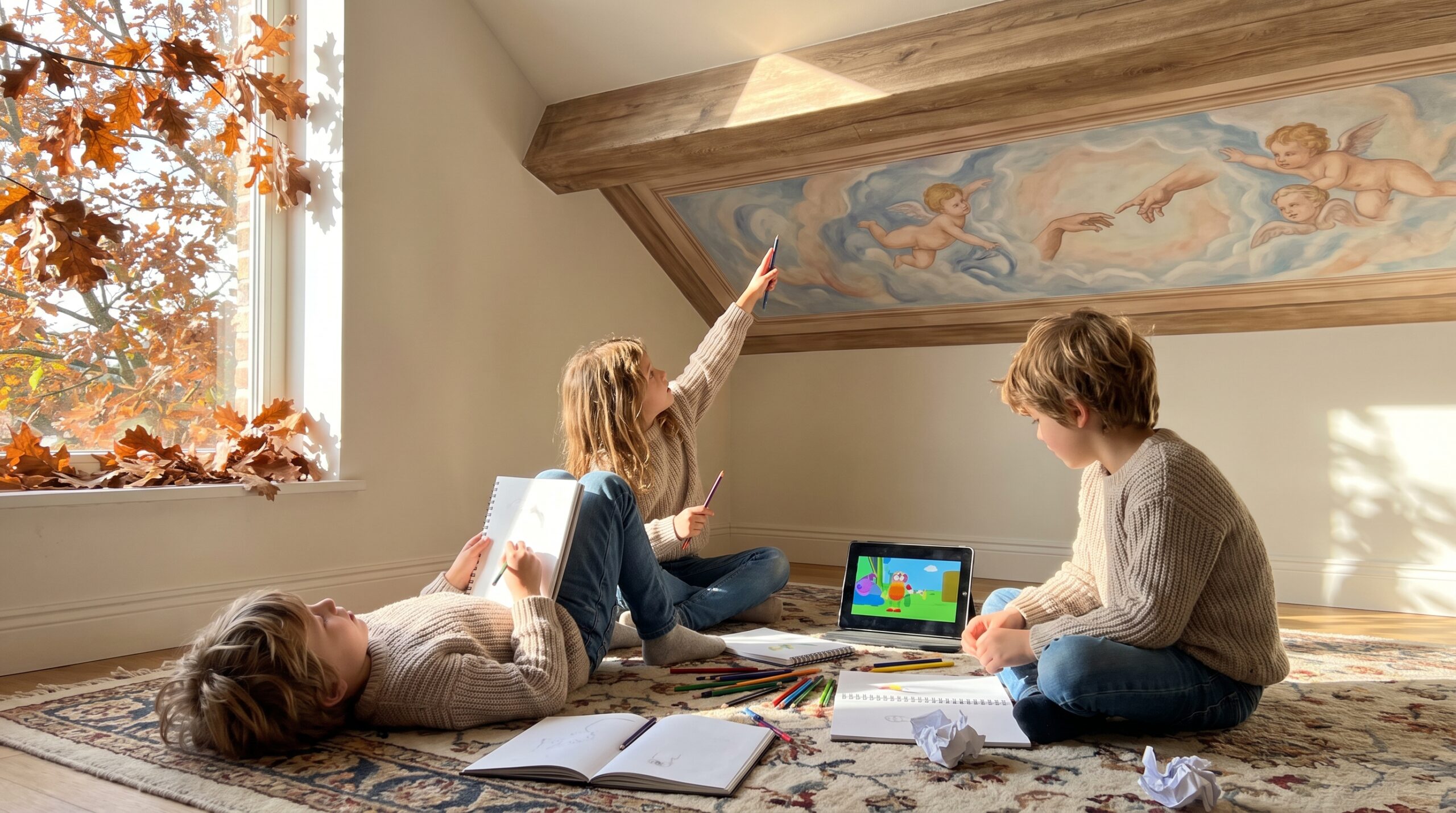
Bright and monumental, the Sistine Chapel ceiling is a standout of the Renaissance. It fills a chapel roof in Vatican City with sweeping figures and vivid color. For parents and teachers, the Sistine Chapel ceiling offers a rich story about art, faith, and human skill.
Sistine Chapel Ceiling: The Commission and the Artist
Pope Julius II asked Michelangelo Buonarroti to paint the ceiling. Michelangelo accepted the huge project in 1508 and worked there until 1512, covering approximately 5,800 square feet (about 540 square meters). Later, he returned to paint the Last Judgment between 1536 and 1541. Overall, his work reshaped how people thought about painting.
How Michelangelo Painted the Ceiling
Michelangelo used the fresco technique. In fresco, pigments go onto wet lime plaster so the paint becomes part of the wall. Painters worked in small sections called giornate. Each giornata matched what they could finish in a day. Because of this, planning mattered a great deal.
Michelangelo drew full-size cartoons and painted the major scenes. Assistants helped with plaster and support tasks. Still, the job was physically demanding. Workers built scaffolding under the ceiling to reach the high vault, which rises to an apex of 20.70 meters above the floor.
Main Scenes, Figures, and Famous Images
At the center are nine big Genesis scenes. They include The Creation of Adam, The Fall and Expulsion from Paradise, and The Flood. The Creation of Adam shows God’s and Adam’s almost-touching hands. That image remains the most famous.
Around the panels, Michelangelo painted prophets, sibyls, and the so-called ignudi. He also added figures who represent Christ’s ancestors. In total, the ceiling’s frescoes include over 300 figures, with one count totaling 343 distinct figures, creating a sweeping visual story across the ceiling.
Size, Setting, and Visitor Tips
The chapel measures roughly 40.23 meters in length and 13.41 meters in width. Thus, the ceiling covers about 520 square meters. Because it is high and broad, many visitors study reproductions first. The chapel receives over 5 million visitors annually, making it a significant cultural landmark. Quiet and respectful behavior helps when visiting. Also, the space still serves as a working chapel for papal ceremonies and conclaves.
Restoration and What Changed
Late twentieth century conservation cleaned soot and old varnish. The modern restoration of the chapel’s ceiling began in June 1980 and was completed in December 1989; the lunettes were cleaned between June 1980 and October 1984. Consequently, the colors that viewers now see are much brighter. However, the restoration sparked debate about appearance changes. Still, the cleaning helped readers spot small details and Michelangelo’s palette.
Simple Ways to Notice Details
- Look for gestures and faces in each panel.
- Notice color contrasts and dramatic poses.
- Spot prophets, sibyls, and the ignudi around the main scenes.
For a gentle at-home activity, invite a quick sketch of The Creation of Adam. Then ask one or two simple questions, such as what the hands seem to do. A short sketch can open a door to wonder.
Read or listen to a story about The Sistine Chapel Ceiling now: For 3-5 year olds, For 3-5 year olds, For 6-8 year olds, For 8-10 year olds, and For 10-12 year olds.
Finally, try the Storypie app for a short tale and a mindful sketch session. Visit the Storypie app to get started: Get the Storypie app.
It remains an astonishing feat of imagination and skill. The Sistine Chapel ceiling still delights children and adults alike.









