Space Race for Families: A quick intro
Space race for families brings a bold slice of history to home time. It tells of engineers, politics, and human courage. First, two superpowers raced after World War II to win firsts in space. The contest ran roughly from Sputnik in 1957 to Apollo Soyuz in 1975. Today, the United States continues to lead in space activities, accounting for 82% of all objects launched into space in 2023.
Major milestones made simple
Major milestones are tidy and exciting. For example:
- October 1957: Sputnik 1 became the first artificial satellite.
- April 12, 1961: Yuri Gagarin orbited Earth as the first human in space.
- March 1965: Alexei Leonov made the first spacewalk.
- July 20, 1969: Apollo 11 landed on the Moon. Neil Armstrong and Buzz Aldrin walked its surface.
Meanwhile, robotic Luna probes returned the first images of the Moon’s far side. Also, Mercury and Gemini helped the United States learn orbital flight and spacewalks. Saturn V remains one of the most powerful rockets ever flown. In recent years, the global space economy has seen significant growth, reaching approximately $570 billion in 2023, with commercial activities accounting for nearly 80% of this value.
Why the Space Race mattered
The Space Race mixed Cold War politics, national prestige, and scientific curiosity. It felt risky and cost billions. However, the push left a huge legacy. For example, satellites improved weather forecasts and communications. Also, engineers developed better electronics, materials, and medical tools. Finally, images like Earthrise changed how people saw the planet. In fact, more than 2,800 satellites were deployed into orbit in 2023, marking a 23% increase in satellite deployments compared to 2022, showcasing the continued advancements in satellite technology.
Key people and programs to remember
Keep names short and memorable for kids. Teach these first:
- Yuri Gagarin
- Neil Armstrong
- Buzz Aldrin
- Michael Collins
Also, point out important programs. Remember Vostok and Soyuz from the Soviet side. Remember Mercury, Gemini, and Apollo from the American side. Finally, note robotic programs such as Luna.
Simple ways to share the story with kids
Keep sharing short and sensory. Try these playful ideas:
- Tell a tidy timeline: Sputnik, first human, first spacewalk, Moon landing, Apollo Soyuz.
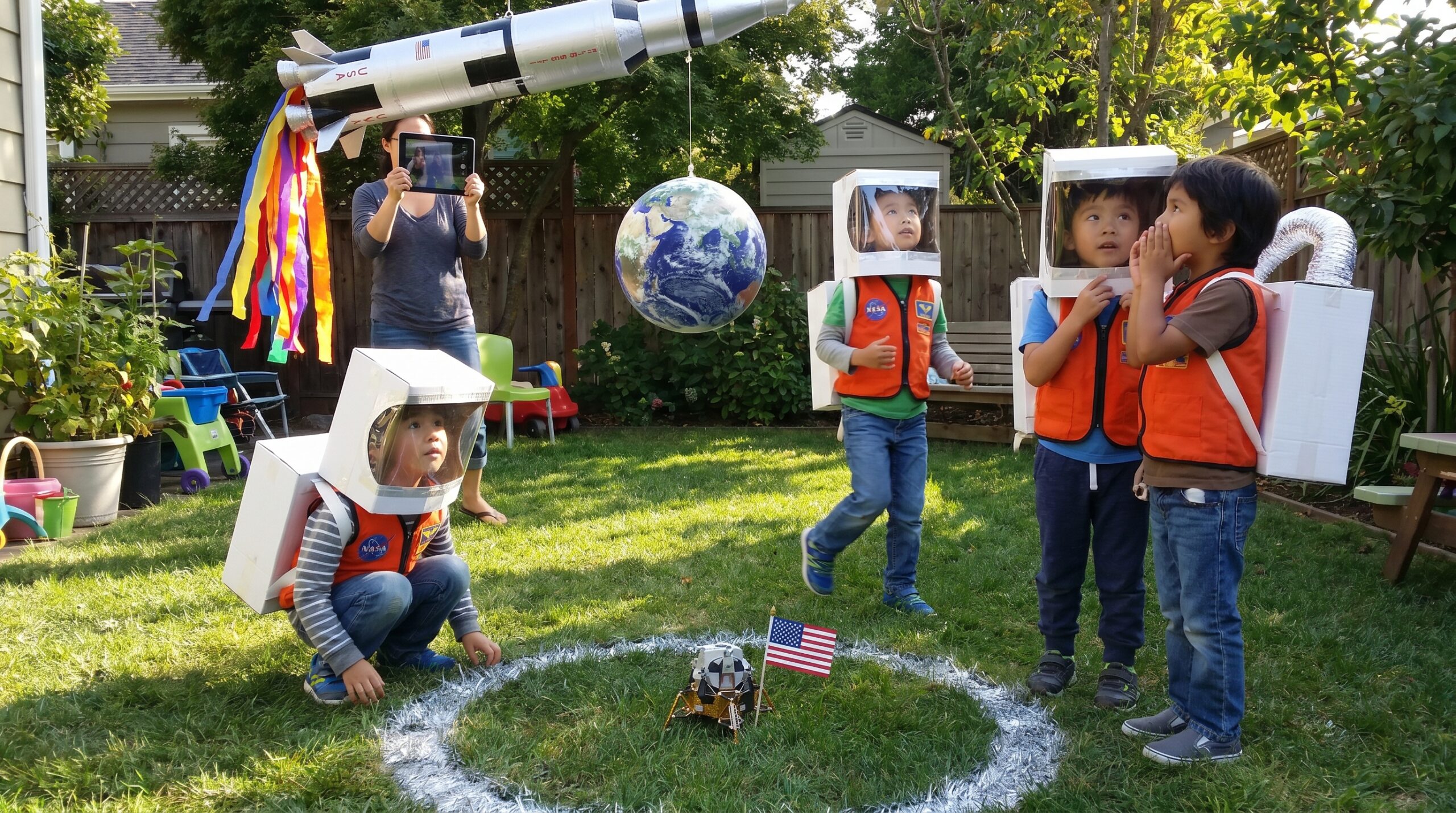
- Use models: a ball on a string shows orbit, stacked cups show rocket staging.
- Visit a planetarium or museum. Watch short launch footage. Point at photos like Earthrise.
How Storypie brings the Space Race to life
Storypie offers narrated retellings and age-appropriate Learn and Explore content. It adds friendly audio playback and guided age bands for families. Make sharing a short ritual: soft light, a quiet seat, and a curious question.
Read or listen to a story about Space Race now: For 3-5 year olds, For 6-8 year olds, For 8-10 year olds, and For 10-12 year olds.
Tiny rituals and activities
- Ten minute listening session. Then ask, “What would you explore?”
- Try a gravity drop. Use two objects and time them together.
- Label one shelf Space and rotate three books weekly.
Why repeat the ritual
Repetition builds curiosity and confidence over time. A short, regular listen turns facts into wonder. Keep it sensory, keep it short, and let questions lead. Over weeks, kids gain memory, vocabulary, and a lasting sense of wonder. In fact, in 2025, there were 321 orbital launches worldwide, with the United States conducting 179 of them, emphasizing the ongoing competitive nature of space exploration.
Want more? Visit Storypie to explore related stories and gentle learning tools: Read or listen to a story about Space Race now.