
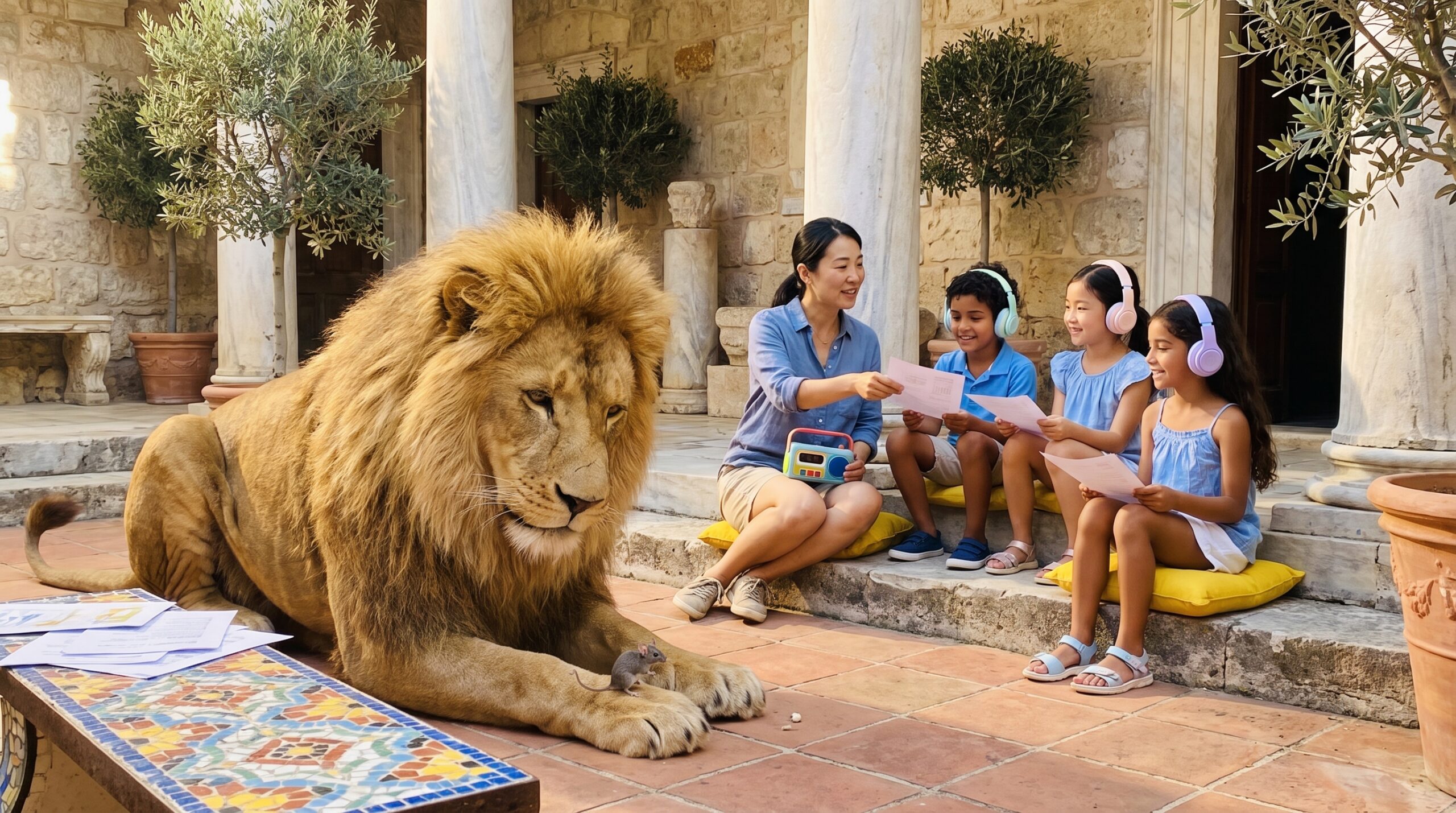
The Lion and the Mouse – Greek is a small, ancient fable that still charms families. It comes from Aesop and dates to about the sixth century BCE. This beloved tale is classified as Fable No. 150 in the Perry Index, a widely used scholarly catalog of Aesop’s Fables. Parents and teachers love its snappy lesson and simple scene.
What the fable says
The plot is short and perfect. A lion spares a frightened mouse. Later the lion gets trapped and the mouse returns the favor. The mouse nibbles ropes and frees the mighty creature. The image feels like sunshine and tiny bravery.
Origins and Greek titles
The story appears in ancient Greek sources. The classical Greek title is ὁ λέων καὶ ὁ μῦς, ho leōn kai ho mys. In modern Greek the title reads Το λιοντάρι και το ποντίκι, To liontári kai to pontíki. These Greek names sound playful and musical aloud. The tradition of Aesop’s fables, including ‘The Lion and the Mouse,’ spans hundreds of tales composed in centuries after Aesop’s life, existing in both Greek and Latin, with murky origins, as noted in a study published by Oxford Academic.
How the tale travelled
Oral versions turned into written lines. Greek versifiers such as Babrius set Aesopic lines to verse. Latin adapters like Phaedrus and later European writers carried the tale widely. So schools, picture books, paintings, and animated shorts now share versions across languages. The fable has been translated into multiple languages, with notable versions in Greek, Russian, and Ukrainian, reflecting its widespread cultural impact, as highlighted in a recent study.
Themes and lasting appeal
The Lion and the Mouse – Greek teaches mercy and humility in a direct way. It uses animals to show human actions. In plain terms it says small acts can change big lives. That clarity makes it a favorite across cultures. Recent research, such as a 2024 study titled Aesop’s fable The Lion and the Mouse: Multicultural perspectives, examines shifts in the representation of characters across different cultural versions of the fable, emphasizing its relevance in contemporary discussions about cultural representation.
Language and learning
Because the tale uses simple vocabulary, it fits bilingual play and basic language learning. Families sometimes enjoy the Greek and English side by side. Also, modern retellings often name the mouse and paint the scene vividly. Notably, Jerry Pinkney’s nearly wordless picture-book adaptation of ‘The Lion & the Mouse’ was published on September 1, 2009, and won the 2010 Caldecott Medal for its illustrations, showcasing the fable’s cultural impact and recognition in modern literature.
Read or listen to a story about The Lion and the Mouse – Greek now: For 3-5 year olds, For 6-8 year olds, For 8-10 year olds, and For 10-12 year olds.
Finally, you can find the tale on Storypie for easy listening and reading. Visit the story pages or download the app to listen together.
Read or listen to a story about The Lion and the Mouse – Greek now and enjoy this tiny, wonderful fable.