
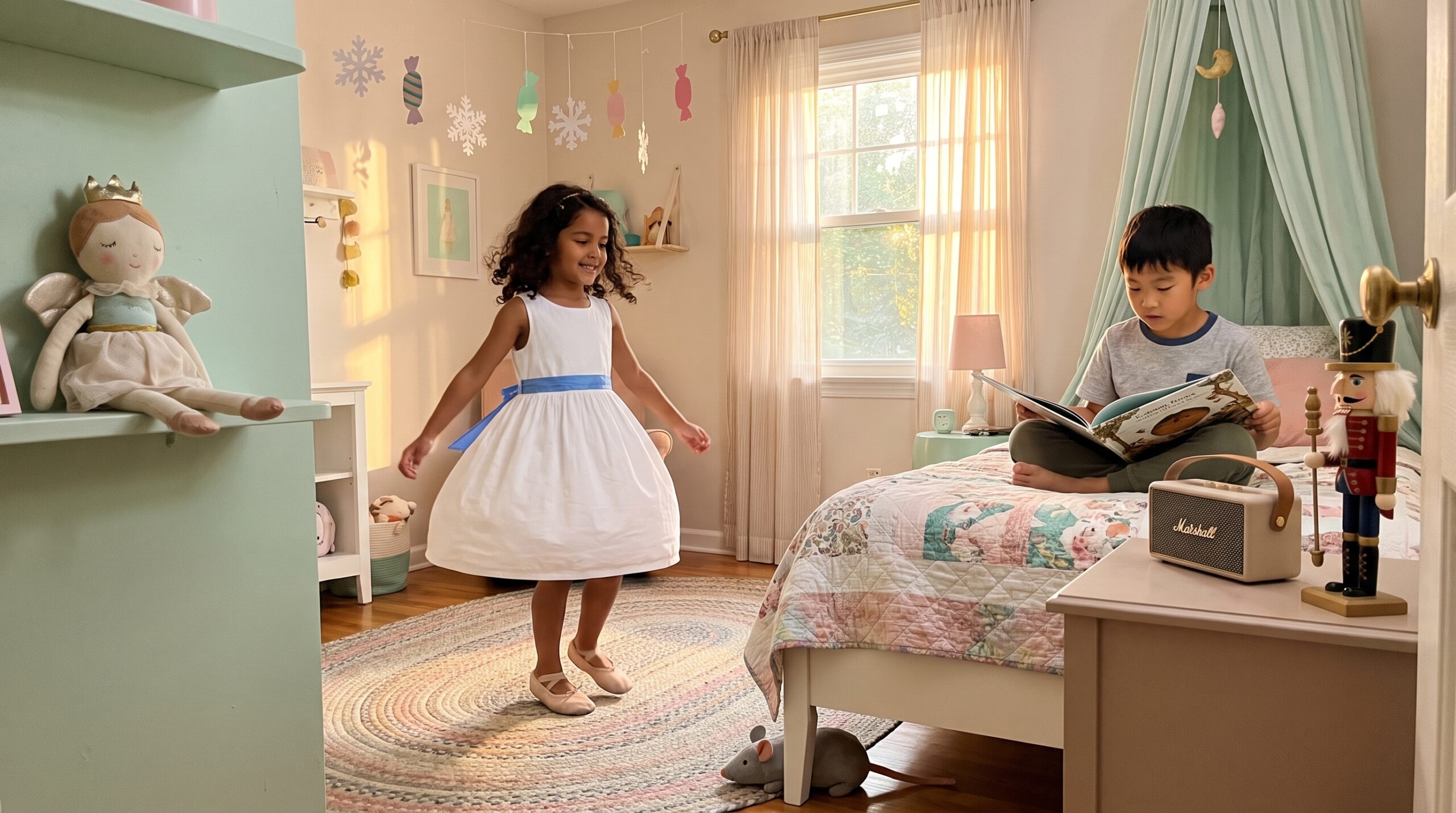
The Nutcracker ballet for families feels like a tiny ritual. Bright music, crisp costumes, and a cozy story make it special. For many children, this ballet is their first taste of full-length dance and orchestra.
Origins of The Nutcracker ballet for families
First, the tale began with E.T.A. Hoffmann. Then Alexandre Dumas softened the story. Next, Pyotr Ilyich Tchaikovsky composed the music in 1891 and 1892. Finally, Marius Petipa and Lev Ivanov shaped the original choreography. The original production of The Nutcracker premiered on December 6, 1892, by the Imperial Ballet in St. Petersburg. This historical moment marked the beginning of a ballet that would become a beloved classic.
The work premiered in St. Petersburg in December 1892. Herr Drosselmeyer, Clara, and the Mouse King first appeared on that stage. Many productions still keep those clear characters today.
Two-act story and musical highlights
Act I shows a Christmas Eve party, a precious gift, and a tiny battle with the Mouse King. Act II moves to the dreamlike Land of Sweets. There Clara watches the Sugar Plum Fairy and short national dances.
Musically, The Nutcracker is a treasure chest. Tchaikovsky compiled the Nutcracker Suite to bring the music into concert halls. Highlights include the March, the Dance of the Sugar Plum Fairy, the Russian Trepak, and the Waltz of the Flowers. These short pieces are perfect listening seeds for young ears.
Why The Nutcracker works for kids
The Nutcracker ballet for families succeeds because it offers clear characters and vivid scenes. Also, Act II presents short dances that hold attention. Additionally, strong visual moments like the snow scene and divertissements stay in memory. In fact, the enduring popularity of The Nutcracker is evident as it continues to generate significant ticket revenue. For instance, in the 2024–25 season, Pittsburgh Ballet Theatre’s production sold 34,617 tickets, generating nearly $1.9 million in revenue.
- Clear characters: Clara or Marie, the Nutcracker Prince, Drosselmeyer, Mouse King, Sugar Plum Fairy.
- Short dances in Act II that hold attention.
- Strong visual moments: the snow scene, the divertissements, the finale.
Practical tips for families
Before you go, play a 10-minute Nutcracker sampler in the car. Start with the March and the Dance of the Sugar Plum Fairy. That tiny ritual often delights young listeners.
Also, choose an abridged matinée for preschoolers. Full productions usually run 90 to 120 minutes with an intermission. For seating, pick an aisle seat so intermission escapes feel easier. Finally, keep expectations low; the battle scene can be mildly scary. Talk about it beforehand, and then ask one simple question after the show. For example, ask, “Which dance did you like most?” Let your child answer with gestures if they prefer.
Activities to extend the evening
After the performance, make paper crowns or bake simple cookies like Clara’s party treats. Also, dance a slow snowflake waltz in the living room. These tactile extras help the memory sparkle and turn one night into a tiny family tradition.
Read or listen to a story about The Nutcracker (ballet) now: Read or listen to a story about The Nutcracker (ballet) now:
For 3-5 year olds, For 6-8 year olds, For 8-10 year olds, and For 10-12 year olds.
If you want more, visit our collection or get the app. Try a short listen, keep it sensory, and stay playful. The Nutcracker is a gentle entry point into listening, story, and movement. In short, a tiny ritual that delights.