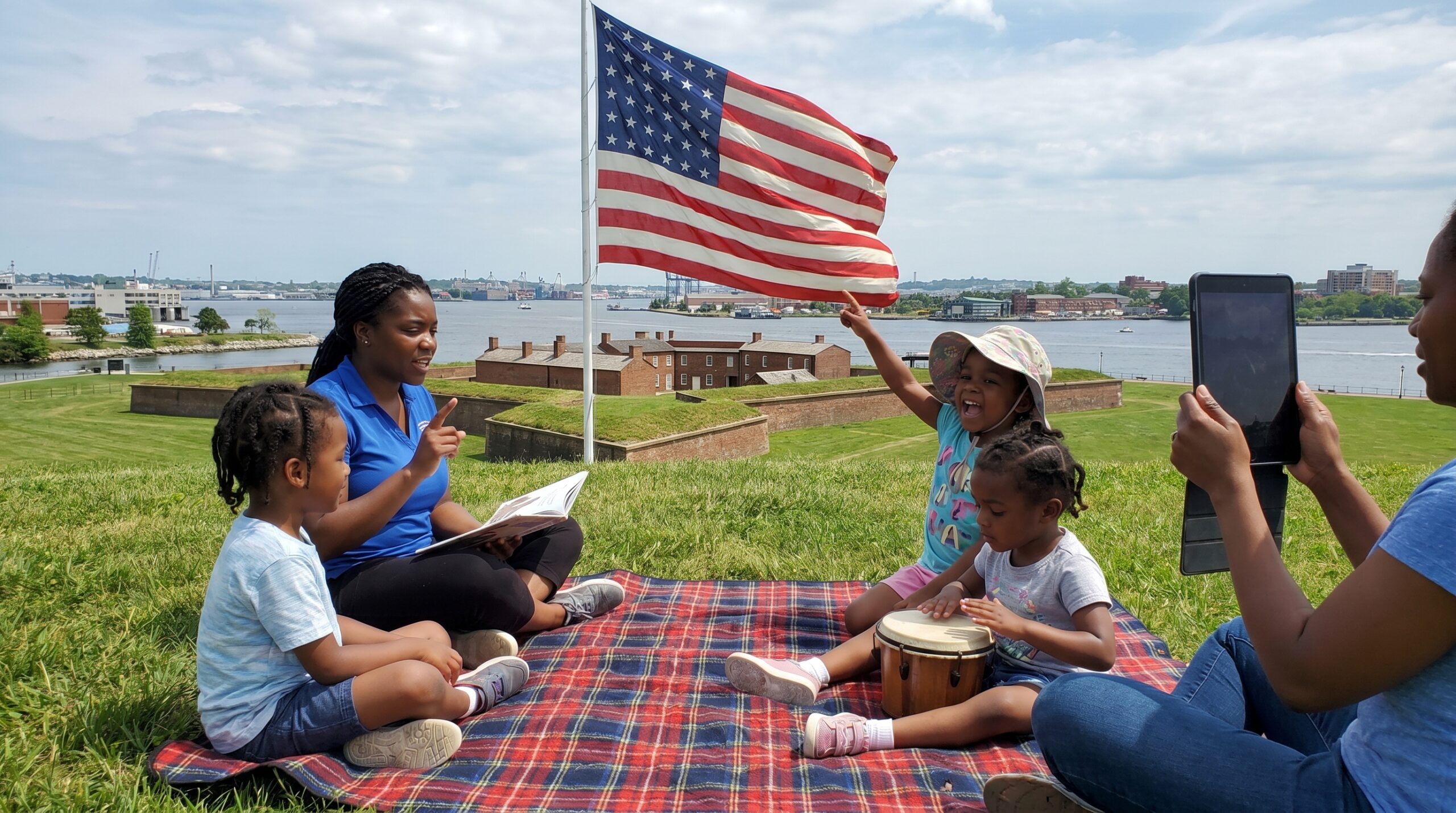
The star-spangled banner flag began as a vivid, hand-sewn idea. On an early summer afternoon in 1813, Mary Young Pickersgill and her helpers stitched a giant garrison flag. It measured about 30 feet by 42 feet, highlighting its impressive size and significance. Major George Armistead asked for a banner big enough to be seen by ships. Also, the flag had fifteen stars and fifteen stripes at the time.
The Star-Spangled Banner Flag at Fort McHenry
The flag flew over Fort McHenry during a fierce night in September 1814. British ships bombarded the fort. Francis Scott Key watched from a ship. Then at dawn on September 14, 1814, he saw the large flag still flying. Because the flag was still there, Key wrote a poem called “Defence of Fort M’Henry.” Later people set his words to a tune. Finally, on March 3, 1931, Congress named that song the national anthem, officially recognizing its importance in American history.
Who made the flag and why it mattered
Mary Pickersgill led a team of sewers in Baltimore. She chose bunting and cotton and stitched the cloth by hand. The U.S. government paid $405.90 for the large garrison flag and $168.54 for the smaller storm flag, illustrating the value placed on these symbols during that time. Major Armistead wanted the flag to be visible from a long distance, so the makers made it very large. The flag served as a bright sign, telling others that the fort still stood.
How the flag survived and where it lives now
The original Star-Spangled Banner flag is fragile today and is preserved and displayed at the Smithsonian Institution’s National Museum of American History in Washington, D.C. Conservators stabilize the cloth and protect it from light. Also, curators preserve Francis Scott Key’s manuscript of the poem. Today both items are kept as treasured artifacts in a museum collection, helping visitors feel that dramatic morning at Fort McHenry.
Why this story still matters
This flag became a symbol because people saw it and felt hope. For kids, the bright image of a giant flag is clear and bold. The song keeps that single moment alive in music and memory.
Read or listen to a story about The Star-Spangled Banner now: For 3-5 year olds, For 3-5 year olds, For 6-8 year olds, For 8-10 year olds, and For 10-12 year olds.
Also, visit Storypie to add this tale to your family library: Storypie. If you enjoy history, this bright flag story will stay with you.