
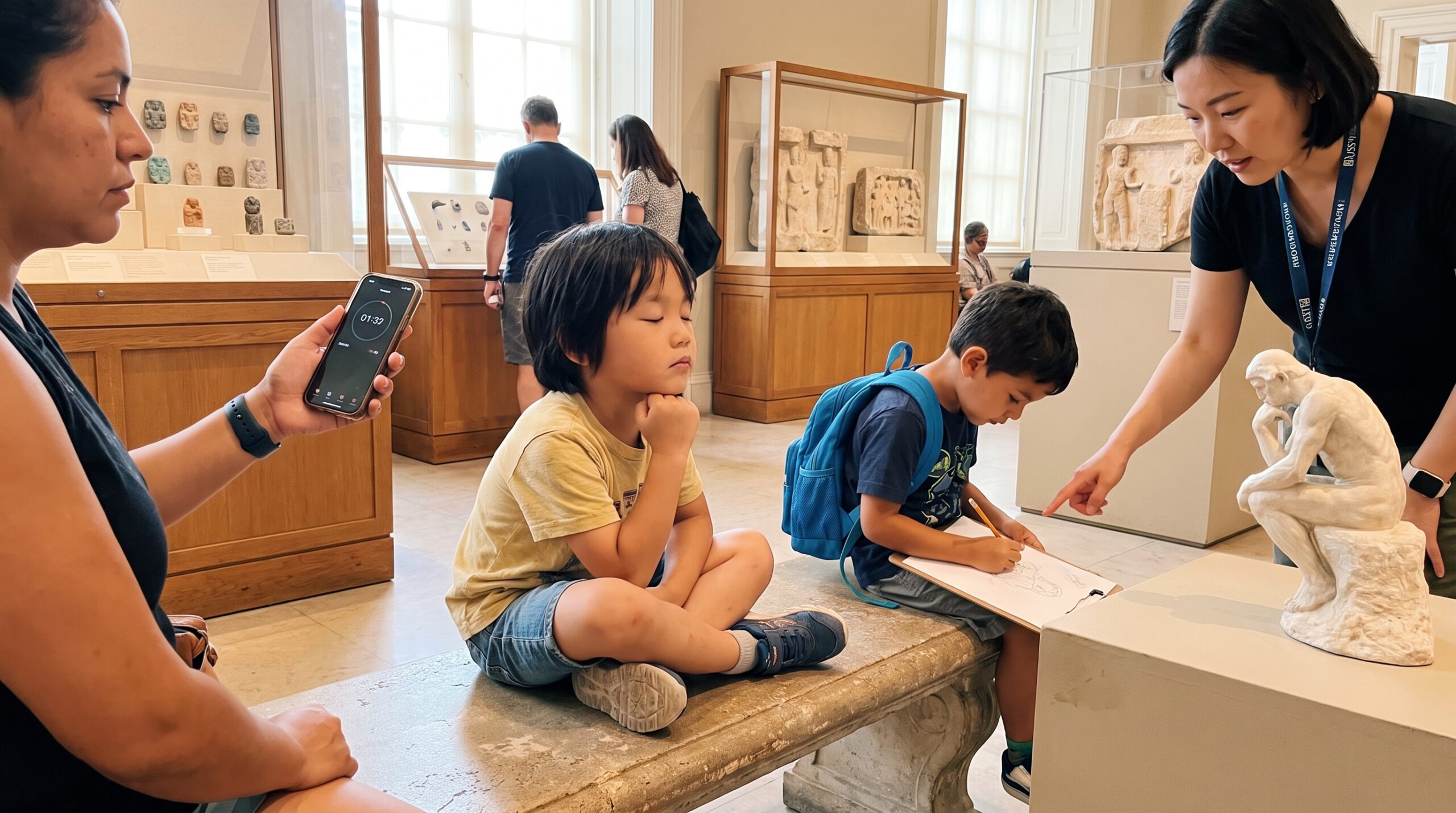
The Thinker Rodin sculpture shows a seated man lost in thought. Rodin created a powerful pose that reads as concentration, wonder, or small mystery. The figure crouches on a rock, elbow on knee, chin on hand.
About The Thinker Rodin sculpture
Auguste Rodin began the figure around 1880. He first designed it as part of a larger doorway called The Gates of Hell. Originally Rodin named the model The Poet. However, the figure escaped that specific role. Instead, it became a global symbol of reflection. According to the Musée Rodin, the original conception of “The Thinker” occurred in 1880 at approximately 70 cm in height; the enlarged version was made in 1904 and measures about 189 cm tall.
Rodin kept surfaces textured and alive. He emphasized feeling and posture rather than polished perfection. As a result, the statue looks lively and full of motion, even while still.
Forms, casts, and materials
Rodin modeled in clay and plaster. Then his workshop made molds and cast the work in bronze. Casting makes strong versions that last for generations. The first monumental bronze casting of “The Thinker” was made in 1904 and is now exhibited at the Musée Rodin in Paris.
Also, The Thinker exists in many sizes. You can find small studies, life-size figures, and very large monumental casts. The enlarged version of “The Thinker” measures approximately 182.9 cm in height, 98.4 cm in width, and 142.2 cm in depth, and weighs 1,650 pounds. Bronze develops a patina from weather and touch. Museums sometimes preserve that patina. Other times they clean or coat the bronze for conservation.
Design and posture
The Thinker Rodin sculpture shows a compact, muscular body. The figure leans forward with tension in the muscles. His pose makes the head and hands feel very expressive. In short, the pose reads as thinking, and it invites curiosity.
Rodin focused on how posture carries meaning. Therefore the sculpture speaks through gesture rather than through fine surface polish. This approach made Rodin one of the most influential sculptors of his time. There are approximately 25 to 30 official enlarged bronze casts of “The Thinker” in museums and collections worldwide; Rodin personally oversaw the casting of around 10 of these during his lifetime, highlighting the widespread influence and replication of his work.
Where to see The Thinker Rodin sculpture
Important casts are at the Musée Rodin in Paris and the Rodin Museum in Philadelphia. Also, other museums and public collections display authorized casts. Some sit outdoors in gardens, where children can approach more easily.
Read or listen to a story about The Thinker – Rodin now: Read or listen to a story about The Thinker – Rodin now: For 3-5 year olds, For 6-8 year olds, For 8-10 year olds, and For 10-12 year olds.
If you plan a visit, check museum hours first. Also, ask whether the cast is outdoors. Then you will know how close you can get and what to expect.
Why The Thinker still matters
The Thinker Rodin sculpture endures because it blends simplicity with emotion. It reads across ages and cultures. For parents and teachers, it offers a friendly gateway to talk about posture, material, and art history. A limited edition of 25 copies of “The Thinker” was made from the original plaster mold by the Musée Rodin after Rodin’s death, emphasizing the ongoing legacy of his work.
Finally, Storypie offers age-adapted audio and text about this piece. Visit Storypie for gentle, child-friendly storytelling and museum-ready notes.
Helpful internal link: Storypie home