The Three Little Pigs – English is a cozy, memorable folktale children adore. It features three sibling pigs and a hungry Big Bad Wolf. Most kids love the huff and puff refrain and join in the fun.
What happens in The Three Little Pigs – English
First, each pig builds a different house: straw, sticks, and bricks. Then the Big Bad Wolf arrives and tries to blow each house down. He huffs and he puffs. As a result, the straw and stick houses fall. However, the brick house stands firm. The story uses a threefold pattern and a repeating refrain for strong rhythm.
Core themes in The Three Little Pigs – English
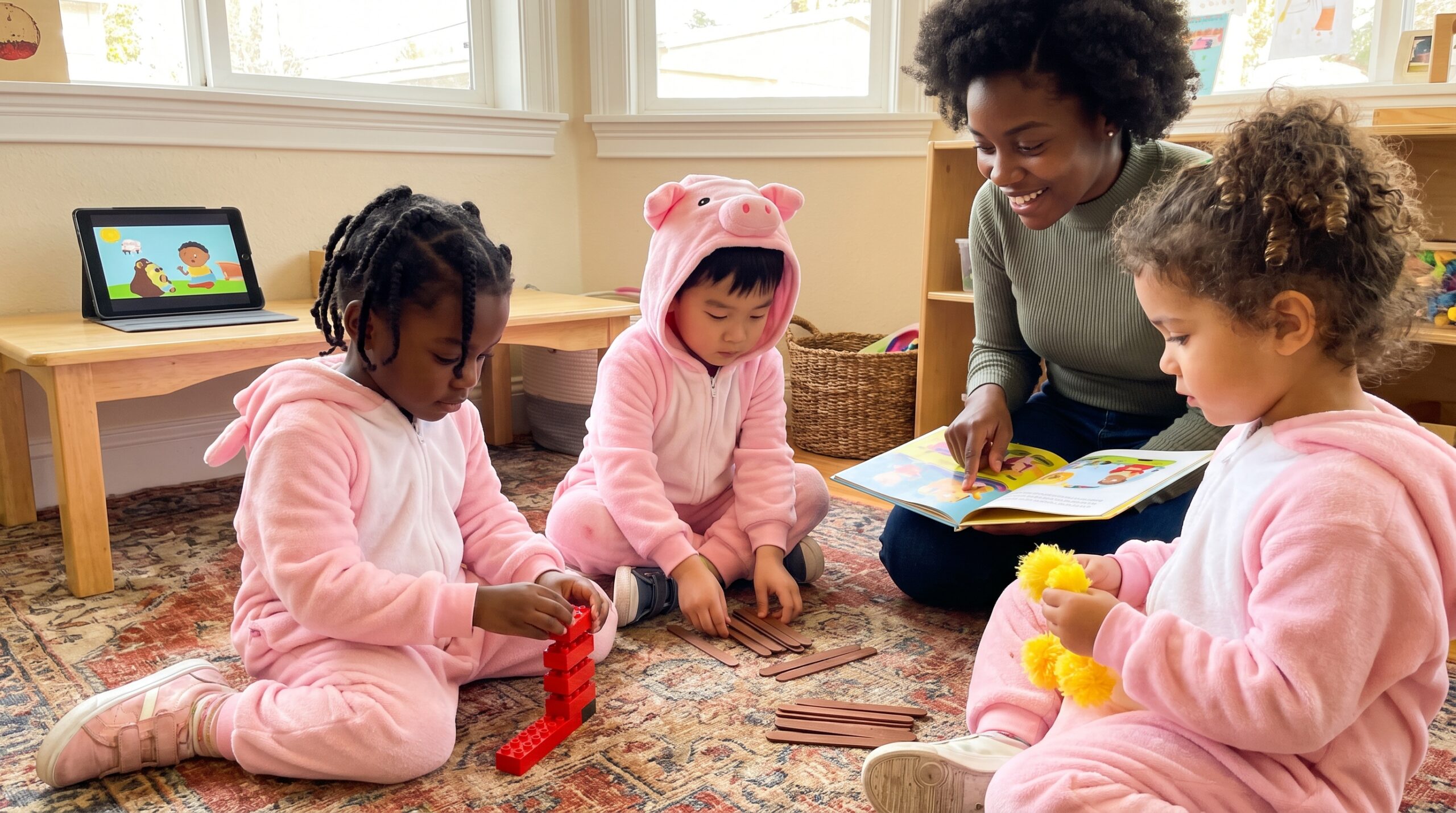
The tale highlights planning, hard work, and consequences. It also shows perseverance and clever choices. In addition, the refrain helps children predict what comes next. Teachers and parents often point to these features when they describe the story’s value in learning settings. For instance, a 2025 empirical study specifically utilized “The Three Little Pigs” to assess foundational literacy and basic math concepts in preschool-aged children, illustrating the story’s educational significance.
History and versions
The Three Little Pigs – English grew from English oral tradition. It first appeared in printed collections in the 1800s. Over time, picture books, cartoons, and stage versions followed. Some retellings soften the wolf. Others retell the tale from the wolf’s point of view. These variations spark lively conversation about perspective and motive.
Main characters and motifs
- Three little pigs — siblings with different approaches
- Big Bad Wolf — the persistent antagonist
- Houses of straw, sticks, and bricks — durable versus flimsy
- Chimney and sometimes a boiling pot — classic story motifs
Vocabulary box for The Three Little Pigs – English
Simple words often appear in the tale. These words help young listeners build clear images.
- Straw — light, dry plant material
- Sticks — small twigs or branches
- Bricks — heavy building blocks
- Chimney — the pipe on a roof
- Huff and puff — the wolf’s loud blowing
Common classroom and home interest
Because of its rhythm and repetition, The Three Little Pigs – English invites strong participation. Children easily remember the refrain. In turn, this feature supports vocabulary and sequencing. Many educators note that the story prompts discussion about choices and outcomes. Notably, a 2025 study found that illustrations combined with signaling significantly enhance preschool children’s memorization and comprehension of stories like this one.
Cultural notes
Wolves often appear as symbolic villains in folktales. Still, it helps to remind children that real wolves are wild animals to respect. Also, different cultures and authors adapt the tale to highlight varied values and humor.
Closing thought and gentle call to action
The Three Little Pigs – English remains one of the most playful and instructive folktales. It mixes silliness with a clear lesson about planning and effort. Research shows that interactive reading interventions, including stories like “The Three Little Pigs,” can have a positive effect on young children’s narrative abilities, particularly with interventions lasting more than 17 weeks, as highlighted in a meta-analytic study. For a warm retelling, explore Storypie’s version.
Read or listen to a story about The Three Little Pigs – English now: For 3-5 year olds, For 6-8 year olds, For 8-10 year olds, and For 10-12 year olds.