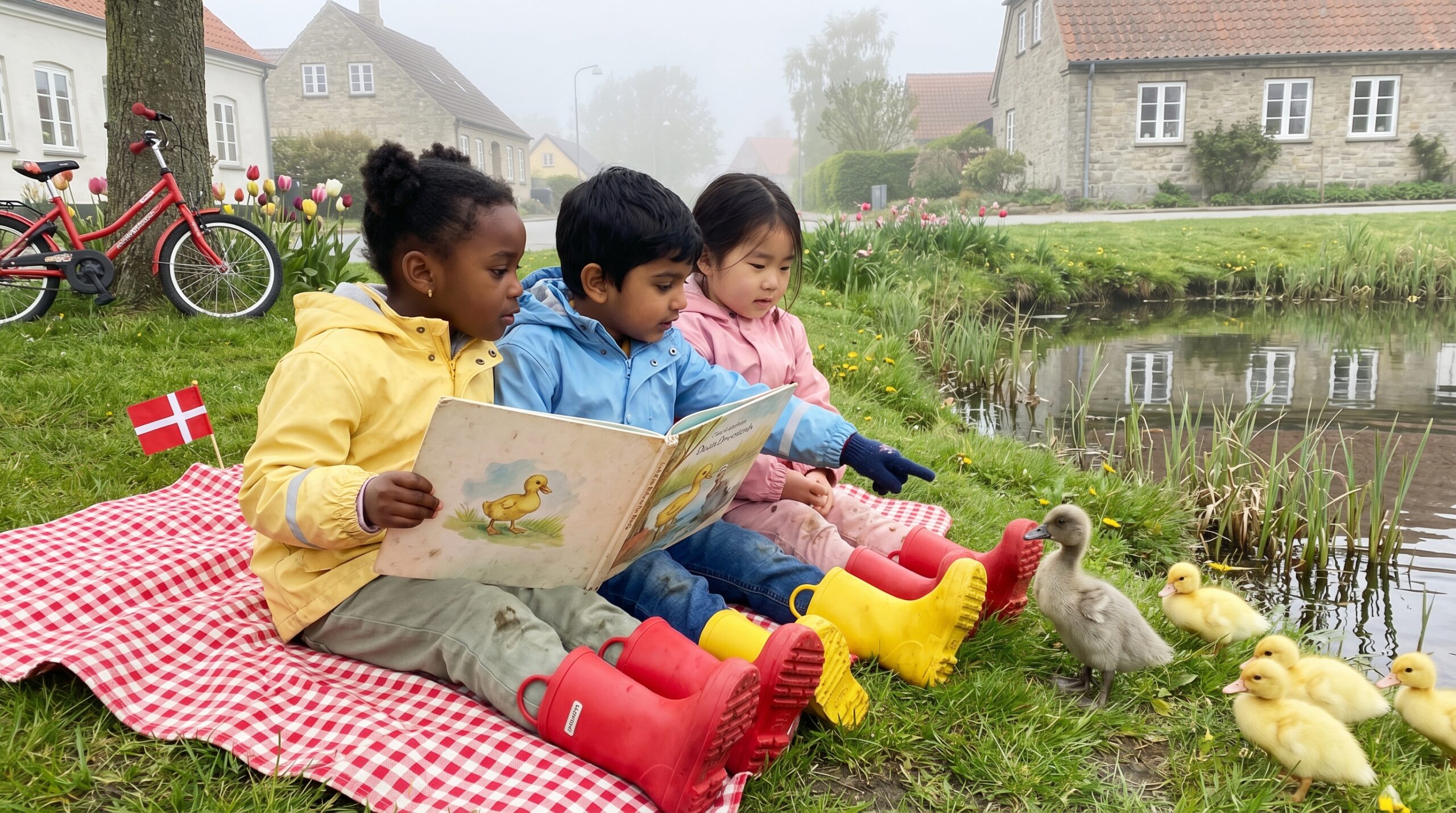
The Ugly Duckling – Danish arrives like a small spring morning. Kids lean in. The room quiets. I tell it often because it simply works and it feels surprisingly tender.
The story and its roots
Hans Christian Andersen wrote The Ugly Duckling – Danish, first published on November 11, 1843, in Copenhagen, Denmark. The original Danish title is Den grimme ælling. Andersen’s own life as an outsider colors the tale. A baby bird faces teasing and loneliness. Then seasons pass. At last the bird becomes a swan and finds a place among others. The plot stays simple while meaning grows deep. This story has been translated into more than 160 languages, making it one of the most widely translated fairy tales globally, highlighting its universal appeal.
The Ugly Duckling – Danish and why it sticks
We use this tale because it speaks plainly of identity and belonging. Also, it fits a range of ages and moods. Here are three quick reasons it lands with kids and adults:
- Empathy first. Children feel for the outcast bird before we say a word about change.
- Growth matters. The story shows slow, honest transformation instead of instant fixes.
- Kindness wins. Small acts of understanding rewrite a life.
Cultural notes and adaptations
Andersen is Denmark’s best known storyteller. For example, April 2, his birthday, is International Children’s Book Day. The swan motif links to Danish parks and waterways. Also, the phrase ugly duckling has entered everyday English to describe late bloomers. The tale inspired ballet, stage, film, and animated shorts. For instance, a 1939 Disney short helped spread the story in English speaking countries and won the Academy Award for Best Short Subject (Cartoon) at the 12th Academy Awards. Additionally, the stage musical Honk! — a modern adaptation of The Ugly Duckling — won the Laurence Olivier Award for Best New Musical in 2000 and has been produced in over 8,000 productions worldwide, seen by more than 6 million people. This showcases the ongoing relevance and adaptation of the story in contemporary arts and entertainment.
Reading with care
The Ugly Duckling – Danish contains scenes of rejection that may upset sensitive children. Therefore I pause and name feelings. I keep sentences short and gentle. I usually ask one simple question. That single question often opens everything.
How to read this tonight
Try these short ideas before lights out:
- Read the lonely winter scene slowly. Let the quiet hang for a beat.
- Ask one simple question: What makes you special?
- Celebrate one small thing before you turn off the light.
Activities that stick
Hands-on ideas make the story stick. Try a swan mask or a feather collage. Role play the moment the bird first sees swans. For older kids, offer a translation that keeps Andersen’s slightly darker tone. Picture books suit ages 3 to 8. Longer illustrated editions suit older children and adults.
Classroom and family use
Teachers and parents use The Ugly Duckling – Danish to begin talks about bullying, resilience, and self esteem. It offers a safe entry into conversations about differences and kindness. For younger listeners, keep the read aloud short and comforting. For older kids, compare versions and mention Andersen’s life. Notably, Andersen wrote over 150 fairy tales during his lifetime, with The Ugly Duckling being one of his most celebrated works.
Read or listen to a story about The Ugly Duckling – Danish now
Read or listen to a story about The Ugly Duckling – Danish now: For 3-5 year olds, For 6-8 year olds, For 8-10 year olds, and For 10-12 year olds.
Finally, read it together and ask one question: What makes you special? Then watch a child find a new corner of belonging. If you like, visit Storypie to listen on the go.